Indigenous Knowledge • Traditional Agriculture • Cultural Preservation
Traditional Agriculture and Indigenous Cultural Preservation 🌾
Traditional agriculture preserves Indigenous knowledge, biodiversity, and cultural identity by sustaining food systems rooted in ecological balance and community stewardship.
Quick answer: Traditional agriculture sustains communities by combining ecological knowledge, crop diversity, and cultural practices to produce food while preserving heritage, biodiversity, and long-term land health.
What Is Traditional Agriculture?
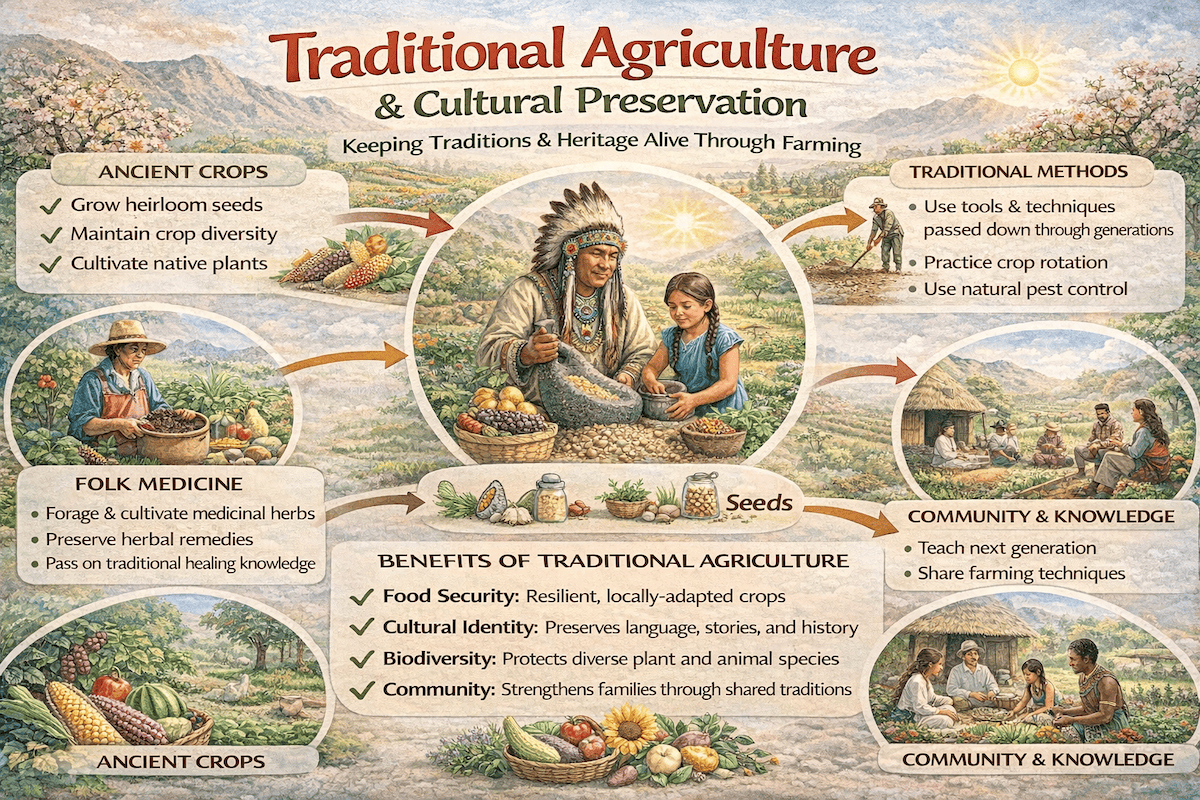
Traditional agriculture refers to farming systems developed over generations by Indigenous and local communities. These systems are deeply connected to the land and are designed to work in harmony with natural ecosystems rather than relying on external inputs.
Definition: Traditional agriculture is a system of farming that integrates ecological knowledge, seed saving, biodiversity, and cultural traditions to sustain both food production and community identity.
These practices include crop rotation, intercropping, seed preservation, and seasonal planting guided by local knowledge, often passed down through oral traditions, ceremonies, and shared community experience.
Did you know? Indigenous agricultural systems have sustained communities for thousands of years while maintaining soil fertility, biodiversity, and resilience without synthetic inputs.
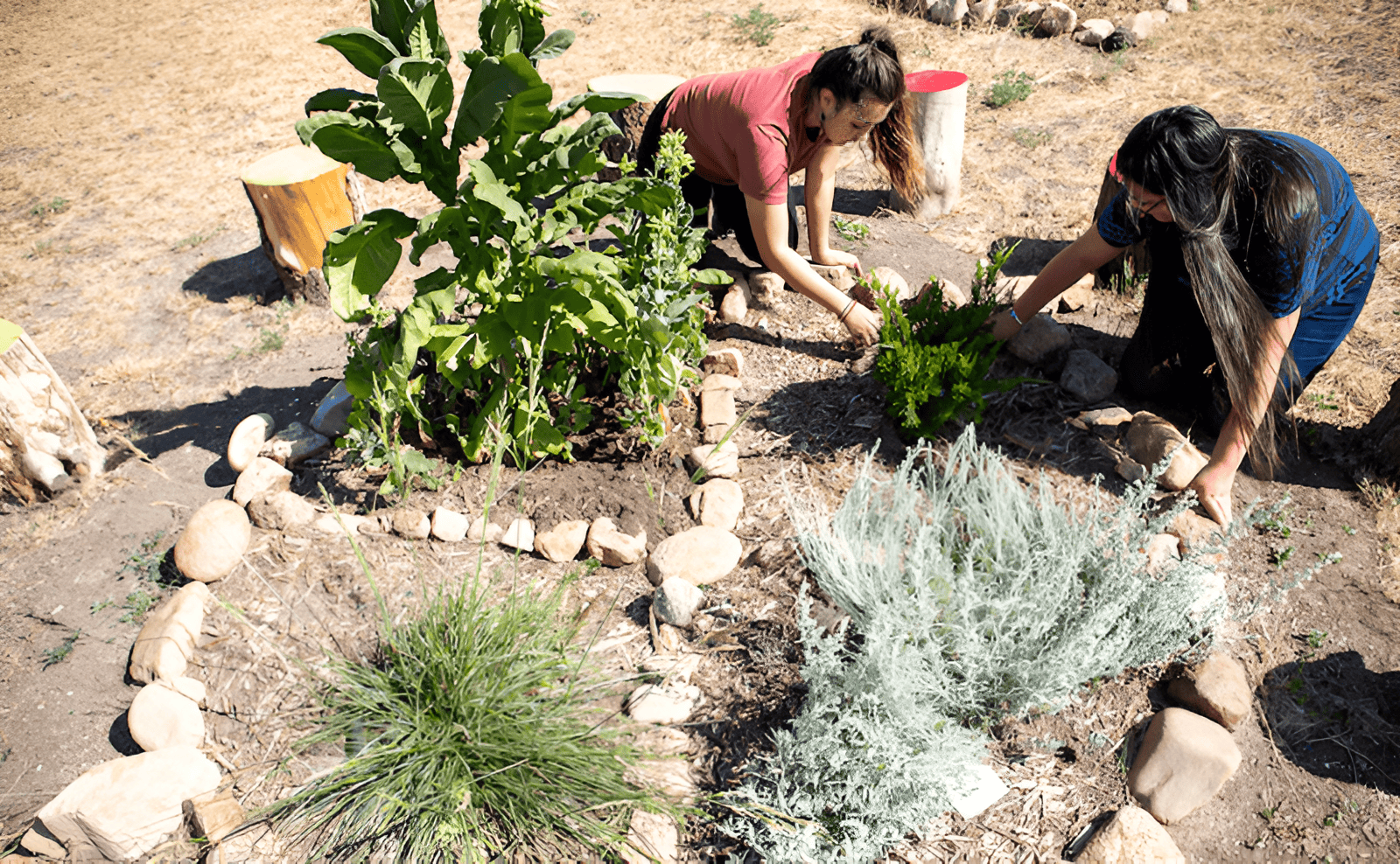
Community agriculture plays an integral role in preserving these traditions. It creates shared spaces where elders, youth, and families gather to grow food, pass down knowledge, and maintain cultural practices tied to the land.
Agriculture in many Indigenous cultures extends beyond food production—it includes ceremony, language, storytelling, and identity. Practices such as
seed saving, seasonal festivals, and planting calendars reflect a deep relationship between people and the environment.
By supporting traditional agriculture, communities can strengthen food sovereignty, protect cultural heritage, and build resilient food systems that honor both past knowledge and future sustainability.
The Interplay of Agriculture and Culture
Community agriculture isn't just about growing food; it's about maintaining traditions, preserving biodiversity, strengthening intergenerational ties, and fostering communal identity. Agricultural systems often reflect deeply held worldviews about balance, reciprocity, and stewardship. Here are five examples showcasing the inseparable connection between agriculture and indigenous cultures:
The Haudenosaunee Confederacy (Iroquois) – Three Sisters Agriculture:
The Haudenosaunee communities of North America have long practiced Three Sisters agriculture, growing corn, beans, and squash together. This intercropping method is not only an efficient use of land—where corn provides structure, beans fix nitrogen, and squash shades the soil—it is also a cultural teaching. The Three Sisters symbolize unity, cooperation, and mutual care. Stories about the sisters are shared with children, embedding ecological knowledge within cultural narratives.
Hawaiian Taro Farming:
In Hawaiʻi, the cultivation of taro, or kalo, is deeply intertwined with genealogy and spirituality. According to Hawaiian tradition, kalo is an elder sibling of the Hawaiian people. Traditional loʻi (irrigated taro terraces) require collective labor and careful water management. The communal work known as kōkua reinforces social responsibility and connection to ʻāina (land). Revitalization of taro farming has become a central part of cultural resurgence movements in Hawaiʻi.
Balinese Subak System:
In Bali, the centuries-old subak system governs cooperative water management for rice terraces. Farmers collectively manage irrigation through temple networks, guided by the philosophy of Tri Hita Karana, which emphasizes harmony with the divine, with other people, and with nature. The subak system represents both agricultural engineering and spiritual organization, illustrating how food production and cosmology are intertwined.
Key Principles of Traditional Agriculture
Traditional agriculture is built upon ecological knowledge developed through generations of observation and interaction with the land. While practices vary across cultures and climates, many indigenous farming systems share several common principles that support long-term sustainability, biodiversity, and community well-being.
Biodiversity:
Traditional agricultural systems typically cultivate a wide range of crops, varieties, and companion plants rather than relying on monocultures. This diversity strengthens ecosystem stability, reduces pest pressures, and supports pollinators and soil life. In many regions, farmers grow dozens or even hundreds of crop varieties adapted to different microclimates and seasons.
Polycultures and Companion Planting:
Many indigenous farming traditions rely on polyculture systems where multiple crops grow together in mutually beneficial relationships. A well-known example is the Three Sisters system of corn, beans, and squash practiced by the Haudenosaunee. Similar approaches are used worldwide and reflect many of the principles described in permaculture design.
Seed Saving and Seed Sovereignty:
Traditional farmers carefully select, save, and share seeds from season to season. This practice preserves genetic diversity and ensures crops remain adapted to local environmental conditions. Community seed exchanges and seed libraries help protect agricultural heritage and strengthen food independence.
Water Conservation:
Traditional agricultural systems often include sophisticated methods of managing water efficiently. Examples include terraced fields, irrigation canals, rainwater harvesting, and soil-covering mulches that reduce evaporation. These water-smart approaches are increasingly relevant in a world facing changing rainfall patterns and water scarcity.
Community Stewardship:
Perhaps the most important principle of traditional agriculture is collective responsibility for the land. Farming knowledge is shared through generations, often taught by elders through hands-on practice. Fields, forests, and waterways are treated not simply as resources but as living systems that require respect, care, and long-term stewardship.
Andean Potato Cultivation:
For the Quechua and Aymara peoples of the Andean highlands, potato cultivation is a cultural touchstone. Thousands of native potato varieties are grown at different elevations, preserving extraordinary biodiversity. Farmers rely on traditional ecological knowledge, reading soil, wind, and sky patterns to guide planting. Seed exchange festivals and communal harvests reinforce cultural continuity and collective resilience in a harsh mountain environment.
Māori Kūmara Growing:
The Māori people of Aotearoa (New Zealand) have cultivated kūmara (sweet potato) for centuries. Kūmara holds a central place in Māori mythology and seasonal ritual. Traditional storage pits and soil preparation methods demonstrate careful adaptation to climate. Today, the revitalization of kūmara growing supports language preservation, land reconnection, and cultural education for younger generations.
Agriculture: The Pillar of a Community
Agriculture does more than provide food for indigenous communities—it brings people together and strengthens collective identity. Planting and harvest seasons often align with ceremonies, dances, and communal feasts. Fields and gardens become living classrooms where elders teach youth about soil, seeds, weather patterns, and ancestral practices.
Shared agricultural activities create structured opportunities for mentorship and storytelling. Through farming, values such as patience, gratitude, reciprocity, and stewardship are passed down organically. These lessons extend beyond food—they shape governance, social relationships, and spiritual life.
Moreover, community agriculture contributes to local economies, providing livelihoods and reinforcing communal ties. It supports food sovereignty; the right of people to define their own food systems—and strengthens resilience against external shocks such as market volatility, climate disruption, or supply chain breakdowns.
Protecting Traditional Farming
Traditional farming methods often embody generations of ecological wisdom. These practices tend to emphasize polycultures, crop rotation, seed saving, natural fertilization, and water conservation—approaches increasingly recognized as models for sustainable agriculture worldwide.
However, traditional systems face mounting threats from industrial agriculture, monocropping, land displacement, climate change, and the erosion of cultural practices. When traditional knowledge is lost, it is not only food diversity that disappears—it is language, ceremony, and ancestral memory.
Preserving traditional farming practices is crucial for maintaining biodiversity and strengthening climate resilience. Initiatives such as the Slow Food movement’s Ark of Taste, seed banks, community seed libraries, and UNESCO’s recognition of cultural landscapes help protect these living agricultural systems. Many indigenous communities are also leading land-back and food sovereignty movements that restore control over ancestral territories and food production.
Why Traditional Agriculture Matters for Climate Resilience
Traditional agricultural systems offer valuable lessons for addressing modern environmental challenges. As climate change alters rainfall patterns, temperatures, and growing conditions around the world, many scientists and policymakers are looking toward indigenous agricultural knowledge as a source of resilient farming strategies.
Drought Resilience:
Many traditional crops have been selected over centuries for their ability to thrive in difficult conditions. Indigenous farmers often grow drought-tolerant varieties of grains, beans, and root crops that require less water than modern commercial varieties. These crops help communities maintain food security even during periods of prolonged dry weather.
Soil Regeneration:
Traditional farming methods often prioritize soil health through composting, crop rotation, natural fertilizers, and reduced soil disturbance. These practices mirror many modern regenerative agriculture techniques that aim to rebuild soil fertility, increase carbon storage, and support beneficial soil microorganisms.
Crop Diversity:
Growing multiple crop species together helps protect farms from climate uncertainty. If one crop fails due to pests, drought, or unexpected weather conditions, other crops may still thrive. This diversity spreads risk and strengthens the resilience of local food systems.
Seed Banks and Traditional Varieties:
Indigenous communities have preserved thousands of crop varieties uniquely adapted to regional climates. Community seed banks and seed-sharing networks help maintain these genetic resources. Protecting this biodiversity is essential for developing crops that can withstand future environmental changes.
By blending ancestral knowledge with modern ecological science, traditional agricultural systems provide powerful models for building resilient food systems that nourish both people and the planet.
Growing Traditional and Non-Traditional Crops
Indigenous cultures cultivate a wide variety of crops, including both traditional and non-traditional species. Traditional crops—such as heirloom corn, taro, millet, amaranth, and native beans—often carry deep cultural significance and are adapted to local soils and climates. Preserving these crops safeguards genetic diversity and protects culinary traditions.
At the same time, many communities thoughtfully integrate non-traditional or introduced crops into their systems. When adopted responsibly, new crops can diversify diets, increase income opportunities, and strengthen food security. The key lies in integration that respects ecological balance and cultural continuity rather than replacing or displacing traditional species.
Blending ancestral knowledge with appropriate innovation allows communities to adapt to changing environmental conditions while honoring their heritage. Agroforestry, regenerative practices, and cooperative growing models can enhance productivity without sacrificing cultural identity.
Community agriculture is vital to the preservation of indigenous cultures. It nurtures relationships between people and the land they inhabit, sustains ceremonies and stories, fosters communal responsibility, and creates gathering places rooted in tradition. By protecting traditional farming practices and cultivating a diverse array of crops, indigenous communities continue age-old agricultural traditions while embracing pathways toward resilience and renewal.
In a rapidly changing world, community agriculture stands as both heritage and hope—a living bridge between ancestors and future generations.
Protect Traditional Food Systems
Community gardens and regenerative agriculture projects help preserve cultural food traditions and strengthen food security worldwide.
Learn how to start a community garden →

.png)
.png)
.png)

.png)