LAS VEGAS
Las Vegas Water-Smart Community Garden Initiative
Growing To Give is building water-efficient community gardens in Las Vegas using Root Tube systems that reduce water use by up to 90% while producing fresh food for local families.
EXPLORE
LAS VEGAS
Growing To Give is building water-efficient community gardens in Las Vegas using Root Tube systems that reduce water use by up to 90% while producing fresh food for local families.
EXPLORE
Las Vegas • Water Crisis • Community Gardens
Las Vegas faces severe water scarcity, making water-smart community gardens a critical solution for reducing water use while increasing local food production.
Quick answer: Water-smart community gardens in Las Vegas use ultra-efficient growing systems to produce fresh food using a fraction of traditional water consumption—helping conserve water while improving local food access.
Las Vegas was once sustained by natural marshes, springs, and artesian wells, but these resources were largely depleted as the city expanded. Today, the region relies heavily on Lake Mead, which has reached historically low levels since the construction of the Hoover Dam.
Definition: Water-smart agriculture refers to growing methods that significantly reduce water use while maintaining or increasing crop productivity, especially in arid environments.
Without continued conservation efforts and innovative solutions, Las Vegas faces increasing pressure on its water supply. The need to reduce consumption while maintaining quality of life has become one of the region’s most urgent challenges.
Did you know? The average Las Vegas household uses about 220 gallons of water per day, with a regional goal to reduce usage to approximately 180 gallons per day by 2035.
Traditional agriculture and landscaping can require significant amounts of water—something that is increasingly unsustainable in desert environments. At the same time, cities like Las Vegas depend heavily on imported food, adding pressure to supply chains and increasing vulnerability.
This creates an opportunity to rethink how food is grown locally by using systems that dramatically reduce water use while still producing meaningful yields.
The Chimera Golf Club initiative introduces a community-driven, city-wide approach to food production using water-smart Root Tube Garden systems. These gardens are designed to operate with extreme efficiency, using only a small fraction of the water typically required for food production.
Each garden can use as little as 4 gallons of water per day—a fraction of the region’s daily household water targets—while producing enough fresh food to support a family of four. This represents a significant shift toward sustainable, localized food systems in a water-limited environment.
Water-smart community gardens offer a practical solution to two major challenges at once: water conservation and food security. By producing food locally with minimal water input, these systems help reduce reliance on external supply chains while supporting community resilience.
In cities like Las Vegas, where every gallon counts, scalable solutions that combine efficiency, productivity, and accessibility are essential for building a sustainable future.
The solution: Water-smart Root Tube Gardens provide a pathway to grow more food with less water, helping Las Vegas conserve critical resources while empowering communities to produce fresh, local food.
The Southern Nevada Water Authority (SNWA) is the regional water management agency serving Clark County, including Las Vegas, Henderson, and surrounding communities. SNWA’s mission is to secure long-term water resources while promoting aggressive conservation and sustainable use of limited supplies in one of the driest urban regions in the United States.
SNWA administers programs and incentives that support water-efficient landscaping and irrigation across residential, commercial, HOA, and golf course properties. Its Water Smart Landscapes rebate program provides financial incentives for replacing high-water-use turf with desert-adapted landscaping and efficient irrigation systems — helping property owners reduce water demand and minimize exposure to excess-use penalties under assigned water budgets.
Golf courses within the SNWA service area operate under structured water budgets, with tiered surcharge rates applied when allocated consumptive use is exceeded. Courses that proactively reduce turf, adopt high-efficiency irrigation strategies, or integrate conservation-aligned land use can lower water consumption, reduce surcharge risk, and contribute meaningfully to regional sustainability goals.
Source: SNWA official site — snwa.com
In Southern Nevada, large commercial properties — including golf courses — are assigned a water budget based on irrigated acreage, plant type, and seasonal evapotranspiration rates. This allocation defines how much water a property is expected to use responsibly.
When a property exceeds its assigned budget, it is subject to tiered surcharge rates, meaning water costs increase significantly above the base rate. These surcharges are designed to discourage overuse and incentivize permanent reductions in high-water turf areas.
By converting portions of irrigated turf into water-smart, food-producing landscapes — such as Root Tube gardens — golf courses can lower total water demand, reduce exposure to overage penalties, and align with regional conservation goals.
In addition to lowering operating costs, conservation-aligned projects may qualify for rebate incentives and favorable consideration in water allocation planning — positioning participating courses as leaders in sustainable land stewardship.

We are building a Community Garden project in collaboration with Chimera Golf Club, nestled in Henderson, Nevada an oasis surrounded by a vibrant, tight-knit community, known for its commitment to outdoor recreation, community engagement, and well-being. As part of its dedication to the community, Chimera is establishing a community garden on the golf course grounds to grow fresh, nutritious produce. This garden will supply fresh ingredients to the clubhouse restaurant, ensuring locally sourced, high-quality meals, and also offer produce to community members, with a primary focus on supporting those in need nearby. Recognizing the importance of sustainable resource use, Chimera is utilizing water-smart methods to address the region's water restrictions. Techniques that conserve water while maximizing yields make this garden both environmentally responsible and practical. The Chimera community garden, built by Growing To Give, aims to become a model for sustainable, community-centered food production throughout Las Vegas and beyond.
Growing To Give is committed to alleviating hunger, promoting food security, and environmental stewardship through the development and deployment of community garden initiatives and programs using water-smart agricultural systems. Their mission is to empower marginalized, low-income communities to grow their own fresh produce to reduce reliance on traditional food distribution systems.
During the implementation phase of the Chimera Community Garden, residents will be engaged through workshops and educational campaigns, learning how to cultivate their water-smart gardens with techniques that align with the city’s stringent water use goals. As a result, the program aims to reduce residential water consumption, foster community involvement, and improve local food security, serving as a model for sustainability in the most unsustainable city in the world.
The Gardens bring substantial value to the surrounding community by combining a highly efficient, containerized design that maximizes plant growth while conserving water, fertilizer, land, and labor. Centered around the needs of the community, it provides fresh produce and cultivates a sense of unity as a gathering place where people can connect, share ideas, and learn together. It’s a natural, educational space, engaging families and children in understanding how food is grown and how to incorporate it into healthy meals. This setting not only promotes exercise and time spent outdoors but also builds a healthy, sustainable environment. As a low-impact, sustainable enterprise, the Chimera Community Garden fosters a thriving ecosystem, benefiting both the local economy and the well-being of the community.
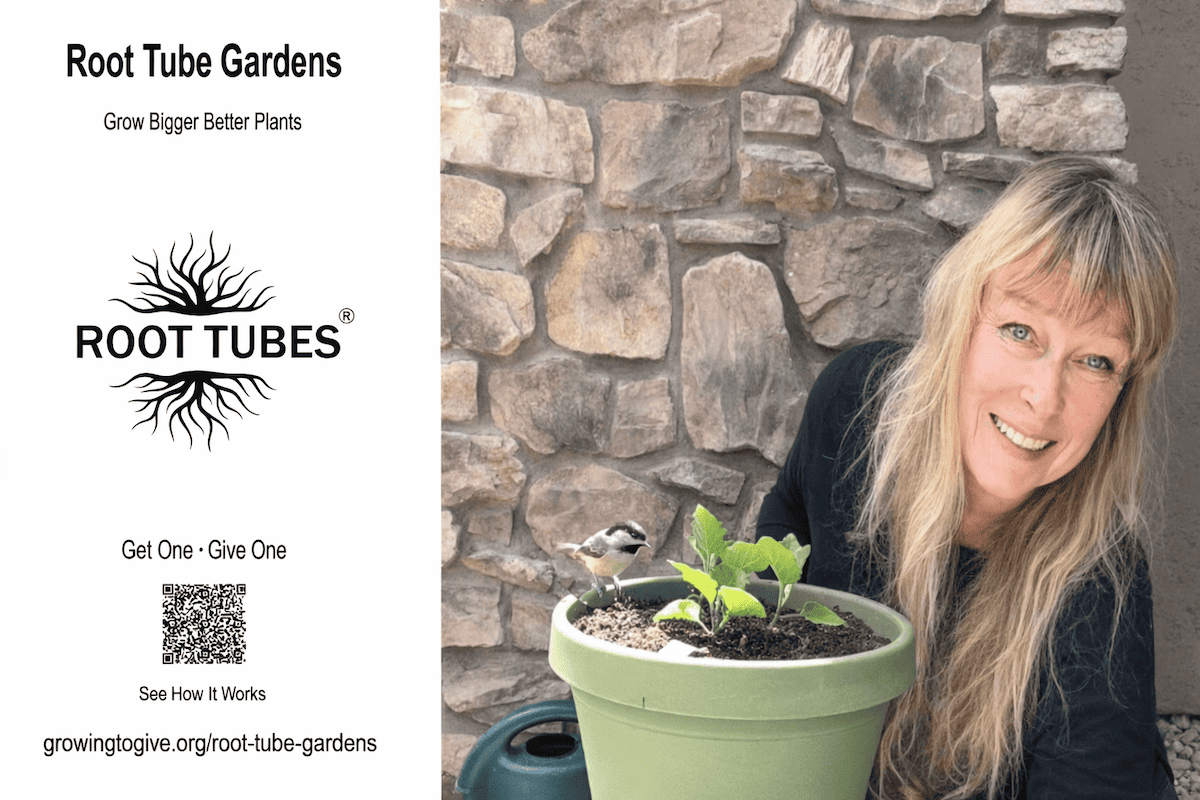
At the heart of the project are Root Tubes, a proprietary garden assembly that efficiently waters and fertilizes each plant in a raised circle. The assembly holds water within a fertilized vessel that feeds each plant over time creating a self-contained targeted agriculture system. The advantages are numerous:
✔ Root Tubes use 90% less water compared to flood, drip, and spray irrigation methods.
✔ Root Tubes use 85% less fertilizer.
✔ Root Tubes are a “plant-and-forget” gardening system requiring little maintenance.
✔ Root Tubes grow crops organically and the “need-to-weed” is virtually eliminated.
✔ Root Tubes double yield in half the space.
Currently, there are four grant or foundation funding applications submitted to support the Chimera Community Garden initiative, with a total funding request of $137,500 and an overall project budget approaching $750,000. Chimera Golf Club’s initial investment will significantly enhance our ability to continuously pursue additional grants, attract community and corporate sponsorships, and strengthen our case for submitting water credit and enhanced allocation requests through the Southern Nevada Water Authority (SNWA). These requests will align with SNWA’s incentive programs for golf courses that adopt recognized water-smart technologies and contribute to community food security.
Two of the current grant applications specifically support a farm-to-table community garden initiative in partnership with local nonprofits serving food-insecure populations across Southern Nevada. These initiatives also support the development of a Chimera Golf Club–hosted Farmer’s Market. Additional annual sponsorship opportunities will be available for Tuscany Village HOA residents and Chimera Golf Club members, offering benefits such as access to gardening plots, harvest sharing, and participation in community workshops and planting events. Sponsorship tiers are being finalized (TBD).
A vital part of this initiative is our commitment to feeding those in need beyond the golf course community. A percentage of all harvested produce will be donated directly to local food banks, churches, shelters, and community kitchens throughout the Henderson and greater Southern Nevada area. We are actively forming partnerships with organizations such as Three Square Food Bank, Lutheran Social Services of Nevada, and area churches with existing food distribution programs. This ensures that the garden's impact reaches vulnerable individuals and families who lack regular access to fresh, nutritious food - reinforcing Chimera Golf Club’s role as a proactive contributor to the community and beyond.
At its core, this project is a scalable demonstration site for how golf course land can be repurposed for water-efficient, food-producing landscapes. It will serve as a replicable model for other golf courses in Southern Nevada and beyond. Numerous foundations support the expansion and sustainability of community gardens, and our project is positioned to take full advantage of this funding landscape.
Revenue from garden produce sales and food/beverage offerings at Slice 19 featuring ingredients grown on-site will enhance the Club’s bottom line. These new income streams, alongside cost savings from reduced water consumption and the potential elimination of SNWA water use penalties, can be reinvested into the garden and course operations for long-term resilience and growth.
With Chimera Golf Club’s leadership and initial investment, our collaborative team will immediately focus on continued fundraising, implementation of smart water and landscape technologies, applying for increased water allocations, and seamless integration of the garden into the course’s aesthetics and operations. Together, we will establish a 21st-century, water-smart, community-driven botanical food garden that positions Chimera Golf Club as a pioneering model for sustainable golf course transformation.

.png)
.png)
.png)

.png)
Copyright Ⓡ 2026. All Rights Reserved. Growing To Give