Sugar • Metabolic Health • Cancer Research
Sugar, Diet, and Cancer: What We Know (and What We Don’t) 🍬
Sugar is often linked to cancer risk—but the relationship is more complex than common myths suggest, involving metabolism, inflammation, and overall dietary patterns.
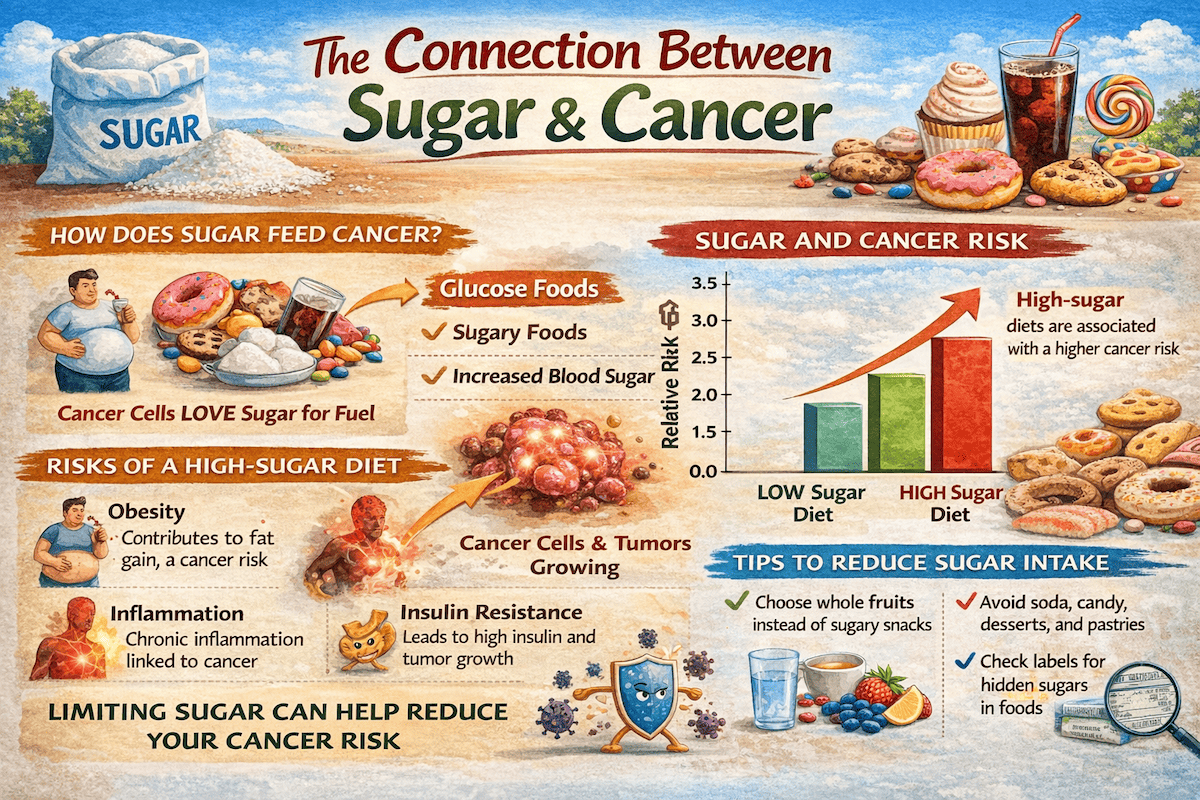
Quick answer: Sugar does not directly cause or “feed” cancer, but high intake of added sugars may contribute to obesity, insulin imbalance, and inflammation—factors linked to increased cancer risk.
Does Sugar Cause Cancer?
All cells in the body—including cancer cells—use glucose for energy. However, current research does not show that sugar uniquely fuels cancer growth in a direct or isolated way.
Definition: Sugar and cancer refers to the relationship between dietary sugar intake and factors such as metabolism, insulin levels, inflammation, and long-term disease risk—not a direct cause-and-effect mechanism.
Concerns about sugar are primarily related to its role in broader metabolic health. Diets high in added sugars can contribute to weight gain, obesity, and insulin resistance—conditions associated with increased cancer risk over time.
Did you know? Whole foods like fruits contain natural sugars along with fiber, vitamins, and antioxidants, which help regulate how sugar is absorbed in the body.
Rather than focusing on sugar alone, most experts emphasize overall dietary patterns—particularly limiting highly processed foods and sugary beverages while prioritizing whole, nutrient-dense foods.
This page explores what science currently says about sugar and cancer, including common myths, metabolic factors, and practical guidance for balanced nutrition.
Growing To Give does not provide medical advice, diagnosis, or treatment. The information shared is for educational and community-support purposes only and is not a substitute for professional medical care. Always consult a qualified healthcare professional regarding any medical condition or dietary changes.
Does Sugar Directly Feed Cancer?
Scientists have studied how cancer cells use glucose for many years. One area of research, sometimes connected to what is called the “Warburg effect,” looks at how certain cancer cells rely heavily on glucose as a fuel source. This has led some people to say that sugar “feeds” cancer. However, the relationship between sugar, metabolism, and cancer is complex. The current evidence suggests that overall dietary patterns, body weight, physical activity, and other lifestyle factors play a large role in cancer risk, rather than any single food or ingredient.
Many health organizations recommend limiting added sugars, especially from sodas, candies, desserts, and highly processed snacks, as part of a broader approach to supporting overall health and managing weight. This guidance is meant to support the body as a whole, not to replace medical treatment or to promise specific cancer outcomes.
Insulin, Inflammation, and Overall Health
Concerns about sugar also relate to its effects on insulin, inflammation, and weight over time. These factors can influence health in many ways, including cancer risk:
• Insulin surges – Meals or drinks very high in added sugar can cause blood-sugar spikes, followed by rises in insulin. Over many years, frequent spikes may contribute to insulin resistance and other metabolic issues in some people.
• Chronic inflammation – Diets high in added sugars and low in whole, nutrient-dense foods may be associated with more inflammation in the body. Chronic inflammation is one of many factors that researchers study in connection with long-term disease risk.
• Obesity and diabetes – High-sugar, high-calorie diets can contribute to weight gain, obesity, and type 2 diabetes. These conditions are clearly linked with a higher risk of several cancers, including breast, colorectal, pancreatic, and endometrial cancers.
Cutting back on refined sugar can be one part of a broader strategy to support metabolic health, manage weight, and follow the dietary guidance you receive from your healthcare team or a registered dietitian.
What Research Currently Suggests
Research does not show that sugar alone causes or cures cancer. Instead, studies suggest that dietary patterns high in added sugars and refined carbohydrates are associated with a higher risk of certain cancers, often through their impact on weight, insulin resistance, and overall metabolic health. Animal and laboratory studies give scientists clues about how cells behave, but those findings do not always translate directly into simple rules for people.
For individuals already in treatment or recovery, any diet changes should be discussed with your oncology team. Reducing sugary drinks and highly processed sweets may be one evidence-informed way to support overall health and energy levels, but it should always be considered in the context of your full medical plan.
Scientific Research on Sugar, Metabolism, and Cancer
Cancer cells have a high metabolic demand and often rely heavily on glucose to fuel rapid growth. This phenomenon, known as the Warburg effect, describes how cancer cells preferentially convert glucose into energy even in the presence of oxygen.
However, this does not mean that consuming sugar directly “feeds cancer.” All cells in the body use glucose for energy, and the body tightly regulates blood sugar levels through insulin and metabolic processes.
What researchers are more concerned about are dietary patterns that lead to chronic high insulin levels, obesity, and systemic inflammation. These metabolic conditions are associated with increased risk for several cancers including colorectal, breast, and pancreatic cancers.
Diets rich in whole foods, fiber, and phytonutrients — such as those found in plant-forward and Mediterranean dietary patterns — may support metabolic balance and help reduce inflammation associated with chronic disease risk.
The Most Common Sources of Added Sugars
Not all sugars show up in the same way in your diet. When people talk about “cutting sugar,” they are usually referring to added sugars—those that manufacturers, restaurants, or home cooks add to foods and drinks:
• Sodas, sweetened teas, energy drinks, and many flavored coffees – These beverages are key sources of added sugar and calories for many people.
• Desserts and candies – Cakes, cookies, pastries, ice cream, and candy often contain substantial added sugars.
• Packaged snacks and condiments – Some granola bars, breakfast cereals, sauces, and dressings have more sugar than people expect.
Reducing these everyday sources of added sugar can be a meaningful step toward a more balanced eating pattern, regardless of your cancer status.
Sugar Intake in Different Dietary Patterns
| Diet Type |
Sugar Intake |
Main Foods |
Research Support |
| Typical Western Diet |
High |
Processed foods, sugary drinks |
Associated with higher chronic disease risk |
| Mediterranean Diet |
Low to Moderate |
Fruits, vegetables, olive oil, fish |
Strong research support |
| Plant-Based Diet |
Low |
Whole grains, legumes, vegetables |
Strong research support |
| Low-Carb / Keto |
Very Low |
Protein, fats, minimal carbohydrates |
Mixed evidence |
Smarter Choices for a More Balanced Diet
You do not have to remove every trace of sugar to make your diet more supportive of overall health. Many people find it helpful to focus on cutting back on added sugars and emphasizing whole, minimally processed foods:
• Replace sodas and sugary drinks with water, sparkling water, or unsweetened herbal tea.
• Choose whole fruits instead of candy—they provide natural sweetness plus fiber and nutrients.
• Build meals that include protein, healthy fats, and complex carbohydrates (like whole grains, beans, or starchy vegetables) to help promote steadier blood-sugar responses.
• Emphasize nutrient-dense foods—such as vegetables, fruits, whole grains, nuts, seeds, and lean proteins—that support overall health and energy.
Metabolic Health, Insulin Resistance, and Cancer Risk
Researchers increasingly study how metabolic health may influence cancer risk.
Diets high in refined sugars and ultra-processed carbohydrates can contribute to insulin resistance, a condition where the body becomes less responsive to insulin signaling.
Chronically elevated insulin and insulin-like growth factors may influence cellular growth pathways. For this reason, scientists often study how dietary patterns, physical activity, and body weight interact with long-term cancer risk.
Nutrition approaches that emphasize whole foods, fiber-rich plants, healthy fats, and balanced blood sugar levels are commonly recommended as part of broader metabolic health strategies.
Empowering Patients and Families
Food choices are only one part of a very complex picture, and no eating pattern can guarantee any specific cancer outcome. Still, many people feel more empowered when they make deliberate, supportive choices about what they eat and drink. Choosing water instead of soda, or fresh fruit instead of candy, can be a way to care for your body and align your daily habits with your long-term health goals.
Any changes in diet—especially during cancer treatment—should always be discussed with your medical team so that your nutrition plan fits your unique needs, medications, and side effects. Working with a registered dietitian who specializes in oncology can also be a valuable way to get personalized guidance.
Putting Sugar in Perspective
Refined, added sugars are one piece of the larger cancer and health puzzle. Research supports limiting added sugars as part of a balanced, plant-forward eating pattern and active lifestyle. Rather than thinking in terms of “feeding” or “starving” cancer, it may be more helpful to focus on creating an overall environment that supports your body, works with your treatment, and feels sustainable for you over time.
Frequently Asked Questions About Sugar and Cancer
Does sugar cause cancer?
Scientific research shows that sugar itself does not directly cause cancer. However, diets high in added sugar may contribute to obesity and metabolic disorders that are associated with higher cancer risk.
Do cancer cells feed on sugar?
Cancer cells use glucose for energy, just like normal cells. The body regulates blood sugar levels carefully, so eliminating sugar completely does not “starve” cancer cells.
Should cancer patients avoid sugar?
Moderating added sugar is generally recommended for overall health, but most medical professionals focus on maintaining balanced nutrition rather than completely eliminating carbohydrates.
What diet is best for cancer prevention?
Research often supports diets rich in fruits, vegetables, whole grains, and healthy fats, such as Mediterranean or plant-based diets.
Is fruit sugar harmful for cancer risk?
Whole fruits contain fiber, vitamins, and antioxidants. Most research suggests that fruit consumption is associated with improved health outcomes rather than increased cancer risk.

.png)
.png)
.png)

.png)