Bananas • Crop Disease • Food Security
A World Without Bananas: Are Bananas Going Extinct? 🍌
Bananas are one of the world’s most important fruits, but disease, monoculture farming, and genetic uniformity are putting global banana production at risk.
Quick answer: Bananas are not extinct, but the dominant Cavendish variety is under threat from Panama disease (Fusarium wilt), which spreads rapidly in monoculture systems.
Why Are Bananas at Risk?
Bananas are among the most widely consumed fruits in the world and a staple food for millions. However, modern banana production relies heavily on genetically identical plants grown in large-scale monocultures, making them highly vulnerable to disease.
Definition: Panama disease (Fusarium wilt) is a soil-borne fungal disease that infects banana plants, blocking water transport and eventually killing the plant, with no effective cure once established.
The most serious current threat is Tropical Race 4 (TR4), a strain capable of infecting Cavendish bananas—the primary export variety found in global markets.
Did you know? Nearly all export bananas are genetically identical clones, meaning a single disease can spread rapidly across entire plantations worldwide.
This vulnerability is not new. A previous banana variety, the Gros Michel, was largely wiped out by an earlier strain of Panama disease, leading to the global adoption of the Cavendish variety.
Today, similar risks highlight the importance of genetic diversity, sustainable farming systems, and disease-resistant crop development to protect the future of bananas and global food security.
Understanding these challenges offers a broader lesson for agriculture: resilience depends on diversity, soil health, and farming systems that reduce vulnerability to widespread crop failure.
The Rise and Vulnerability of the Modern Banana Industry
Bananas were not always the globally standardized fruit that most consumers recognize today. Over time, advances in transportation, refrigeration, export logistics, and plantation agriculture helped transform bananas from a regional tropical food into one of the most common fruits sold in international markets. Their popularity grew because they were portable, sweet, convenient to eat, and relatively affordable.
However, the commercial success of bananas also encouraged a highly simplified production model. Rather than cultivating many genetically distinct bananas adapted to different conditions, the export market increasingly favored single varieties that could be grown, harvested, transported, and marketed in consistent ways. This approach improved uniformity and made supply chains easier to manage, but it also concentrated risk.
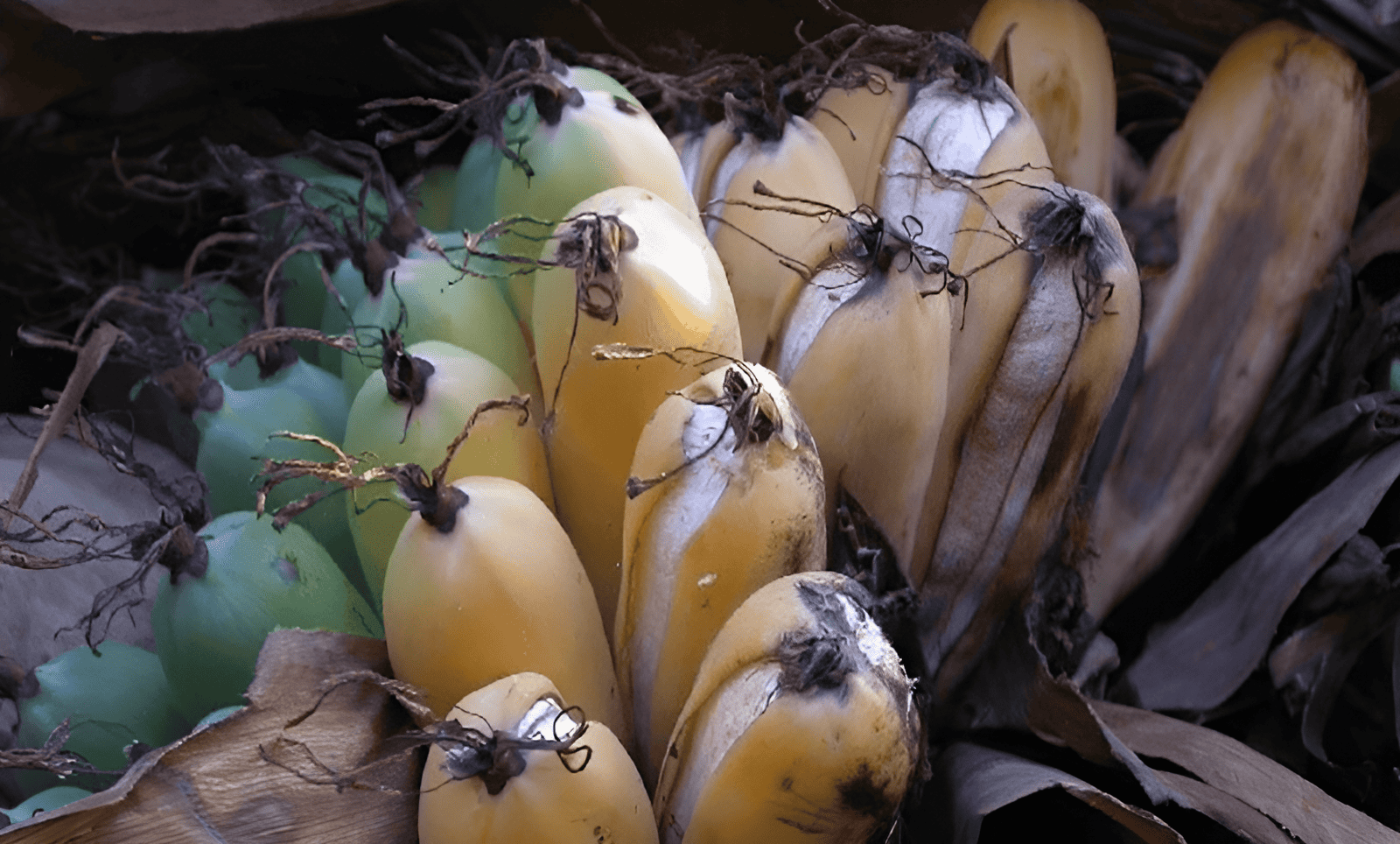
One of the most important historical examples was the Gros Michel banana, which once dominated international trade. Gros Michel was valued for its flavor, handling qualities, and export appeal, but it proved highly susceptible to a devastating soil-borne disease known as Panama disease. When the disease spread across plantations in the early twentieth century, large areas of production were lost. The banana industry eventually shifted toward the Cavendish variety, which at the time offered greater resistance to the strains of the disease then affecting plantations.
This transition is one of the clearest examples in agricultural history of how dependence on a narrow genetic base can leave a major crop industry exposed. Although the Cavendish replaced Gros Michel in many export markets, the structural vulnerability of the production system did not disappear. It was largely transferred from one dominant variety to another.
Panama Disease, Fusarium Wilt, and the Ongoing Disease Threat
The most serious long-term biological threat to bananas is Panama disease, a destructive fungal disease associated with Fusarium wilt. This disease is caused by strains of the soil-borne fungus Fusarium oxysporum that infect the vascular tissue of banana plants. Once inside the plant, the pathogen interferes with water and nutrient movement, causing leaves to yellow, wilt, collapse, and eventually die.
One reason Panama disease is so difficult to manage is that it persists in the soil. Unlike some crop threats that can be controlled with short-term treatment, soil-borne fungal pathogens can remain viable for long periods and continue infecting future plantings. This makes recovery particularly difficult once a plantation has been contaminated.
The threat did not end with the loss of Gros Michel. New strains, often discussed in relation to tropical race 4, have increased concern because they can affect Cavendish bananas as well. Since Cavendish dominates global export markets, the spread of Fusarium-related disease in major production regions represents a serious risk to supply stability. In practical terms, this means that one of the world’s most common fruits still depends on a production model that remains biologically fragile.
The concern is not simply that individual plantations may experience losses. The larger issue is that if a widely planted clonal variety is highly susceptible, disease can spread through entire production systems built around that same genetic profile. This creates the possibility of repeated industry-wide disruption similar to what happened in the Gros Michel era.
Threats from Monoculture Farming
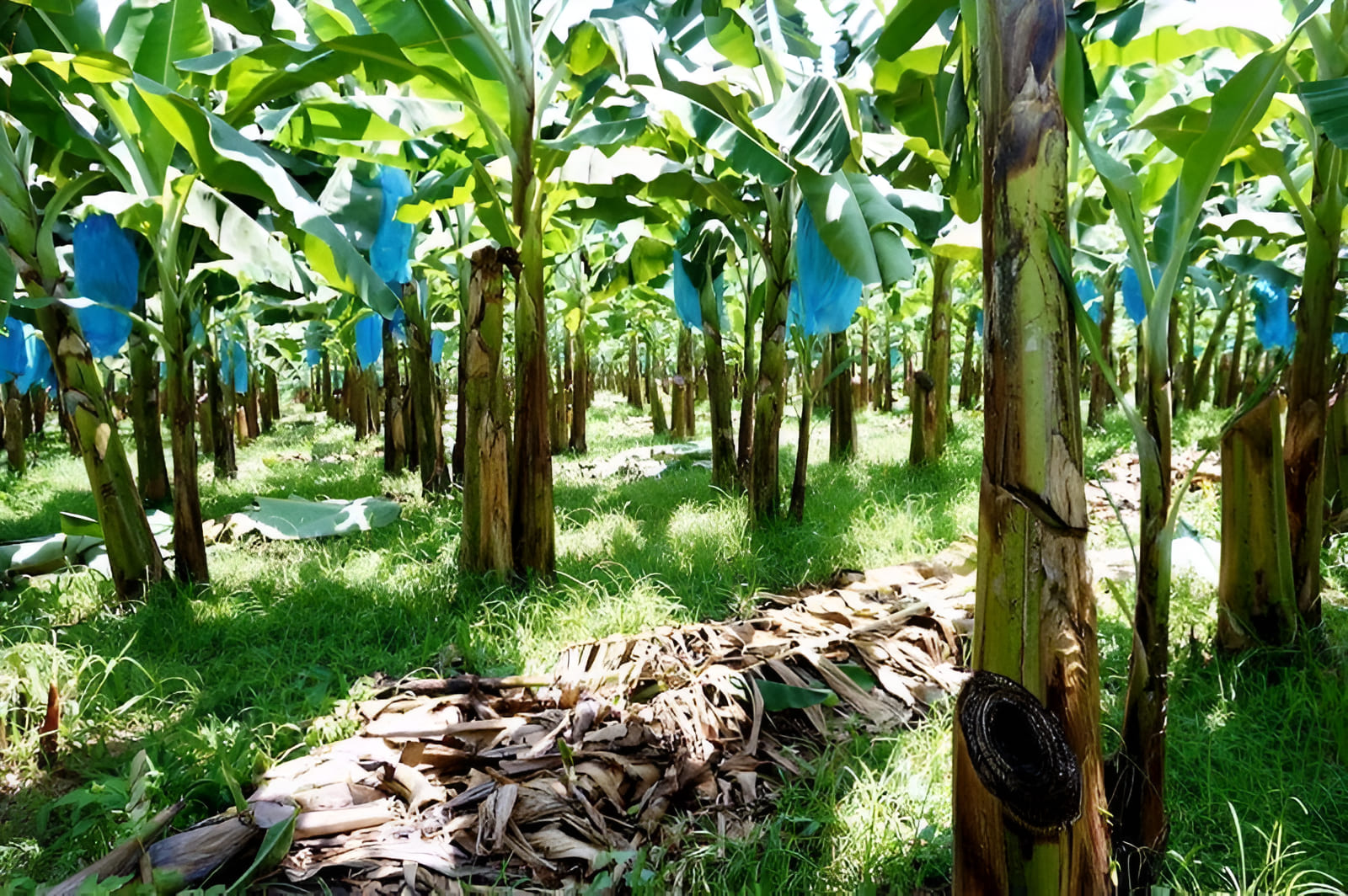
The structure of modern banana farming has intensified these disease risks. In many producing regions, bananas are grown in large monoculture plantations, where a single crop is planted over extensive areas with relatively little genetic variation. This system can improve short-term efficiency, simplify harvest and export logistics, and support consistent market supply. However, it also creates ideal conditions for disease transmission.
When genetically similar plants are grown close together across large landscapes, a pathogen does not face many biological barriers. Once disease is introduced, it may spread more easily from plant to plant and from field to field. In contrast, a more diverse system often slows transmission because plants differ in susceptibility, spacing, surrounding root activity, and associated microbial communities.
Monoculture also tends to reduce broader ecological resilience. Limited crop diversity can weaken soil health, reduce beneficial insect habitat, simplify root-zone biology, and increase dependence on external inputs. Over time, this can create production systems that are more vulnerable not only to disease, but also to drought stress, nutrient imbalance, and pest pressure. These concerns are relevant to banana farming just as they are to other crops discussed in relation to broader agricultural disease and resilience challenges, including the threat of disease in intensive growing systems.
For bananas, monoculture is especially risky because the crop is frequently propagated clonally rather than from genetically variable seed. That means many plants within commercial systems are effectively near-identical copies, which reduces the crop’s ability to adapt naturally when new disease pressures emerge.
Diminished Genetic Diversity and the Importance of Biodiversity
Genetic diversity is one of the most important safeguards in agriculture. When a crop species contains a broad range of traits, some plants may naturally tolerate drought, resist disease, or perform better under stress. This diversity gives breeders, farmers, and ecosystems more options for adaptation over time.
Bananas illustrate what happens when that diversity is narrowed too far within commercial production. Many cultivated bananas are sterile or largely seedless and are propagated vegetatively. While this allows consistent fruit quality, it also means that a successful commercial variety can be reproduced on a massive scale without introducing meaningful genetic variation. The result is a crop system that may appear stable but is biologically exposed.
Biodiversity matters at several levels. It matters within banana genetics, where preserving wild relatives and diverse cultivars increases the chance of identifying useful resistance traits. It matters within farms, where mixed plantings and support species can improve ecological function. And it matters at the landscape level, where diverse agricultural systems tend to be more resilient than highly simplified ones.
In the long term, saving bananas is not only about protecting one commercial cultivar. It is about protecting the broader genetic resources and ecological systems that make banana cultivation possible. This is one reason biodiversity is increasingly treated as a practical agricultural necessity rather than merely an environmental ideal.
A Potential Response: Diversified and Resilient Banana Production Systems
One promising response to banana vulnerability is the development of more diversified farming systems. Rather than depending on large uniform plantations of a single clone, diversified systems aim to reduce pathogen spread, improve soil health, and create stronger ecological buffers around banana crops. In this context, Growing To Give crop circle agriculture offers an example of a more resilient design strategy.
Crop circle agriculture involves growing bananas within a more complex planting system that includes multiple crops and supportive species. By integrating bananas with other plants, including companion crops and potentially different banana types, growers can reduce the continuous uniformity that often enables rapid disease movement. Mixed-root environments, varied plant architecture, and more diverse microbial interactions may help support stronger ecological balance than simplified plantation systems.
In addition, diversified systems can support beneficial insects, improve water use efficiency, strengthen soil structure, and reduce the intensity of pest and pathogen pressure. These benefits are especially important in tropical agriculture, where disease pressure can remain high and environmental conditions can accelerate biological spread.
By diversifying what is planted around and within banana systems, farmers can build a more resilient production model. This does not eliminate disease risk, but it can reduce systemic vulnerability and help move banana farming away from the fragile assumptions of monoculture. Such approaches also align more closely with long-term sustainable agriculture goals.
Case Studies and Practical Examples of Diversified Banana Systems
Real-world examples suggest that more diverse banana-growing systems can offer meaningful advantages. In parts of the Philippines, where disease pressure has seriously affected banana production, growers have experimented with intercropping and more varied planting systems. By incorporating crops such as legumes, ginger, and sweet potatoes alongside bananas, farmers can create a less uniform environment and reduce dependence on a single vulnerable crop structure.
These systems may also provide secondary income streams, improve ground cover, support soil biology, and reduce the economic risk of total crop failure when disease strikes a plantation. In practical terms, diversified agriculture gives growers more than one line of defense. It spreads biological and financial risk instead of concentrating everything in one highly exposed crop arrangement.
Although no single system provides a complete solution, the lessons are clear. Banana resilience is more likely to improve when farming systems move toward diversity, soil health, ecological balance, and broader genetic resources. The long-term future of bananas will likely depend on a combination of strategies, including resistant breeding, protection of banana diversity, cleaner planting material, improved disease monitoring, and more resilient cultivation models.
A world without bananas is not inevitable, but the risks facing this crop are real. The history of Panama disease demonstrates how quickly an industry built on genetic uniformity can be destabilized. Protecting bananas in the future will require a shift from short-term production efficiency toward systems designed for biological resilience. That means valuing biodiversity, reducing monoculture dependence, and supporting farming approaches capable of protecting both the crop and the ecosystems that sustain it.

.png)
.png)
.png)

.png)