CARIBBEAN FOOD SECURITY
Caribbean Food Security: How to Reduce Import Dependency
Practical strategies to increase local food production, reduce imports, and build climate-resilient island agriculture systems.
EXPLORE
CARIBBEAN FOOD SECURITY
Practical strategies to increase local food production, reduce imports, and build climate-resilient island agriculture systems.
EXPLORE
Island Agriculture & Food Security
Caribbean food security depends on reducing import dependence by expanding local, climate-resilient, water-efficient, and commercially viable island agriculture systems.
Quick answer: Caribbean food security means helping island nations grow more of their own food through local production, water-smart farming, protected agriculture, better logistics, and climate-adaptable growing systems so they can reduce reliance on imported food and strengthen resilience during inflation, drought, storms, and supply-chain disruption.
Caribbean food security refers to the ability of island nations to provide reliable access to safe, nutritious, and affordable food by strengthening domestic and regional food production. In practical terms, it means reducing dependence on imported food by investing in island agriculture, protected growing systems, better water management, climate-resilient crops, and local distribution networks.
Definition: Island agriculture is the design and operation of food production systems adapted to the realities of island environments, including limited land, high input costs, hurricane exposure, saline conditions, and water scarcity.
Across the region, food security has become a major strategic priority because many Caribbean nations import a large share of what they eat. That dependency leaves islands vulnerable to shipping delays, global price spikes, fertilizer shortages, and external shocks that can raise food costs quickly for households, hotels, schools, and public food programs.
Did you know? CARICOM’s regional food-security push included a US$100 million special concessional financing package, and the original “25 by 2025” food-import reduction effort was later expanded and extended to 2030, showing that Caribbean food resilience remains a long-term regional priority.
Food security matters in the Caribbean because island nations often face a difficult combination of limited arable land, scarce freshwater, high freight costs, storm vulnerability, and import dependence. When global markets tighten, shipping slows, or climate events damage crops, islands can feel the impact faster and more intensely than larger continental economies.
That is why regional leaders have pushed for more investment in local agriculture, agricultural diversification, and modern production systems that can increase output with less land, less water, and fewer imported inputs. The goal is not only to grow more food, but to build systems that are productive, scalable, and resilient enough to support both communities and local economies.
President Dr. Irfaan Ali of Guyana, serving as CARICOM’s lead head with responsibility for agriculture and food security, helped spotlight the urgency of reducing the region’s food import bill through coordinated investment, production planning, and agricultural modernization. The original regional target focused on cutting extra-regional food imports by 25 percent, and that initiative was later broadened and extended to 2030 as part of a longer-term food security strategy.
This regional agenda reflects a simple reality: the Caribbean cannot build lasting resilience if it remains heavily dependent on imported food, imported fertilizer, and fragile overseas supply chains. Stronger local food systems can improve affordability, create rural jobs, support nutrition, and increase preparedness for climate and economic shocks.
The Caribbean import dependency challenge is rooted in structural constraints. Many islands must produce food on limited acreage while also dealing with tourism-driven land pressure, rising energy costs, labor shortages, and climate extremes. As a result, even basic produce, poultry inputs, grains, and fertilizers are often sourced from outside the region.
Reducing that dependency requires more than traditional farming alone. It calls for water-smart systems, protected agriculture, regenerative land use, local input development, post-harvest infrastructure, and scalable small-farm technologies that help growers produce more food in less space and under tougher conditions.
According to the Caribbean Development Bank (CDB), many Caribbean nations import between 60% and 80% of their food supply, making the region one of the most import-dependent in the world. This structural reliance exposes island economies to global price volatility, shipping disruptions, fertilizer cost spikes, and climate-related supply chain shocks.
The initiative underscores a collective recognition among CARICOM member states of the urgent need to develop island agriculture rapidly. It's not just a response to the immediate challenges but a forward-thinking strategy to enhance food self-sufficiency in the Caribbean. This approach is crucial for a region that has traditionally relied heavily on food imports, making it vulnerable to global market fluctuations and supply chain disruptions.
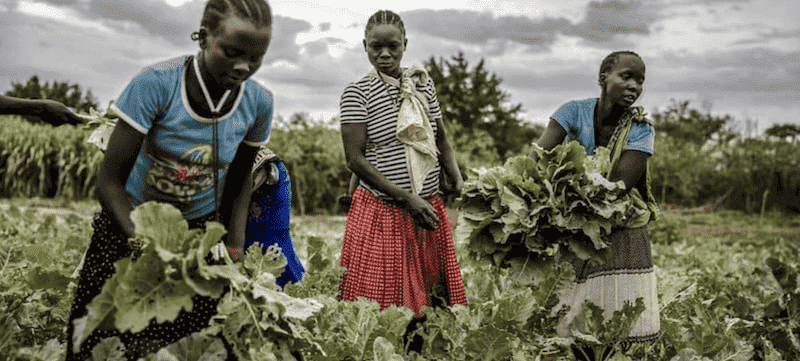
The collaboration with Growing To Give introduces a transformative approach to Caribbean agriculture. By partnering with regional governments, Growing To Give intends to implement water-smart, small-footprint agricultural systems across the islands. These innovative systems are designed to maximize the efficient use of limited space and water resources, crucial in the Caribbean context of small holder farmers.
This initiative is a part of a broader vision to ensure long-term food security and sustainability in the Caribbean. By reducing dependence on food imports, the region aims to build a more resilient agricultural sector that can withstand external shocks and contribute to economic stability. The focus on small-footprint, water-efficient systems also reflects a commitment to environmental stewardship and sustainable development, aligning with global efforts to combat climate change and preserve natural resources.
Growing To Give addresses the challenges of broken supply chains and reliance on imported food through innovative ""Crop Circle" and "Tomato Volcano agricultural technologies. These water-smart, climate-adaptable systems are designed to enhance local food production, reducing dependence on imports. By implementing these technologies, Growing To Give food security projects provide more consistent and sustainable food sources, tackling the issues of food security and environmental sustainability in a changing global climate. These innovations represent a significant stride towards self-reliance in food production, particularly in areas affected by disrupted supply chains and high import costs.
If a nation imports 70% of its food supply and global shipping costs increase by 30%, domestic food inflation does not simply rise by 30%. In highly import-dependent island economies, price impacts are magnified by layered cost structures, currency exposure, and limited domestic substitution.
Imported food prices reflect not only the base commodity cost, but also:
• International freight and fuel surcharges.
• Port handling and insurance fees.
• Currency exchange fluctuations.
• Storage and distribution markups.
• Retail margin compression during supply volatility.
When shipping rates surge, every stage of the import chain absorbs additional cost. If local currencies weaken against the U.S. dollar — the dominant currency for global food trade — the effective cost of imports increases again. The result is a compounding inflation effect, where a 30% rise in shipping expenses can translate into significantly higher retail food prices.
In small island economies with limited domestic production capacity, there is often no immediate local alternative to buffer these shocks. Consumers therefore bear the full weight of global disruptions — whether driven by fuel volatility, geopolitical instability, fertilizer price spikes, or climate-related port disruptions.
This structural vulnerability underscores why increasing domestic agricultural output is not merely a food policy issue, but a matter of economic resilience, currency stability, and national security. Reducing import dependency lowers exposure to external shocks and stabilizes long-term household food costs.

.png)
.png)
.png)

.png)
Copyright Ⓡ 2026. All Rights Reserved. Growing To Give