Phoenix • Dust Storms • Desert Climate
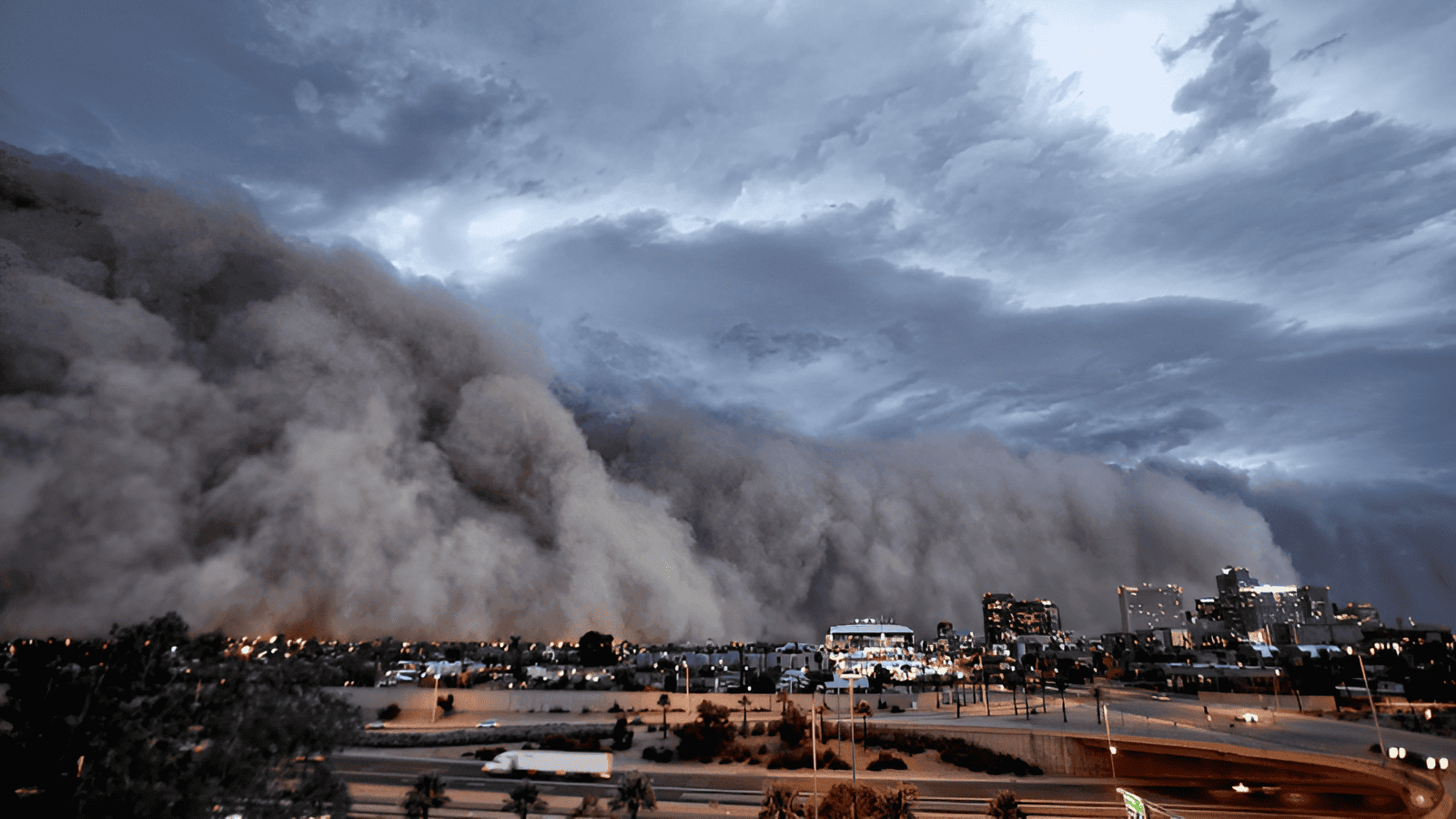
Phoenix Haboobs: Mile-High Dust Storms That Sweep Across the Arizona Desert 🌵
Phoenix haboobs are powerful dust storms driven by monsoon winds, capable of reducing visibility to zero within minutes and impacting health, transportation, and desert ecosystems.
Quick answer: Phoenix haboobs form when collapsing monsoon thunderstorms send strong outflow winds across dry desert terrain, lifting massive walls of dust that can engulf entire areas in minutes.
What Is a Haboob?
A haboob is an intense dust storm caused by powerful thunderstorm outflows in arid and semi-arid regions. These storms create towering walls of dust that can stretch for miles and rise thousands of feet into the atmosphere.
Definition: Haboob comes from the Arabic word “habb,” meaning “blowing,” and refers to a fast-moving wall of dust generated by collapsing thunderstorms.
In the American Southwest, especially around Phoenix, haboobs are closely linked to summer monsoon activity. When rain-cooled air rushes downward from a storm and spreads across the desert floor, it lifts loose soil into a dense, advancing dust front.
Did you know? Large haboobs in Arizona can reach heights of 5,000 to 10,000 feet and stretch over 100 miles wide, making them among the most dramatic weather events in the desert Southwest.
The intensity of a haboob is influenced by land conditions. Drought, soil disturbance, construction activity, overgrazing, and reduced vegetation cover all increase the amount of loose dust available to be carried into the air.
Why Phoenix Experiences Some of the Most Dramatic Haboobs in the United States
Phoenix sits within the Sonoran Desert, one of the hottest and driest regions in North America. During Arizona’s summer monsoon season—typically June through September—intense thunderstorms build rapidly over surrounding mountains and desert basins. When these storms collapse, powerful downdrafts push cool air toward the ground, creating strong outflow winds that sweep across dry terrain.
As these gust fronts move across exposed soil, construction zones, agricultural fields, and drought-stressed landscapes, vast quantities of fine desert dust are lifted into the atmosphere. The result can be a towering wall of dust that stretches for miles across the Valley, sometimes rising thousands of feet high and reducing visibility to near zero in minutes.
Urban expansion, land disturbance, and prolonged drought conditions can increase the amount of loose soil available for uplift. This is one reason Phoenix has become one of the most well-known U.S. cities associated with large, visually dramatic haboobs.
Five Documented Severe Haboobs in Modern History
1) Phoenix, Arizona – July 5, 2011
One of the most widely reported haboobs in U.S. history struck the Phoenix metropolitan area on July 5, 2011. The dust wall reached approximately 5,000 feet high and stretched nearly 100 miles across central Arizona. Visibility dropped to nearly zero in parts of the city, grounding flights at Phoenix Sky Harbor International Airport and causing widespread power outages. National and international media broadcast dramatic images of the storm as it rolled into the city at sunset.
2) Phoenix, Arizona – July 9, 2014
Another powerful haboob hit the Phoenix area in July 2014, again associated with monsoon thunderstorms. The storm reduced visibility on major highways, forced flight delays, and coated homes and vehicles in thick layers of dust. The National Weather Service issued multiple dust storm warnings as conditions rapidly deteriorated across the region.
3) Lubbock, Texas – May 9, 2014
A massive dust storm swept across Lubbock and surrounding areas in West Texas, generating wind gusts exceeding 60 mph. The storm created dangerous driving conditions and led to several traffic accidents. Media reports described the advancing dust wall as resembling a “brown tsunami” across the plains.
4) Sydney, Australia – September 23, 2009
Although technically classified as a large-scale dust storm rather than a classic monsoon-driven haboob, the 2009 Sydney dust storm is one of the most dramatic modern examples. Originating from drought-stricken inland Australia, the storm blanketed Sydney in a thick red haze. Air quality levels reached hazardous levels, flights were disrupted, and the city’s skyline disappeared behind a wall of dust. The event received global media attention and highlighted the link between drought, land degradation, and extreme dust events.
5) Sudan – Multiple Events (e.g., 2018 Khartoum Dust Storm)
In Sudan and across parts of North Africa, severe haboobs are a recurring phenomenon. In 2018, a powerful dust storm engulfed Khartoum, severely reducing visibility and causing disruptions to transportation and daily life. Sudanese haboobs are among the events that originally gave the phenomenon its name, and they continue to be documented regularly in regional weather reporting.
Health Hazards of Haboobs
Haboobs can pose serious health hazards to people exposed to airborne dust and debris. Fine particulate matter (PM10 and PM2.5) can irritate the eyes, nose, and throat, and may worsen respiratory conditions such as asthma, bronchitis, and COPD. In severe cases, dust inhalation can lead to breathing difficulties and hospital visits.
Dust storms may also carry fungal spores, bacteria, allergens, and pollutants. Individuals with pre-existing respiratory conditions, young children, older adults, and those with compromised immune systems are particularly vulnerable.
Driving Safety During a Phoenix Dust Storm: Pull Aside, Stay Alive
Dust storms are especially dangerous for drivers. When a haboob sweeps across highways in the Phoenix metropolitan area, visibility can drop from clear skies to complete whiteout conditions in seconds. Multi-vehicle collisions have occurred during past events when drivers attempted to continue traveling through blinding dust.
Arizona transportation officials promote the “Pull Aside, Stay Alive” safety message. If you encounter a dust wall while driving:
• Exit the roadway completely if possible.
• Pull as far to the right as you can, beyond the travel lanes.
• Turn off your lights so other vehicles do not follow your tail lights.
• Set your parking brake and remain inside your vehicle.
• Wait until visibility clearly improves before returning to the road.
Never stop in the middle of a travel lane. Visibility can be so limited that other drivers may not see a stationary vehicle until it is too late.
Environmental and Agricultural Impacts
Haboobs can significantly impact agriculture and ecosystems. Strong winds may damage crops, strip leaves from plants, and remove nutrient-rich topsoil. Repeated dust events accelerate soil erosion and can contribute to desertification in already fragile environments.
On a larger scale, airborne dust can travel hundreds or even thousands of miles. While some transported dust deposits nutrients in distant ecosystems, it can also influence atmospheric conditions by blocking sunlight and temporarily cooling surface temperatures.
Mitigating the severity of dust storms often involves strengthening land stewardship practices. Re-vegetation, regenerative agriculture, windbreak planting, and soil stabilization efforts can reduce exposed soil and increase resilience against high winds. Healthy soils with strong root systems are far less likely to become airborne during extreme weather events.
Haboobs serve as powerful reminders of the relationship between climate, land management, and community resilience. As drought conditions intensify in some regions due to climate variability, understanding and preparing for dust storms becomes increasingly important for public safety and environmental sustainability.

.png)
.png)
.png)

.png)