Madagascar • Drought • Food Security
From Paradise to Desolation: Madagascar’s Drought and Food Crisis 🦥
Madagascar’s food system is under pressure from prolonged drought, climate variability, and environmental degradation—threatening livelihoods, agriculture, and long-term food security.
Quick answer: Madagascar is facing a severe food crisis driven by drought, shifting rainfall, soil degradation, and reliance on rain-fed agriculture, leading to crop failures and rising malnutrition.
What Is the Madagascar Food Crisis?
Madagascar’s food crisis is a drought-driven humanitarian challenge affecting millions of people, particularly in the southern regions where prolonged dry conditions have disrupted agriculture and reduced food availability.
Definition: Food and water insecurity in Madagascar refers to the inability of communities to reliably access sufficient food and clean water due to environmental stress, climate variability, and fragile agricultural systems.
Known for its extraordinary biodiversity, Madagascar is home to unique ecosystems found nowhere else on Earth. Yet many communities depend on rain-fed agriculture, making them highly vulnerable to climate shifts and environmental degradation.
Did you know? Southern Madagascar has experienced repeated multi-year droughts, severely impacting crops, livestock, and household food access.
Deforestation, soil degradation, and economic vulnerability have intensified the effects of drought, turning what were once productive agricultural areas into regions facing persistent food insecurity.
Addressing this crisis requires integrated solutions, including water-smart agriculture, soil restoration, diversified crops, and community-based resilience programs such as those supported by
Growing To Give.
Madagascar’s situation highlights a broader global challenge: how climate change and environmental degradation are reshaping food systems and increasing the urgency for sustainable, resilient agriculture.
Madagascar's Journey from Drought to Famine — How Did This Happen?
Madagascar’s current food security crisis did not emerge suddenly. Rather, it has developed over decades as environmental pressures, climate variability, and socioeconomic challenges combined to weaken the resilience of rural communities. Much of Madagascar’s agriculture depends on predictable seasonal rainfall. When those rainfall patterns shift, the effects ripple quickly through farming systems that lack irrigation infrastructure, financial safety nets, or large-scale food storage capacity.
Climate variability has played a major role in recent years. Extended drought periods have been linked in part to the El Niño climate cycle, which can alter rainfall distribution across the Indian Ocean region. During strong El Niño events, southern Madagascar often experiences reduced precipitation and prolonged dry conditions. These conditions place immediate pressure on crops, livestock, and water resources.
At the same time, environmental degradation has intensified vulnerability. Deforestation and unsustainable land-use practices have reduced soil stability and moisture retention in many regions. When forests are removed, landscapes become more susceptible to erosion, reduced groundwater recharge, and declining fertility. These environmental changes can magnify the impact of drought, turning short-term rainfall shortages into long-lasting agricultural crises.
Changes in once-reliable rainfall patterns have therefore had cascading consequences. Farmers who historically relied on predictable seasonal rains now face greater uncertainty in planting schedules and harvest outcomes. When crops fail repeatedly, households often sell livestock, tools, or land in order to purchase food. Over time, this loss of productive assets can deepen poverty and make recovery increasingly difficult.
The Impact on Agricultural Production and Food Security
Agriculture is central to Madagascar’s economy and daily life. A large share of the population depends on smallholder farming for both income and subsistence. Most agricultural production in the country remains rain-fed rather than irrigated, which means crop success is closely tied to seasonal rainfall conditions.
Severe drought conditions have had particularly strong impacts on staple crops such as rice, maize, and cassava. These crops form the foundation of household food supplies in many rural communities. When rainfall fails or arrives at the wrong time, harvest yields can decline sharply. Repeated crop failures can leave families without sufficient food for months at a time.
The effects extend beyond individual farms. Reduced harvests weaken local markets, increase food prices, and reduce rural incomes. When food becomes scarce and expensive, vulnerable populations—especially children, pregnant women, and the elderly—face higher risks of malnutrition. Long-term undernutrition can have lasting consequences, including impaired physical development and reduced cognitive capacity, which can perpetuate cycles of poverty and food insecurity.
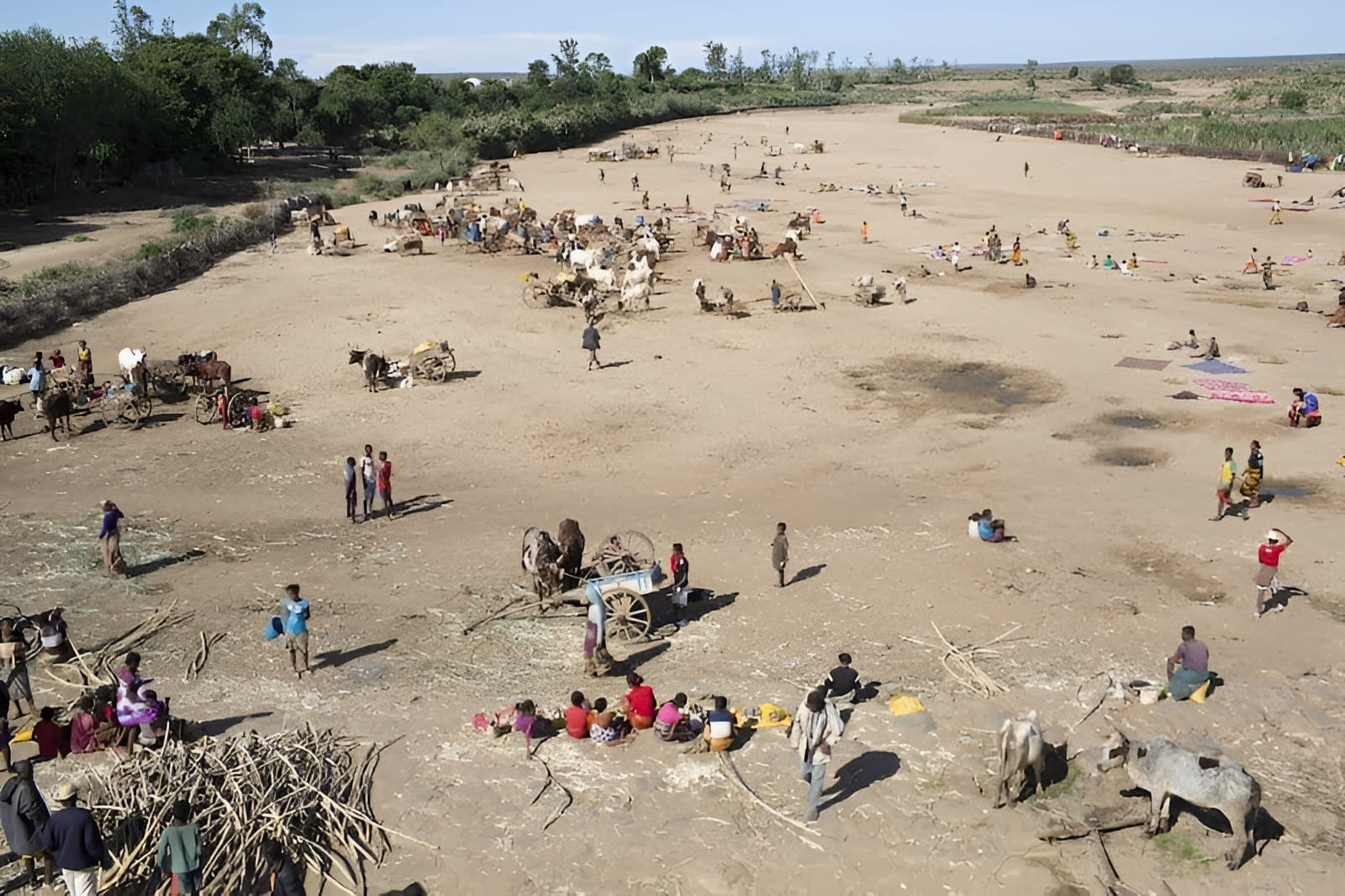
Livestock losses also contribute to the crisis. In drought conditions, grazing lands deteriorate and water sources diminish, forcing pastoral communities to travel farther to sustain their animals. When livestock perish due to dehydration or starvation, families lose both a key food source and a financial safety net.
Parts of the Country Most Affected by Drought and Famine
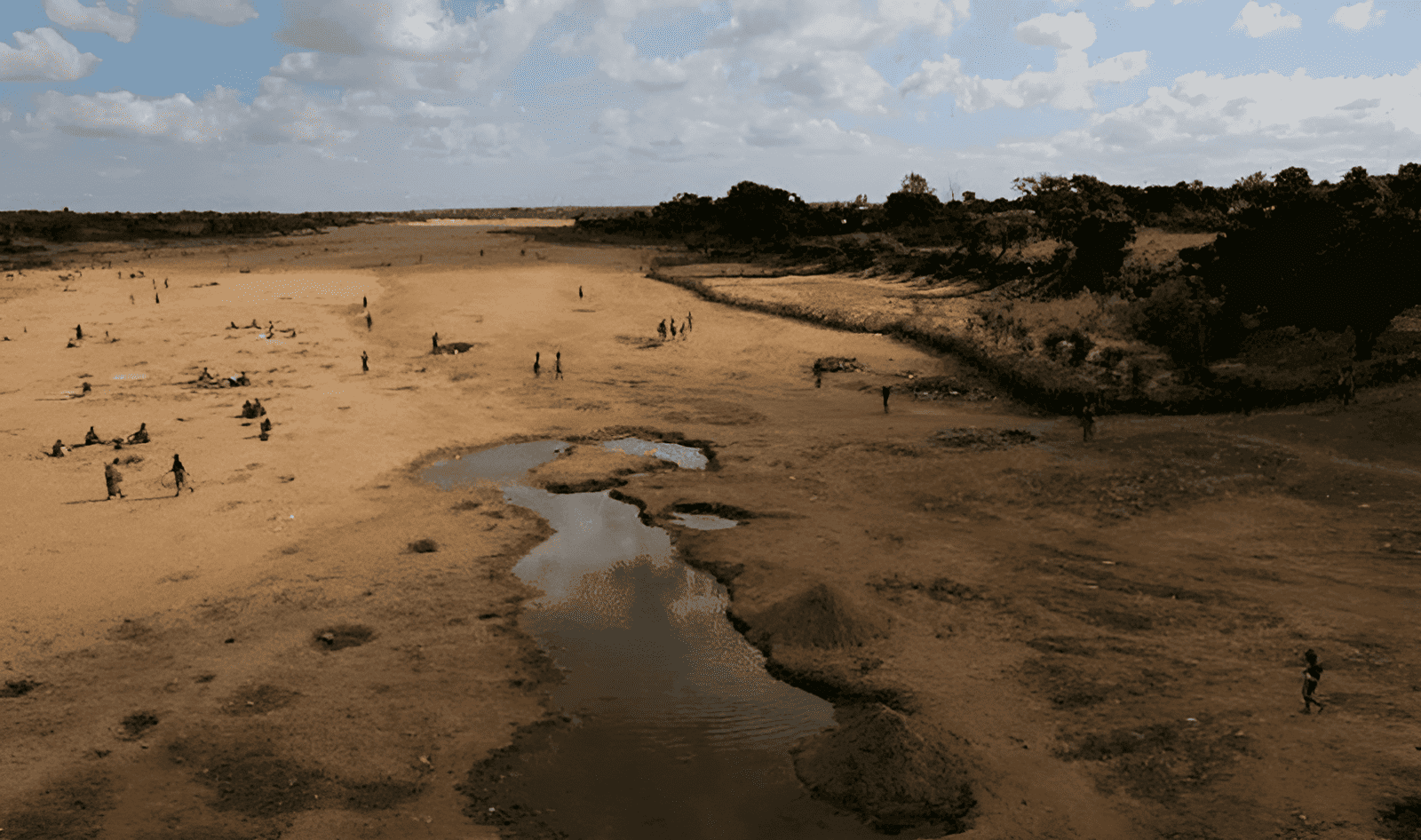
Although drought conditions have affected multiple parts of Madagascar, the southern regions have been particularly vulnerable. Districts such as Ambovombe, Tsihombe, and Beloha have experienced some of the most severe impacts. In these areas, agricultural productivity has declined dramatically due to persistent dry conditions and fragile soils.
These districts have been classified under the Integrated Food Security Phase Classification (IPC) Phase 4, indicating a severe food crisis. In communities where the majority of households depend on small-scale farming, the loss of crops can eliminate both food supplies and household income simultaneously. Without outside assistance, many families struggle to meet basic nutritional needs.
Southern Madagascar is characterized by semi-arid conditions and highly fragile ecosystems. These landscapes are particularly sensitive to rainfall variability. Prolonged drought can rapidly transform productive farmland into barren terrain where crops struggle to survive. Water scarcity also affects daily life, forcing families to travel long distances to collect drinking water or support small livestock herds.
In some areas, drought conditions have also led to internal migration as families seek better economic opportunities in other regions. Population movement can place additional strain on neighboring communities, where infrastructure, food supplies, and employment opportunities may already be limited.
The Role of International Organizations in Providing Aid and Support
In response to the worsening humanitarian situation, international organizations have mobilized to support affected communities. The United Nations has played a central role through agencies such as the World Food Programme (WFP) and the Food and Agriculture Organization (FAO). These organizations work alongside the Malagasy government to provide emergency food assistance, support agricultural recovery programs, and strengthen resilience against future climate shocks.
Emergency food aid has helped stabilize vulnerable communities during acute shortages, while agricultural programs aim to restore productivity and improve long-term sustainability. These initiatives often include distributing drought-tolerant crop varieties, providing farming equipment, and training farmers in soil conservation and water management techniques.
Non-governmental organizations also play an important role in supporting long-term recovery. Organizations such as Growing To Give focus on empowering communities through agricultural education and technology. Their work emphasizes water-smart agricultural technologies, which are designed to increase yields while reducing water consumption—an essential capability in drought-prone environments.
Spotlight on Organizations Like Growing To Give Working to Alleviate Hunger
Community-based agricultural initiatives have become increasingly important in addressing food insecurity in Madagascar. Programs that focus on local training and self-sufficiency often produce longer-lasting results than short-term aid alone. By helping communities develop their own food systems, these initiatives can reduce dependence on external assistance.
Growing To Give works with communities to introduce practical agricultural solutions that increase resilience in drought-affected environments. These programs may include training farmers in efficient irrigation practices, establishing community farms and gardens, and promoting crops that can tolerate harsher growing conditions.
By strengthening agricultural knowledge and providing practical tools, such initiatives help farmers rebuild local food systems and restore productivity. Over time, these efforts can support improved nutrition, increased household income, and stronger community resilience.
Hope for a Brighter Future for Madagascar
Despite the severity of the current challenges, Madagascar’s future is not predetermined. The combined efforts of international organizations, government agencies, and community initiatives are helping to address both immediate humanitarian needs and long-term resilience.
Investments in sustainable agriculture, improved water management, and environmental restoration may help stabilize vulnerable regions. Efforts to address deforestation, rebuild soil health, and promote climate-adapted farming systems can strengthen the country’s capacity to withstand future climate shocks.
Ultimately, Madagascar’s recovery will depend on a combination of environmental stewardship, agricultural innovation, and community empowerment. With sustained collaboration between local communities, international partners, and organizations dedicated to sustainable development, the island nation has the opportunity to transform today’s crisis into a pathway toward a more resilient and food-secure future.

.png)
.png)
.png)

.png)