Permaculture • Regenerative Design • Sustainable Food Systems
Permaculture Principles and Design: Building Sustainable Gardens and Farms 🌿
Permaculture is a nature-based design system that creates productive, resilient gardens and farms by working with ecosystems instead of against them.
Quick answer: Permaculture designs sustainable food systems by mimicking natural ecosystems—integrating soil, water, plants, and biodiversity to produce food while restoring land and reducing inputs.
What Is Permaculture?
Permaculture is a holistic design approach that uses ecological principles to create self-sustaining agricultural systems. By observing how natural ecosystems function, permaculture designs landscapes that are efficient, productive, and resilient over time.
Definition: Permaculture is a design system that integrates land, resources, people, and the environment through mutually beneficial relationships inspired by natural ecosystems.
Core principles include water conservation, soil regeneration, biodiversity, and stacking functions—where each element in the system serves multiple purposes, increasing efficiency and reducing waste.
Did you know? Well-designed permaculture systems can reduce water use by up to 90% while improving soil fertility and increasing long-term yields.
Permaculture principles are widely applied in regenerative agriculture, urban gardens, and community food systems. These approaches complement practices such as
soil health and regenerative agriculture,
vermicomposting with worm castings, and water-smart systems like
rainwater harvesting techniques, helping build resilient, climate-adapted food systems.
Key Takeaways
- Permaculture is a design framework for sustainable agriculture based on natural ecosystem patterns.
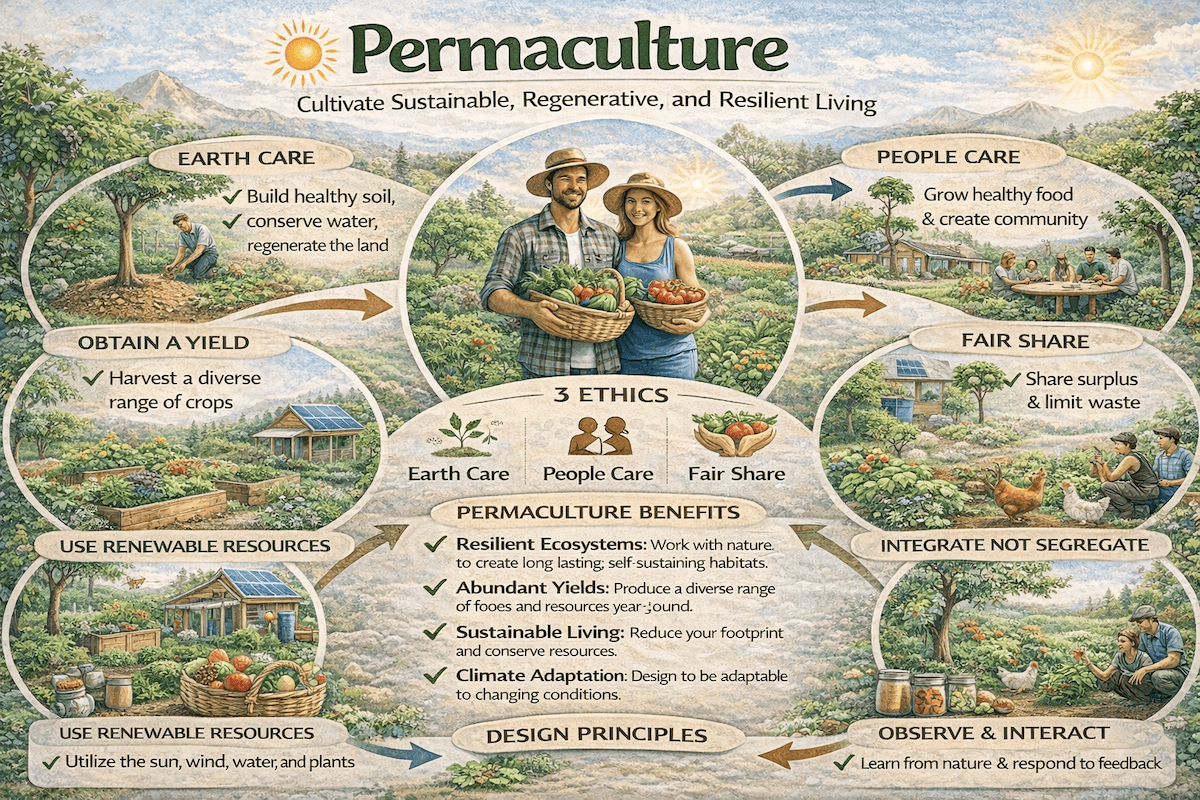
- Its ethics focus on caring for the earth, caring for people, and sharing resources fairly.
- Permaculture design tools include zones, sectors, plant guilds, and edge effects.
- Systems are designed to conserve water, build soil, and reduce dependence on chemicals.
- Permaculture can be applied to farms, backyard gardens, urban spaces, and community food projects.
What Is Permaculture
Permaculture is a holistic land-design philosophy developed in the 1970s by Bill Mollison and David Holmgren. The goal is to create productive landscapes that function similarly to natural ecosystems. Instead of relying heavily on chemical fertilizers or large inputs of energy, permaculture systems emphasize biodiversity, soil health, and natural cycles.
These ideas are increasingly applied in urban environments through projects like
city gardening initiatives and neighborhood food projects such as
community gardens. Even small spaces can be transformed into productive landscapes when ecological principles guide the design.
The Core Ethics of Permaculture
Permaculture design is built on three foundational ethics that guide all decisions within the system.
Earth Care
Healthy soil, clean water, and thriving ecosystems are essential for long-term food production. Permaculture systems prioritize restoring soil fertility, protecting biodiversity, and minimizing pollution.
People Care
Food systems should nourish communities while supporting physical and social well-being. Gardens, farms, and green spaces provide food, education, and opportunities for community collaboration.
Fair Share
Permaculture promotes responsible resource use and encourages sharing surplus food, seeds, and knowledge. This principle supports stronger community food networks and reduces waste.
Key Permaculture Design Principles
Permaculture principles guide how landscapes are designed and managed. These principles encourage working with natural processes rather than trying to dominate them.
Observe and Interact
Careful observation of sunlight, soil conditions, rainfall patterns, and wildlife helps designers understand how a site naturally functions.
Catch and Store Energy
Water harvesting, composting, and soil organic matter capture valuable resources that would otherwise be lost.
Obtain a Yield
Permaculture systems are designed to provide consistent harvests of food, fiber, and other resources while improving ecological health.
Use Diversity
Biodiversity improves resilience. Planting multiple species together reduces pest outbreaks and stabilizes ecosystems.
Produce No Waste
Organic materials are returned to the soil through composting and mulching, turning waste into fertility.
Permaculture designers use several practical tools to organize landscapes efficiently.
Zones
Zones organize a property based on how frequently each area is used. Kitchen herbs and vegetables are placed close to the house, while orchards or grazing areas may be located farther away.
Sectors
Sectors analyze natural forces such as wind, sunlight, water flow, and fire risk. Understanding these patterns helps place gardens, windbreaks, and water systems effectively.
Plant Guilds
A guild is a group of plants that support each other. A fruit tree guild may include nitrogen-fixing plants, pollinator flowers, and groundcovers that protect the soil.
Edge Effect
Ecological productivity often increases where two environments meet. Permaculture designs maximize edges between garden beds, ponds, and forest areas to encourage biodiversity.
Benefits of Permaculture Systems
Permaculture landscapes offer several advantages over conventional agricultural systems.
• Improved soil fertility through compost, mulch, and biological activity
• Greater biodiversity that supports pollinators and wildlife
• Improved water retention and drought resilience
• More stable food production across changing climates
Permaculture vs Conventional Agriculture
| Feature |
Permaculture Systems |
Conventional Agriculture |
| Soil Fertility |
Built through compost, mulch, and biological activity |
Often dependent on synthetic fertilizers |
| Biodiversity |
High plant diversity and ecological balance |
Often monoculture crops |
| Water Use |
Rain capture, swales, and soil moisture retention |
Heavy irrigation demand |
| Pest Control |
Natural predator balance and plant diversity |
Often chemical pesticides |
| Long-Term Sustainability |
Improves ecosystem health over time |
May degrade soil without careful management |
Permaculture in Gardens and Farms
Permaculture principles can be applied to landscapes of any size. Backyard gardeners often combine raised beds, fruit trees, compost systems, and pollinator plants to create small food forests. Larger farms integrate orchards, water retention features, and diversified crop rotations.
These approaches complement pollinator-supporting landscapes like
bee-friendly gardens and resilient soil systems built through
vermiculture and composting. By focusing on soil biology and natural water cycles, permaculture systems become increasingly productive over time.
Frequently Asked Questions
What is permaculture in simple terms?
Permaculture is a design approach for creating sustainable farms and gardens that mimic natural ecosystems. It focuses on soil health, water conservation, and biodiversity to produce food while improving environmental health.
What are the three ethics of permaculture?
The three core ethics are Earth Care, People Care, and Fair Share. Together they guide responsible stewardship of land and resources.
Can permaculture work in small gardens?
Yes. Even small urban spaces can use permaculture principles through container gardens, vertical growing systems, composting, and diverse plantings.
How does permaculture improve soil?
Permaculture improves soil by adding organic matter through compost, mulch, and plant diversity. These practices increase soil microbes, improve water retention, and build long-term fertility.
Is permaculture the same as organic farming?
Permaculture includes organic farming practices but goes further by focusing on ecosystem design, biodiversity, water management, and long-term sustainability.

.png)
.png)
.png)

.png)