Hawaiian gardens combine native plants, canoe crops, and tropical fruits to create sustainable, biodiversity-rich landscapes that support food production, cultural preservation, and island resilience.
Hawaiian Gardens: Native Plants, Tropical Crops, and Sustainable Island Gardening 🌺
Hawaiian gardens blend native plants, tropical crops, and traditional stewardship practices to create resilient, productive ecosystems that support biodiversity and local food systems.
Quick answer: Hawaiian gardens grow native plants, tropical fruits, and traditional crops using sustainable, ʻāina-based practices that protect biodiversity, conserve resources, and support local food production.
What Are Hawaiian Gardens?
Hawaiian gardens are diverse, living ecosystems that combine native island plants, Polynesian-introduced crops, and modern sustainable gardening practices. These gardens reflect a deep connection to the land, known as ʻāina, where caring for the environment is essential to sustaining life.
Definition:ʻĀina is a Hawaiian concept meaning “that which feeds,” emphasizing the relationship between people and the land as a source of nourishment and responsibility.
Hawaii’s tropical climate allows for year-round growing of fruits, vegetables, and ornamental plants. However, the islands’ isolation also makes them especially vulnerable to invasive species, habitat loss, and environmental change.
Did you know? Hawaii is home to one of the highest rates of endemic plant species in the world, meaning many plants found there exist nowhere else on Earth.
Hawaiian gardens play a vital role in preserving native species, supporting pollinators, and strengthening local food systems. Community-driven efforts, including
community gardens, help protect biodiversity while providing fresh, locally grown food across the islands.
Native Plants That Define Hawaiian Gardens
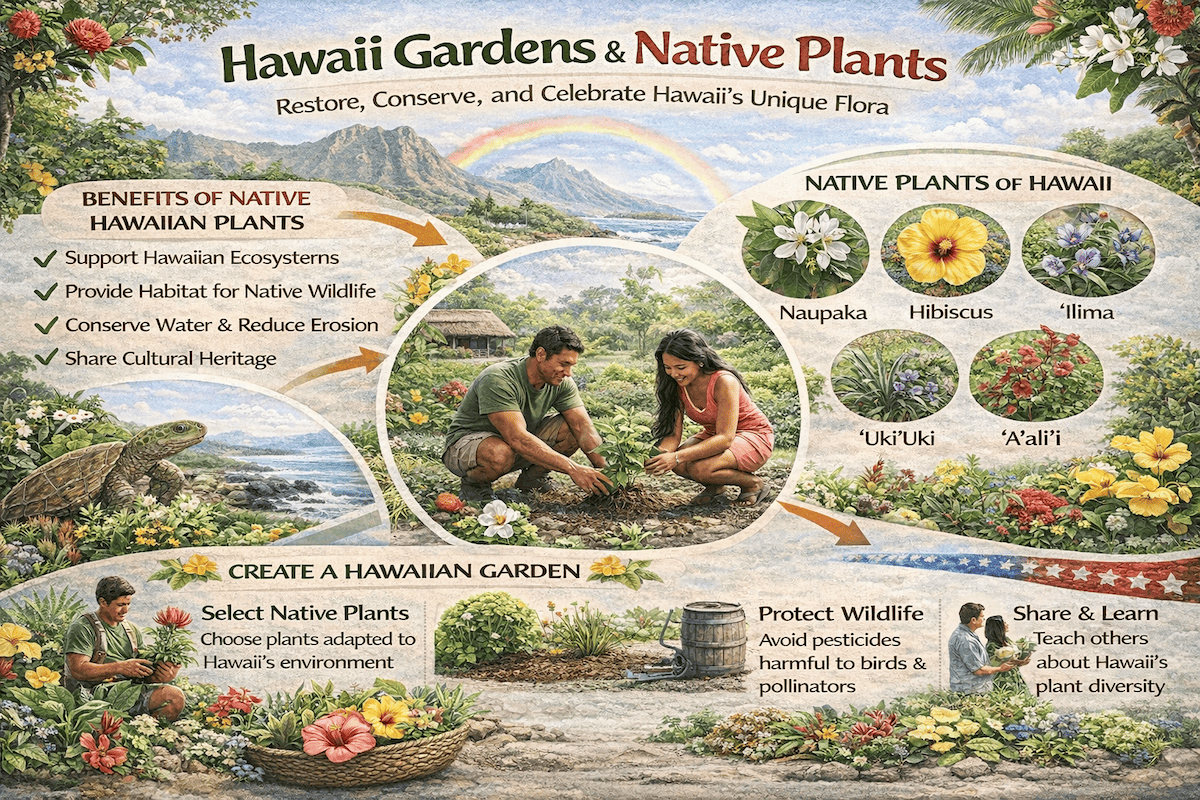
Many Hawaiian gardens are shaped by the plants that evolved within the islands’ unique volcanic landscapes, rainfall zones, and coastal environments. Native Hawaiian plants are more than ornamental features. They support biodiversity, provide habitat for pollinators and birds, and help preserve the ecological identity of the islands. Because they are adapted to Hawaii’s climate, many native species can thrive with less water, fertilizer, and intervention than imported ornamentals.
Some of the best-known native plants used in Hawaiian gardens include hibiscus, naupaka, ʻilima, and ʻukiʻuki. These plants are valued not only for their beauty, but also for their role in supporting local ecosystems and cultural traditions. In many settings, native plants are paired with carefully selected food crops to create gardens that are both functional and ecologically appropriate.
Using native plants in home landscapes, school gardens, and community spaces can also reduce the spread of invasive ornamentals that compete with island species. Native plant gardening is one of the most practical ways residents can contribute to conservation while creating landscapes that feel rooted in place.
These plantings work especially well when combined with healthy soil practices, mulching, and water-wise garden design. In this way, Hawaiian gardens can become living examples of biodiversity, restoration, and sustainable island stewardship.
Vegetable Plants to Grow in Hawaiian Gardens
Most vegetable plants that can be grown on the mainland can also be cultivated in Hawaii due to the state’s rich volcanic soil and tropical climate. This includes common crops such as tomatoes, peppers, and cucumbers. But Hawaii's warm climate also allows for the growth of vegetables that are more unusual in the continental U.S.
One of these is taro, or 'kalo' in Hawaiian, a staple crop that's been cultivated in the islands for centuries. The starchy root is traditionally used to make 'poi', a nutritious Hawaiian dish. Another unusual vegetable is the 'ulu', or breadfruit. The large, round fruit is incredibly versatile and can be used similarly to potatoes when it's not fully ripe.
Hawaii is also known for its sweet potatoes, specifically the Okinawan purple sweet potato. This vibrant, deeply colored tuber is not just visually striking but also rich in antioxidants and flavor.
Share This Infographic
You are welcome to share this infographic on your website or blog.
Please include a link back to this page as the source.
Nurturing Endangered Plants in a Hawaiian Garden
Hawaii is home to more endangered species than any other U.S. state, largely due to its isolation and unique habitats. Several endangered plants can be grown in local gardens to contribute to their preservation.
One example is the Alula (Brighamia insignis), often referred to as the 'Cabbage on a Stick.' This unusual plant is considered critically endangered, and few are left in the wild. It can grow well in pots, making it ideal for residential gardens.
The Silversword (Argyroxiphium sandwicense) is another endangered plant, found only on the slopes of Maui's Haleakalā volcano. While its natural habitat is restricted, with careful cultivation, it can be grown in home gardens.
Canoe Plants in Traditional Hawaiian Agriculture
Many of the crops still found in Hawaiian gardens today were originally brought across the Pacific by Polynesian voyagers. These important species are known as canoe plants because they traveled with the first settlers and became essential to life in the islands. Canoe plants shaped traditional Hawaiian agriculture, food systems, and cultural practices, and they remain central to many gardens today.
Important canoe plants include kalo (taro), ʻulu (breadfruit), banana, coconut, sugarcane, sweet potato, and gourds. These plants were carefully selected for their usefulness as staple foods, medicines, fibers, and materials for daily life. Their cultivation reflected deep knowledge of land, water, weather, and seasonal cycles.
Traditional Hawaiian agriculture was highly sophisticated and based on long-term stewardship of natural systems. Loʻi kalo systems, for example, used flowing water to cultivate taro while supporting soil fertility and community food production. This approach aligns closely with many ideas discussed in traditional agriculture and cultural preservation, where farming is understood not just as production, but as a relationship between people, place, and responsibility.
Including canoe plants in modern Hawaiian gardens helps preserve cultural heritage while also supporting food resilience and education. These crops connect present-day gardeners with centuries of agricultural knowledge and offer a powerful reminder that sustainable gardening in Hawaii has deep historical roots.
Fruits of Hawaii: The Tropical Delights of a Hawaiian Garden
Hawaii's tropical climate allows for a stunning variety of fruits to be cultivated. Many are commonly found in mainland markets, like bananas, pineapples, and mangoes. However, the islands also grow more exotic fruits that are rarely seen on the mainland.
The starfruit or carambola, is a juicy, sweet-sour fruit that, when sliced, reveals a star-shaped cross-section. Another example is the rambutan, a fruit that resembles a hairy lychee and has a deliciously sweet and tangy flavor. Additionally, Hawaii's rich volcanic soil enables the cultivation of coffee plants, particularly in the Kona region.
Community Gardens in Hawaii
Community gardens in Hawaii play a critical role in preserving the islands' unique flora, promoting sustainable agriculture, and bringing communities together. The Kōkua Kalihi Valley Comprehensive Family Services manages one of the largest community gardens in the state, the Ho'oulu 'Āina Nature Preserve. The garden is home to a vast range of native plants and vegetables and serves as an educational hub for sustainable farming practices.
Another is Māla‘ai, the Culinary Garden of Waimea Middle School. This outdoor learning center emphasizes the importance of 'aina-based (land-based) learning and is recognized as a model for garden-based education in Hawaii.
Invasive Species that Threaten Hawaiian Gardens
While Hawaii's biodiversity is a source of pride, it's also at risk from invasive plant species. Invasive species like Miconia (Miconia calvescens) and Albizia (Falcataria moluccana) threaten the natural biodiversity and can cause significant ecological disruption.
Efforts to control these invasive species are ongoing and include public education, biological control methods, and removal programs. Residents are encouraged to plant native or non-invasive species in their gardens to help preserve Hawaii's unique ecosystem.
Hawaii's gardens reflect the islands' vibrant culture, rich history, and unique biodiversity. Through careful cultivation, preservation of endangered species, and the promotion of community gardens, Hawaii's residents continue to honor their environment while providing a model for sustainable gardening practices in a tropical climate.
Did you know?
Hawaii contains more endangered plant species than any other U.S. state, making native plant preservation a critical part of sustainable Hawaiian gardening.

.png)
.png)
.png)

.png)