POWER OF PLANTS
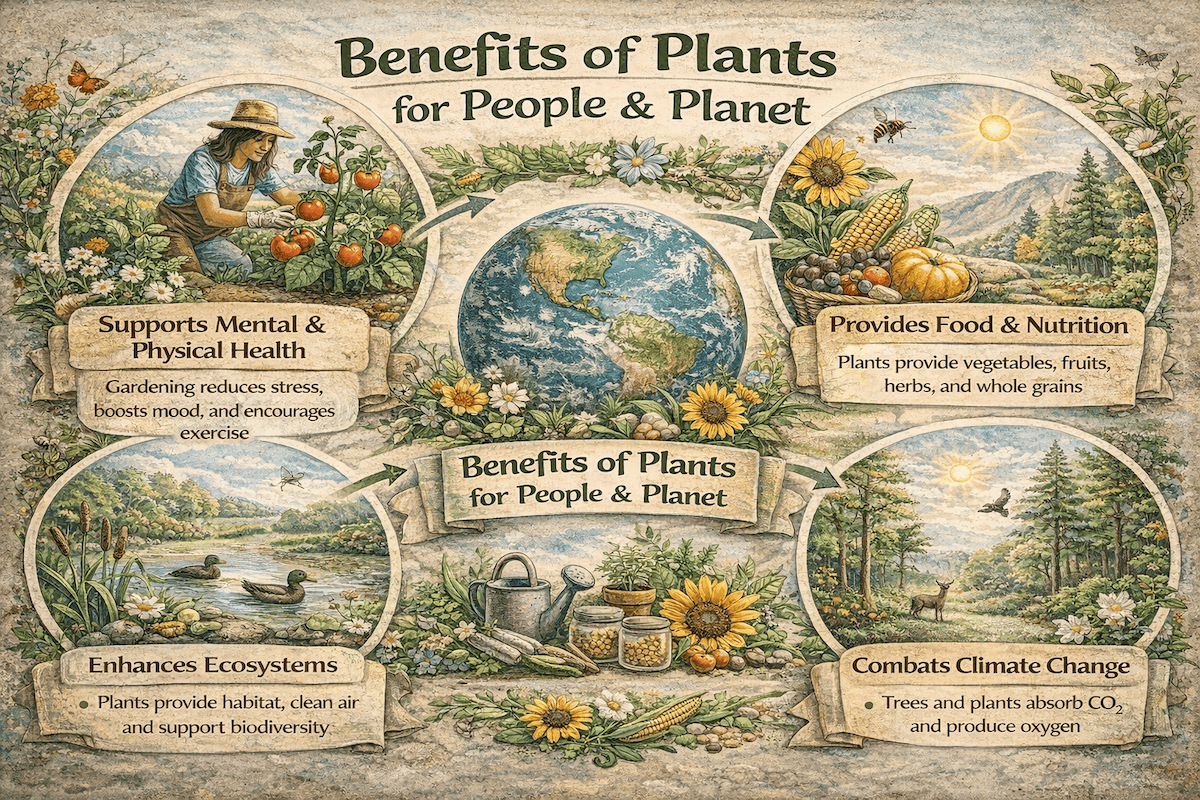
Benefits of Plants for People and Planet
Discover how plants provide oxygen, food, climate regulation, soil health, and biodiversity support—making them essential for life on Earth.
EXPLORE
POWER OF PLANTS
Discover how plants provide oxygen, food, climate regulation, soil health, and biodiversity support—making them essential for life on Earth.
EXPLORE
Plants • Ecosystems • Life on Earth
A single plant can support life, improve soil, clean air, and contribute to food systems—demonstrating how small actions in nature create powerful, far-reaching impact.
Quick answer: A single plant provides oxygen, food, habitat, soil stability, and climate benefits, making it a foundational building block of ecosystems and human life.
Plants are essential to life on Earth. From vast forests to a single potted plant, each one contributes to the balance of ecosystems by producing oxygen, storing carbon, and supporting biodiversity.
Definition: Plants are living organisms that use sunlight, water, and carbon dioxide to produce energy through photosynthesis, forming the foundation of most food chains on Earth.
The impact of a single plant is vast—it can provide nourishment, shelter wildlife, improve soil structure, regulate temperature, and contribute to water cycles and climate stability.
Did you know? One mature tree can produce enough oxygen to support two to four people each day while also absorbing carbon dioxide from the atmosphere.
Plants support nearly every aspect of life—from the air we breathe to the food we eat. They also provide medicinal compounds, raw materials, renewable energy sources, and psychological benefits that improve human well-being.
Whether growing in natural ecosystems or urban environments, each plant plays a role in stabilizing soil, retaining moisture, supporting underground microbial life, and creating habitats for countless species.
This interconnected power makes plants one of the most important forces on Earth—demonstrating how even a single plant can contribute to healthier ecosystems, stronger communities, and a more sustainable future.
Plants play a vital role in the planet’s food chain, serving as a natural food source for a wide range of organisms, including humans. From fruits and vegetables to grains and nuts, plants provide essential nutrients necessary for survival and growth. They offer a rich source of vitamins, minerals, and fibers that promote good health and prevent disease.
Not only do plants provide food directly, but they also support life indirectly. They form the basis of the food chain in just about every ecosystem on earth, providing nourishment to herbivores, which in turn serve as food for carnivores. In agriculture, plants like clover and alfalfa enrich the soil with nutrients, promoting the growth of other crops. In essence, without plants, life as we know it would cease to exist.
In addition to serving as a natural food source, plants play a pivotal role in oxygen production. Through the process of photosynthesis, plants convert carbon dioxide and sunlight into oxygen and glucose. This oxygen is released into the atmosphere, providing the vital element needed for the survival of most organisms on Earth.
Oxygen is not only essential for respiration but also plays a key role in energy production within living cells. Without oxygen, life on Earth would be impossible. Furthermore, oxygen plays a significant role in maintaining the Earth's temperature thereby creating the ozone layer that shields the planet from harmful ultraviolet radiation.
Plants are not just food providers and oxygen producers; they are also natural healers. For centuries, humans have harnessed the medicinal properties of plants to cure ailments and promote health. From the willow tree that gives us aspirin to the aloe vera plant that soothes burns, plants offer a plethora of healing solutions.
Many pharmaceutical drugs are derived from plant compounds, highlighting their significant role in modern medicine. Moreover, the use of plants in traditional medicine systems worldwide underscores their importance in health and wellness. Today, research continues into the medicinal properties of plants, offering hope for new treatments and cures.
Plants also work tirelessly to clean the environment by absorbing pollutants and carbon dioxide. Through the process of photosynthesis, plants absorb carbon dioxide, a major greenhouse gas, thus helping to mitigate the negative effects of climate change. Plants also absorb and store harmful pollutants from the air, soil, and water, thereby detoxifying our environment.
Plants also play a role in reducing noise pollution. They act as sound barriers, absorbing and deflecting noise, thus contributing to a quieter and more serene environment. This function is particularly crucial in urban areas, where noise pollution can be detrimental to both human health and wildlife.
Plants contribute significantly to soil stabilization and the creation of subterranean ecosystems. Their roots bind the soil together, preventing erosion and maintaining soil structure. Plants also enrich the soil with organic matter, promoting the growth and diversity of beneficial microorganisms. Subterranean ecosystems, supported by plants, play a pivotal role in nutrient cycling. These ecosystems break down organic material, converting it into nutrients that plants can absorb and use. In this way, plants and the organisms that live in the soil work together to maintain the health of just about every ecosystem on the planet.
Another key benefit of plants is their role in water conservation. Plants help soil retain moisture, preventing water loss through runoff or evaporation. Their roots create channels in the soil, allowing water to infiltrate deeper layers, thereby improving groundwater recharge and the filling of underground aquifers. When plants transpire, they release water vapor into the atmosphere. This process not only helps cool the environment but also contributes to the formation of clouds and precipitation, thus playing a crucial role in the water cycle.
Plants also serve as habitats, supporting a diverse array of wildlife. They provide shelter and breeding grounds for many species, from insects to birds and mammals. Forests, grasslands, and even aquatic plants form ecosystems that sustain countless species, contributing to the planet's biodiversity.
Plants provide food for many wildlife species, forming the basis of most food chains. They also offer protection from predators, create nesting sites, and even act as a source of medicinal remedies for some animals. Without plants, wildlife diversity would be significantly reduced. In fact, the extinction of many insect and animal species can be directly related to the clearing of forests and their plants.
Beyond their ecological contributions, plants also have significant industrial importance. They serve as a source of raw material for various industries, including textiles, paper, and construction. Timber from trees is used in building houses, while fibers from plants like cotton and flax are used to produce clothing. Some plants are a source of essential oils used in perfumery and cosmetics, latex for rubber production, and even natural dyes and other plants are used to produce biofuels, providing a renewable source of energy that can help reduce dependence on fossil fuels.
The potential of plants as a source of renewable energy is immense. Bioenergy, derived from plants, is a sustainable and renewable energy source that can help mitigate greenhouse gas emissions. Biomass, the organic material from plants, can be converted into electricity, heat, and biofuels. Energy crops like switchgrass and miscanthus, as well as crop residues, forest residues, and even algae, are potential sources of bioenergy. As the world grapples with the challenges of climate change, the role of plants in providing renewable energy becomes even more crucial.
Plants have a significant impact on the climate. By absorbing carbon dioxide, a major greenhouse gas, plants help mitigate climate change. Forests, in particular, act as carbon sinks, storing vast amounts of carbon that would otherwise contribute to global warming. Plants influence local climates by regulating temperature and humidity. They provide shade, reducing the heat absorbed by the ground, and release water vapor through transpiration, cooling the surrounding air. These effects can be particularly noticeable in urban areas, where plants can help mitigate the heat island effect.
Plants play a crucial role in regulating rainfall and preventing erosion. Their leaves intercept rain, slowing its impact on the ground and reducing the potential for erosion. The root systems of plants also help hold the soil in place, further preventing erosion and landslides.
Furthermore, plants contribute to the water cycle, which in turn influences rainfall patterns. Through the process of transpiration, plants release water vapor into the atmosphere, contributing to cloud formation and precipitation. In this way, plants not only regulate rainfall but also help ensure the availability of fresh water.
Beyond their physical and environmental benefits, plants also offer psychological benefits. Research has shown that interaction with plants can reduce stress, improve mood, and enhance cognitive function. The mere presence of plants in indoor environments can improve air quality, increase humidity, and reduce noise levels, contributing to a sense of well-being and productivity.
Gardening and plant care can provide a sense of achievement and a connection to nature, promoting mental health. In healthcare settings, the inclusion of plants and green spaces can promote healing and reduce patient stress. Indeed, the psychological benefits of plants are as profound as their physiological ones.
Plants are undeniably one of nature's miracles, offering a multitude of benefits that sustain life on Earth. From providing food and oxygen to offering medicinal properties, absorbing pollutants, and even providing psychological benefits, the power of a single plant is indeed vast and far-reaching. Every plant, in its unique way, contributes to the health and wellbeing of the planet and its inhabitants. Embracing and protecting these green wonders is not just a choice, but a necessity for our survival and prosperity. They hold the key to our future.

.png)
.png)
.png)

.png)
Copyright Ⓡ 2026. All Rights Reserved. Growing To Give