Uganda • Food Security • Community Partnerships
Growing to Give × Kichini Gardeners: Empowering Children Through Food and Agriculture 🦍
This collaboration brings sustainable gardening, nutrition education, and hands-on food production to children in Uganda—building resilience, skills, and healthier communities.
Quick answer: Growing to Give and Kichini Gardeners are working together to improve food security for children in Uganda through sustainable gardens, education, and community-based agriculture.
About the Uganda Collaboration
Growing to Give (G2G) has partnered with Kichini Gardeners to launch “Sowing the Seeds of Resilience and Empowerment for Uganda’s Children,” a project focused on improving nutrition and food access through sustainable garden systems.
Definition: Community-based food security initiatives are programs that empower local populations to grow, access, and manage their own food through education, sustainable agriculture, and shared resources.
Uganda—often called the “Pearl of Africa”—has fertile soils and strong agricultural traditions, yet many communities still face food insecurity due to economic, environmental, and infrastructure challenges.
Did you know? Smallholder farms produce over 80% of Uganda’s food supply, making local agriculture education critical for long-term food security.
This initiative focuses on establishing outdoor fruit and vegetable gardens using
Root Tube Gardens, providing children with practical skills in growing food, improving nutrition, and understanding sustainable agriculture.
By combining innovative growing systems with grassroots community leadership, the partnership helps children develop lifelong skills while strengthening household food security and community resilience.
Through education, mentorship, and hands-on experience, the project creates a ripple effect—empowering children to grow food, share knowledge, and contribute to healthier, more self-reliant communities.
About Kichini Gardeners
Kichini Gardeners is a unique environmental and educational organization located in the central region of Uganda. Their mission is to help children build meaningful connections with people, food systems, and the natural environment while learning the principles of sustainable gardening and environmental stewardship. Through hands-on education programs, Kichini Gardeners encourages children to become leaders in building greener communities and a healthier planet.
The organization envisions a world where every child understands the value of safe, nutritious food and develops a lifelong relationship with the environment through gardening. By teaching children how food is grown and how healthy soil, water conservation, and biodiversity contribute to thriving ecosystems, Kichini Gardeners nurtures both environmental awareness and practical life skills.
Founded by Irene Nagudi, a Kofi Annan Changemaker in 2021, Kichini Gardeners was given its name by the children Irene teaches. The name reflects the spirit of community ownership and youth leadership that defines the organization. Irene’s vision is rooted in the belief that children can become powerful advocates for change within their families and communities.
Many of the children participating in Kichini Gardeners programs come from rural areas or densely populated urban settlements where malnutrition is a persistent challenge. Families often rely on inexpensive staple foods such as cassava flour and beans, which provide calories but lack essential vitamins and minerals needed for healthy growth and development. By introducing children to the practice of growing leafy greens, herbs, and vegetables, Irene’s programs help diversify diets and improve overall nutrition.
Her approach focuses not only on teaching children how to garden but also on helping them become ambassadors for healthier living. Children are encouraged to bring their new knowledge home, teaching their parents how to grow vegetables in small spaces and explaining the importance of balanced nutrition. Teachers are also engaged in the process, helping integrate environmental awareness and food-growing skills into school learning experiences. As Irene often says, “If we do something, we can change the world.”
Project Overview
In May 2024, our partnership received a generous grant from the Blooming Prairie Foundation. Both Growing to Give and Kichini Gardeners are deeply grateful for this support, which allows us to expand educational gardening programs and introduce resilient food-growing systems to communities in Wakiso, Uganda. The funding helps provide materials, seeds, training resources, and garden infrastructure needed to support children and families participating in the project.
The initiative focuses on teaching children between the ages of 6 and 14 how to grow healthy food using sustainable gardening methods that can be replicated in small spaces around homes, schools, and community centers. Many of these children live in areas where access to fresh produce is limited and families often depend on simple staple diets. By learning how to grow vegetables themselves, children gain both immediate nutritional benefits and long-term skills that can support household resilience.
Through the implementation of Crop Circle Gardens, Kichini Gardeners will help children supplement their meals with nutritious food grown at their homes and schools. These innovative gardens are designed to maximize food production while minimizing water and fertilizer use. The circular design improves soil health, increases planting density, and makes efficient use of small growing spaces.
Children participating in the program will learn a range of sustainable food production techniques including soil building, composting, water conservation, and organic pest management. The project emphasizes growing without chemicals and encourages natural methods that protect soil life and biodiversity. By working directly with living soil and plants, children gain a deeper appreciation for the natural processes that sustain healthy ecosystems.
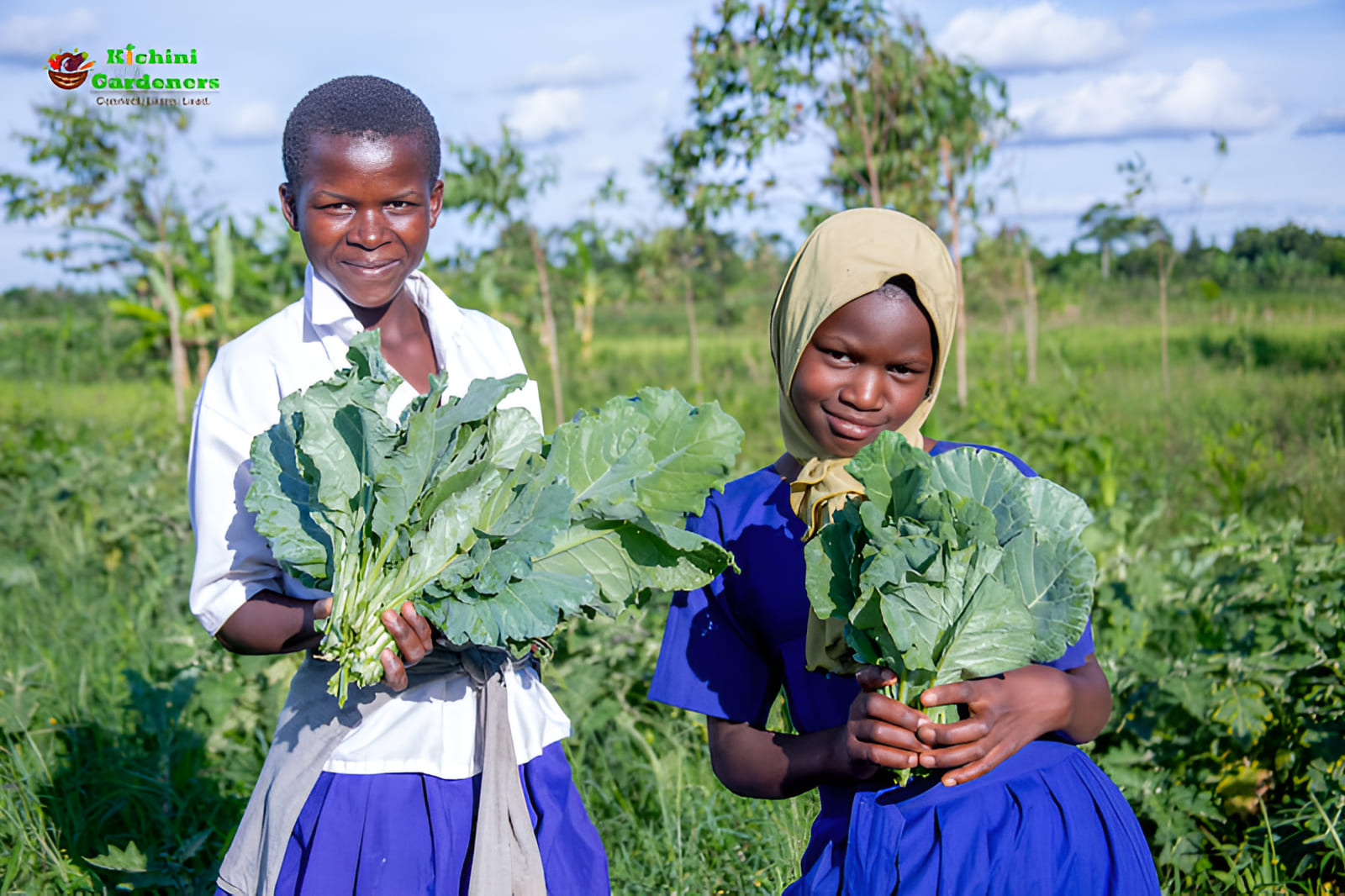
The gardens will include a variety of nutritious crops that children already enjoy eating, such as collard greens, Swiss chard, and native vegetables including buga and nakati. These nutrient-rich greens provide essential vitamins and minerals that support healthy growth. As children harvest their crops, they will be encouraged to share their produce with family members and neighbors, reinforcing a spirit of generosity and community cooperation.
Beyond improving nutrition, the project also introduces children to the idea that agriculture can be an exciting and meaningful career path. By seeing how sustainable gardening systems can produce abundant food even in small spaces, children begin to imagine new possibilities for entrepreneurship, environmental leadership, and community development.
Project Goals and Impact
This project aims to address multiple challenges simultaneously, including food insecurity, environmental degradation, and limited access to agricultural education. By teaching children practical skills in sustainable food production, the program helps build long-term resilience within the Wakiso community.
Children and their families will gain knowledge about how healthy soil supports plant growth, how water can be conserved through thoughtful garden design, and how local food production can reduce dependence on expensive imported foods. As families adopt these practices, communities become more self-reliant and better prepared to adapt to changing environmental conditions.
The educational component of the program also strengthens environmental awareness. Children learn how climate change affects rainfall patterns, soil fertility, and crop productivity. By understanding these connections, they become motivated to care for the land and protect natural resources. The project encourages young people to see themselves as stewards of the environment and leaders in shaping a sustainable future.
Over time, the gardens established through this program will serve as demonstration sites where neighbors and other schools can learn from the children’s success. This creates a multiplier effect in which knowledge spreads organically through the community, inspiring more families to grow their own food and improve their nutrition.
How You Can Help
Support from individuals, organizations, and corporate partners can dramatically expand the reach of this initiative. Donations help provide low water-use garden systems that can be placed directly into the soil or installed in large bags filled with soil and seeds. These systems allow children to grow healthy greens even in areas with limited land or challenging growing conditions.
With your support, Growing to Give will send Crop Circle Gardens to participating communities, provide training materials that teach sustainable gardening methods, and send funds to Kichini Gardeners for the purchase of seeds, transplants, garden tools, and watering cans. These resources ensure that each child has the opportunity to actively participate in growing food.
Together we can equip entire schools and neighborhoods in Kampala and surrounding rural areas with the knowledge and tools needed to grow nutritious food locally. Every contribution helps plant the seeds of resilience, health, and environmental stewardship in the next generation.
Programs like the Uganda school garden initiative demonstrate how small, practical solutions can address some of the world’s most pressing challenges. By empowering children with the knowledge and tools to grow food, communities can strengthen resilience, improve nutrition, and protect natural ecosystems for future generations.
For large donations or corporate partnerships, please contact Siobhan Shaw, Co-founder, at admin@growingtogive.org.

.png)
.png)
.png)

.png)