$10,000
Community Sponsor
Supports a Food Ambassador project in a local community, with recognition on the Growing To Give website, a link to the sponsor’s website, and appropriate program and social-media acknowledgement.
TOMATO VOLCANOES
High-efficiency container gardening using a Tomato Volcano to grow more food in less space using less resources.
EXPLORE
Food Ambassadors • Tomato Volcanoes • Community Food Production
👉 $10,000 Sponsorship → 1 Fully Installed Tomato Volcano → High-Visibility Demonstration → Ongoing Food Production
The Program in One Sentence
The Food Ambassador Program places highly visible Tomato Volcano growing installations with healthcare organizations, universities, schools, nonprofits, and community partners to demonstrate how substantial fresh-food production can be achieved in a compact footprint while engaging the public, supporting local food security, and showcasing water-efficient growing technology.
The focus of the Food Ambassador program is the Tomato Volcano — a compact, crop-focused growing system designed to become both a productive food source and a highly visible demonstration of what is possible with innovative local food production. Each installation is intended to attract attention, spark conversation, and give partner organizations a practical way to connect food security, sustainability, education, and community engagement in one highly visible project.
Growing To Give works with each Food Ambassador partner to support site selection, installation, setup, training, and ongoing technical guidance so the Tomato Volcano can become a long-term part of the host organization's community and food-security efforts.
Current National Campaign
Growing To Give is inviting a select group of healthcare organizations, universities, community organizations, companies, and other partners to join our growing national Food Ambassador cohort through the placement of a Tomato Volcano installation at no cost to the partner.
Growing To Give provides the complete Tomato Volcano system and works with the host organization to establish the project, support successful operation, and connect the harvest with an appropriate community use. Participating organizations are also recognized as Food Ambassador Partners on the Growing To Give website.
THE GROWING SYSTEM
The Tomato Volcano is a compact, high-capacity growing system designed to produce an unusually large amount of fresh food from a very small footprint. Powered by Root Tube Growing Technology, the system gives plants access to a larger, more stable growing environment than a conventional container while efficiently delivering water and nutrients directly into the root zone.
Rather than growing a single plant in a traditional pot, a Tomato Volcano can support multiple productive plants growing together, creating a dense canopy that can become several feet wide and tall. Depending on the installation and growing season, it can be planted with tomatoes, peppers, herbs, and other compatible food crops.
Its compact footprint makes the Tomato Volcano especially useful in places where a conventional garden may be difficult or impossible — including healthcare campuses, universities, schools, courtyards, patios, rooftops, community organizations, and other highly visible public spaces.
For the Food Ambassador Program, the Tomato Volcano serves two purposes at once: it is a working food-production system and a high-visibility demonstration of what can be accomplished with innovative, water-efficient growing technology. Each installation is intended to grow food, attract attention, start conversations, and demonstrate a practical approach to strengthening local food security.

Tomato Volcano installations can be placed at healthcare campuses, universities, schools, nonprofit facilities, courtyards, patios, rooftops, community spaces, and other highly visible locations where conventional gardens may be difficult or impractical. Proposed sites are reviewed for sunlight, water access, accessibility, routine care, visibility, and installation requirements.
The goal is not simply to place another garden. Each Food Ambassador site is designed to become a working demonstration of local food production, water-efficient growing, and community food security that visitors, patients, students, staff, and community members can see in action.
WHY ONE INSTALLATION CAN MATTER BEYOND ONE SITE
The Food Ambassador Program is about more than placing individual growing systems. Each Tomato Volcano is designed to become a visible and productive source of fresh food while demonstrating what can be accomplished within a remarkably small growing footprint.
Participating organizations can use the harvest at their own location, share fresh tomatoes with patients, students, employees, volunteers, food banks, senior communities, community organizations, or other local food-security partners.
The Multiplying Effect
As more Tomato Volcanoes are sponsored and placed, individual growing sites can become part of a wider community food network. Healthcare organizations, schools, universities, nonprofits, companies, and community partners can demonstrate practical local food production, share harvests, engage their communities, and help inspire additional Food Ambassador locations.
WHAT CAN YOU GROW?
The Tomato Volcano can be planted with virtually any indeterminate tomato variety suited to the local climate and growing season. Indeterminate tomatoes continue growing, flowering, and producing fruit over an extended period, making them especially well suited to the Tomato Volcano’s large root environment and elevated plant-support structure.
That means a Tomato Volcano can be used to grow a wide range of tomato types, from large slicing tomatoes to clusters of small, sweet fruit. Depending on the goals of the partner site, the installation can focus on one variety or combine several compatible indeterminate varieties within the same growing system.

Indeterminate varieties are the primary focus of the Tomato Volcano because they continue extending their vines and producing new flowers and fruit as the season progresses. With adequate sunlight, nutrition, water, support, and growing time, the plants can develop into a large productive canopy surrounding the installation.
Varieties may include traditional red tomatoes as well as yellow, orange, pink, purple, striped, green-when-ripe, and multicolored heirloom types. Partners can select tomatoes based on local climate, flavor, harvest goals, educational value, community preference, or simply the visual impact they want the Food Ambassador installation to create.
A Food Ambassador site might choose large beefsteak tomatoes for slicing, prolific cherry tomatoes for frequent harvesting, colorful heirlooms for education and public engagement, or a mixture of several indeterminate varieties. The Tomato Volcano provides the growing platform; the tomato selection can be tailored to the needs and interests of each partner location.
Actual plant size, harvest volume, and length of production will vary by tomato variety, climate, season length, sunlight, plant care, and local growing conditions.
ONE SYSTEM. MORE WAYS TO GROW.
The Tomato Volcano can also be used with its elevated stainless-steel support-frame attachment to grow more than tomatoes, allowing the same growing unit to function as an Urban Harvester.
This configuration is ideal for crops that benefit from the same vertical support structure, including beans, cucumbers, peppers, and eggplant.
This gives Food Ambassador partners the flexibility to grow a variety of crops while using the same core growing system.
For example, as cucumber plants vine and grow over the trellis, the fruit hangs freely over the perimeter edge, helping improve fruit quality compared with cucumbers conventionally grown at grade.
The same trellis structure can also be quickly converted into a temporary hothouse by draping a protective cover over the frame, helping protect beans, peppers, and eggplant from cold temperatures potentially extending the growing season in colder climates by as much as two months.
Similarly, a sun-reflective cover can be draped over the structure to create a temporary shade house, reducing heat stress and protecting plants growing beneath the trellis from the intense desert sun.
The Food Ambassador program is a community food-security and education initiative created by Growing To Give to demonstrate how productive, water-efficient food growing can be integrated into healthcare campuses, universities, schools, community organizations, and other highly visible public locations. Through Food Ambassador partnerships, Growing To Give provides innovative growing systems, installation support, training, technical assistance, and ongoing program guidance while helping participating organizations produce fresh food, engage their communities, and demonstrate practical approaches to local food production and resource conservation.
Growing A National Network
Highly visible food-growing demonstrations connecting healthcare, education, food security, sustainability, and community engagement.
Growing To Give is a U.S. 501(c)(3) nonprofit organization.
Food Ambassador partnerships are being developed with healthcare, university and community organizations in Arizona, Washington, Vermont and New York.
The Tomato Volcano creates a compact, highly visible growing installation designed to demonstrate how significant food production can begin in a remarkably small footprint.
Food produced at participating locations can support patients, food banks, seniors, students and community food-security programs.
Root Tube Growing Technology included with every Tomato Volcano and Spiral Garden is designed to use substantially less water and fertilizer while supporting productive growing in places where traditional gardens may be impractical.
Every Food Ambassador location is designed to be more than a garden. It becomes a working demonstration of local food production, water conservation and community food security that other organizations and communities can see, understand and replicate.
Growing To Give is building a national network of healthcare, academic and community partners demonstrating innovative, sustainable food-growing solutions in the communities they serve.
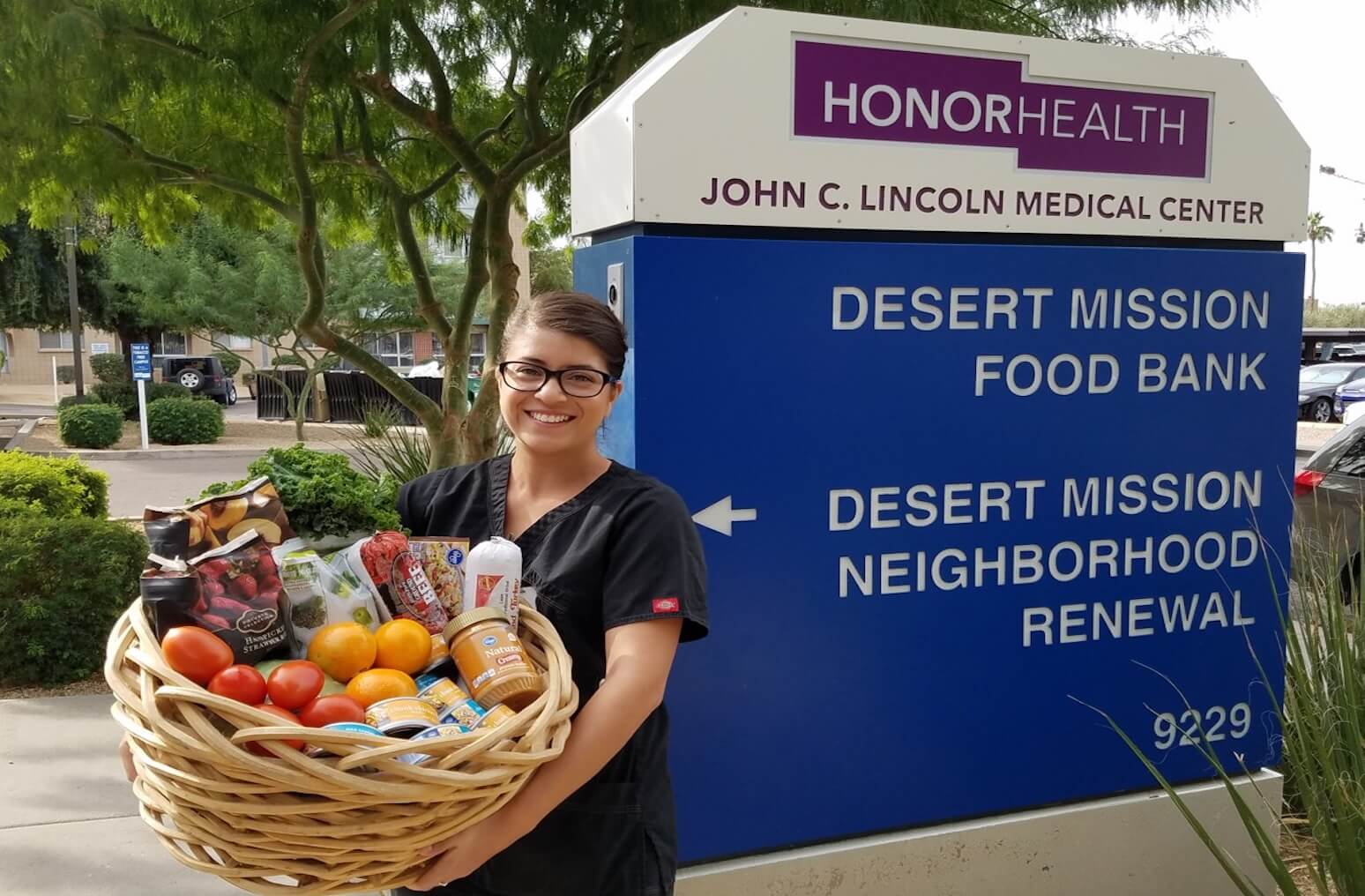
HonorHealth Desert Mission — Food Ambassador partner in Arizona.
Corporate & Community Partnerships
Corporate and community sponsorships help Growing To Give expand the Food Ambassador program through healthcare organizations, universities, community partners, and other highly visible public locations. Sponsorship support helps fund the growing systems, installation, transportation, site preparation, training, ongoing technical support, and expansion of new Food Ambassador locations.
Sponsors may support a Food Ambassador installation in a specific community or help Growing To Give expand the program across multiple partner locations and regions.
$10,000
Supports a Food Ambassador project in a local community, with recognition on the Growing To Give website, a link to the sponsor’s website, and appropriate program and social-media acknowledgement.
$25,000
Provides expanded support for Food Ambassador installations and program development across multiple partner locations, with broader recognition as the program grows within a region.
$50,000
Supports the continued expansion of the Food Ambassador program into new healthcare, academic, and community locations, with prominent recognition as a national program partner.
Contact Growing To Give to discuss community, regional, and national partnership opportunities.
Discuss a Sponsorship Opportunity →Growing Together

EXPANDING COMMUNITY FOOD PRODUCTION
For Food Ambassadors that want to grow substantially more fresh food for their community, Growing To Give can expand beyond the Tomato Volcano with a Spiral Garden.
The Spiral Garden is a larger-scale food-production system designed around a continuous spiral growing pattern. Instead of dividing growing space into conventional straight rows, the spiral creates a long, highly productive planting area within a compact overall footprint.
The result is a visually striking community garden that can produce significant quantities of fresh vegetables while also serving as a demonstration of efficient land use, water conservation, sustainable food production, and community food security.

The Spiral Garden is designed to dramatically increase productive growing area while reducing the amount of land required. Compared with conventional row-style growing, the system can provide up to four times the food production in approximately half the space.
The spiral layout concentrates a large amount of productive growing space into one highly efficient garden.
The continuous spiral design can produce substantially more food without requiring a traditional large rectangular field.
The growing system is designed to deliver water efficiently into the active root zone rather than watering large areas of unused soil.
Nutrients can be concentrated where plants use them instead of being broadly distributed across conventional growing areas.
The compact spiral layout reduces the amount of ground that must be prepared, watered, fertilized, weeded, and maintained.
By producing more food with less land, water, fertilizer, and ongoing maintenance, the technologies become more sustainable.
A Spiral Garden can support a broad mix of productive crops, allowing each Food Ambassador site to tailor the garden to its climate, growing season, community needs, and harvest goals.
From Demonstration To Community Food Production
A Tomato Volcano can introduce a community to what is possible in a small growing footprint. A Spiral Garden takes that same Food Ambassador concept to a much larger scale — producing fresh food for food banks, healthcare programs, schools, senior communities, nonprofit organizations, and other local food-security efforts.
Beyond increased production, the spiral creates a distinctive and highly visible community feature. It can turn an underused piece of land into a productive food-growing destination, create opportunities for volunteer participation and education, demonstrate water-efficient agriculture, and provide a continuing source of fresh produce for the surrounding community.

.png)
.png)
.png)

.png)
Copyright Ⓡ 2026. All Rights Reserved. Growing To Give