Urban Food Systems • Edible Landscapes • Food Parks
Edible Landscapes in Cities: How Food Parks Transform Urban Spaces 🌳
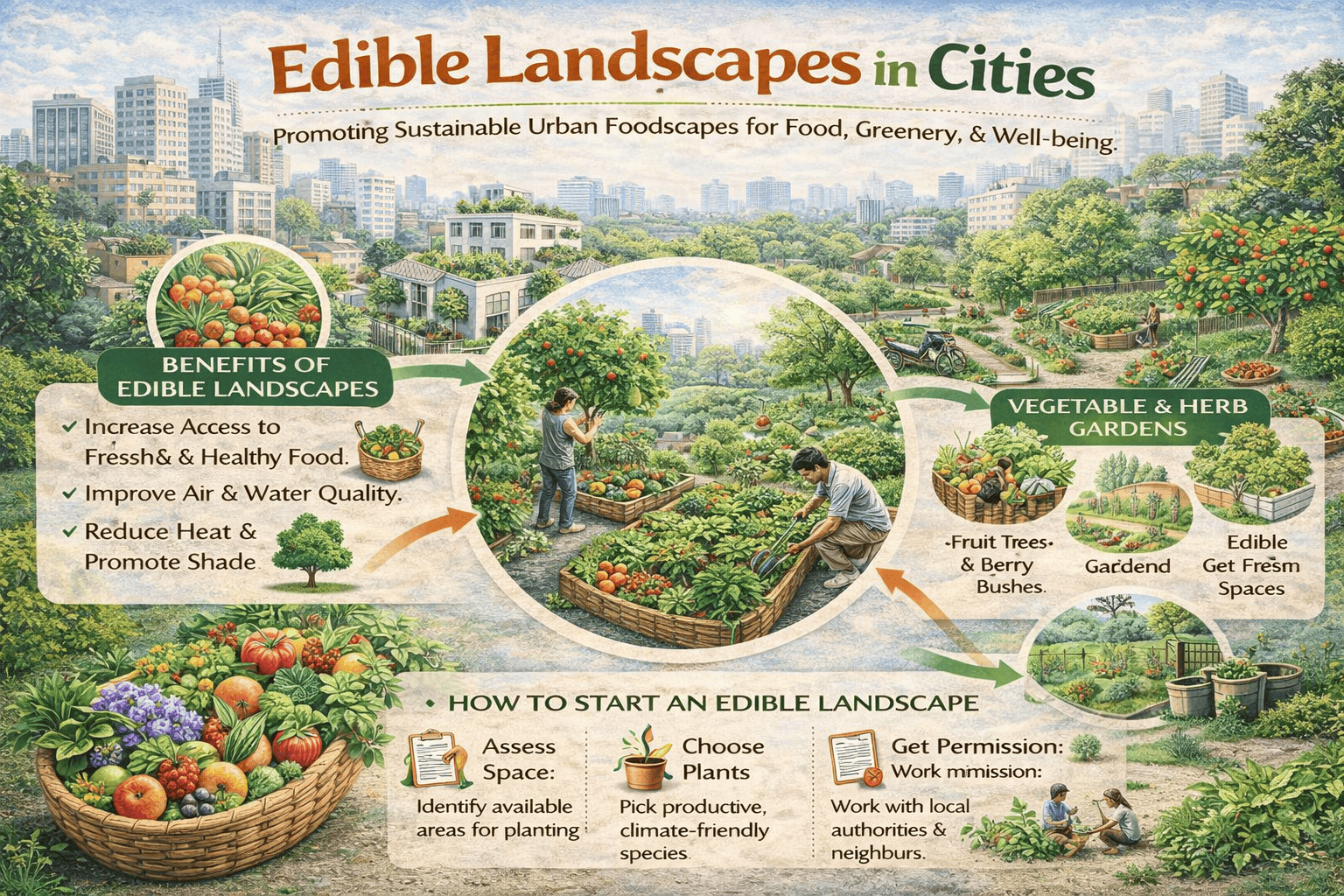
Edible landscapes turn cities into productive food systems—transforming parks, neighborhoods, and public spaces into sources of fresh, local food and community connection.
Quick answer: Edible landscapes grow fruit trees, vegetables, and herbs in public spaces, while food parks expand this concept into community hubs where people can grow, harvest, cook, and share food.
What Is an Edible Landscape?
An edible landscape is a garden or public space designed to produce food instead of ornamental plants. In cities, these landscapes can include fruit trees, vegetable beds, herbs, pollinator plants, and
community gardens integrated into parks, schools, and neighborhoods.
Definition: Edible landscape refers to the intentional design of spaces that combine food production with ecological and community benefits, replacing purely decorative plantings with productive systems.
Food parks take this concept further by transforming entire urban spaces into interactive food systems where people can grow, harvest, cook, and share food together.
Did you know? Well-designed urban food systems can produce significant amounts of fresh food per acre, helping cities reduce food deserts and improve access to healthy nutrition.
Imagine walking through a city park where people are not only relaxing, but also tending gardens, harvesting fruit, and preparing meals. These food parks create vibrant, multifunctional spaces that support both community well-being and local food production.
Unlike traditional parks, food parks are designed as living systems—combining agriculture, education, and social connection. They provide opportunities for people of all ages and backgrounds to participate, learn, and benefit from shared food resources.
As cities face rising food costs, limited access to fresh produce, and social challenges such as homelessness, edible landscapes offer a practical, scalable solution—transforming underused land into productive, community-driven food systems.
Addressing Homelessness: The Role of Food Parks
Homelessness is a complex issue with many causes, but at its core, it's about a lack of resources. Food parks offer a new way to provide those resources. They provide homeless individuals with access to fresh vegetables and herbs, but their benefits extend far beyond just feeding the hungry.
Food parks provide a sense of community and purpose for those struggling with homelessness. They offer a safe and welcoming space where individuals can contribute to a community project, learn new skills and interact with others. Being part of a food park can help to rebuild self-esteem and confidence, which are often eroded by the experience of being homeless.
But food parks aren't just about providing immediate resources. They're about creating long-term solutions to homelessness. By providing opportunities for training and education, food parks can help homeless individuals to build the skills and knowledge they need to escape the cycle of poverty.
Food Parks: A Training Ground for Youth
Food parks are an excellent platform for educating the younger generation as well. They provide a hands-on experience of food production, from storing and planting seeds to harvesting crops. This not only teaches youth about where their food comes from but also instills in them a respect for the environment and the importance of sustainable practices.
Moreover, food parks can help to address issues of youth unemployment. They provide opportunities for young people to gain practical experience, develop their skills and potentially gain qualifications. This can help them to find employment and build a successful future.
Creating Edible Landscapes through Food Parks
Food parks are quite literally creating edible landscapes. They are transforming expansive areas of mowed grass into productive gardens filled with a variety of fruits, vegetables, herbs and more. This not only provides a source of fresh, healthy food but also creates a beautiful and engaging environment for people to enjoy.
Edible landscapes also have numerous environmental benefits. They increase biodiversity, improve soil health, reduce the urban heat island effect and more. They also provide habitat for beneficial insects, such as bees and birds, supporting local wildlife.
Moreover, creating edible landscapes can help to address issues of food security. By producing food locally, communities can reduce their dependence on imported food, making them more resilient to changes in food prices or availability.
Why Cities Are Turning Lawns into Food Gardens
Across the world, cities are beginning to rethink how public land is used. Vast areas of urban land are covered with ornamental grass that requires water, mowing, and maintenance but provides little ecological or social value. By replacing unused lawns with edible landscapes—fruit trees, vegetables, herbs, and pollinator plants—communities can transform underutilized land into productive green spaces that feed people while improving the environment.
One major reason cities are embracing edible landscapes is the growing challenge of food deserts. Many urban neighborhoods lack convenient access to fresh fruits and vegetables, forcing residents to rely on highly processed foods from convenience stores. Community gardens and food parks can help close this gap by bringing healthy food production directly into neighborhoods where it is needed most.
Municipal governments are also increasingly supporting edible landscaping as part of broader sustainability and climate action programs. Cities are recognizing that urban agriculture can reduce food transportation distances, improve soil health, capture carbon, and increase biodiversity. Initiatives such as community orchard programs, school gardens, and neighborhood food forests are becoming important tools for creating greener, more resilient cities.
Beyond food production, edible landscapes strengthen urban resilience. Local food systems help communities adapt to supply disruptions, rising food prices, and climate impacts. When cities integrate food production into parks, vacant lots, and public spaces, they create landscapes that not only beautify neighborhoods but also provide nutrition, education, and economic opportunities for residents.
As more cities adopt these approaches, edible landscapes are transforming the role of urban green spaces—from decorative lawns into productive ecosystems that nourish both people and the planet.
Urban Agriculture Fact
More than 55% of the world’s population now lives in cities, and urban agriculture projects such as food parks and edible landscapes are increasingly recognized as important tools for improving food security and community resilience.
Food Parks and Native Wildlife: Rebuilding Natural Ecosystems
Food parks play a crucial role in rebuilding natural ecosystems. By incorporating native plants and creating habitats for local wildlife, they contribute to biodiversity and help to restore balance to the urban environment.
Food parks can serve as a sanctuary for native wildlife, providing food, shelter and breeding sites. This can help to support populations of birds, insects, and other animals, many of which are under threat from urban development.
Moreover, food parks can play a role in educating the public about native wildlife and the importance of conservation. They can serve as a living classroom, where people can learn about the local ecosystem and how they can contribute to its preservation.
The Contribution of Food Parks to Soup Kitchens and Food Banks
Food parks can make a significant contribution to soup kitchens and food banks, providing them with a reliable source of fresh, nutritious food. This not only improves the quality of the food available to those in need but can also help to reduce the cost of providing meals.
By growing their own food, soup kitchens and food banks can ensure a steady supply of fresh produce all year round while also contributing to healthier urban environments. This can help to diversify their offerings, providing a wider range of healthy options for those they serve.
Moreover, food parks can provide opportunities for those using soup kitchens and food banks to get involved in food production. This can help to empower them, giving them the skills and confidence to grow their own food and take control of their nutrition.
Examples of Cities Turning Lawns into Food Gardens
There are many successful food park projects around the world, demonstrating the potential of this innovative concept. For example, the Incredible Edible Project in Todmorden, UK, has transformed public spaces throughout the town into edible landscapes, providing food for the community and attracting visitors from around the world.
In Detroit, the Detroit Food Park project has turned vacant lots into productive gardens, providing fresh food for local residents and training opportunities for young people. The project has also helped to revitalize the local area, improving the environment and boosting community spirit.
These projects and many others like them demonstrate the power of food parks to transform urban spaces, address homelessness, and create a more sustainable and inclusive food system.
The future of food parks is full of possibilities. As the concept continues to gain traction, we can expect to see more and more food parks popping up in cities around the world. These spaces have the potential to make a significant contribution to addressing homelessness, improving urban environments, and creating more sustainable and resilient food systems.
However, there are also challenges that need to be overcome. These include securing land for food parks, obtaining the necessary funding, and ensuring the long-term sustainability of these projects. There may also be regulatory hurdles to overcome, as current planning and zoning laws do not always accommodate food parks.
Despite these challenges, the potential benefits of food parks are significant. They offer a new way to use urban spaces that benefits not only individuals but also communities and the environment. With the right support and resources, food parks could play a major role in addressing some of the most pressing issues of our time.

.png)
.png)
.png)

.png)