Growing To Give: Community Gardens & Raised Bed Systems
Growing To Give helps communities design, build, and retrofit community gardens using
raised beds, water-efficient irrigation, and regenerative growing systems that increase yield,
reduce labor, and strengthen local food security.
A community garden is a shared space where people grow food or plants together, either in individual plots or as a collective effort. Common types include plot-based gardens, shared production gardens, educational gardens, and donation-focused gardens that support local food security. These spaces transform unused land into productive areas that strengthen community ties, improve access to fresh food, and promote sustainable growing practices.
🌱 Quick answer: Start a community garden by securing land, building raised beds, installing water-efficient irrigation, and organizing planting and maintenance systems to grow more food with fewer inputs.
Growing To Give helps communities design, build, and retrofit community gardens using
raised beds, water-efficient irrigation, and regenerative growing systems that increase productivity,
reduce labor, and improve long-term sustainability.
• Organize community interest and form a leadership team.
• Secure land with sunlight, safe soil, and water access.
• Design raised beds, pathways, and irrigation layout.
• Install water-efficient drip or subsurface systems.
• Create garden rules, planting schedules, and maintenance plans.
When designed with raised beds and efficient irrigation systems, community gardens can reduce water use by up to 50–70% while increasing productivity and long-term sustainability.
With a strong emphasis on sustainability and maximizing efficiency, Growing To Give equips local gardens and urban farms with the tools and knowledge needed to produce more food while using fewer resources, including water and fertilizer.
To address the critical issue of maintenance, including the constant need for weeding, Growing To Give introduces cost-effective and time-saving methods for plant cultivation. This support ensures that community-centered farm and garden projects thrive as local food production hubs, while also becoming self-sustaining educational and communal spaces within urban landscapes.
Building and Retrofitting Raised Garden Beds
Across the country, there are countless raised garden beds—some newly built, others aged and weathered over time. Many of these beds have fallen into disrepair, their structure compromised by shifting roots and soil. Turning over soil in these beds is often a labor-intensive process, as mechanical rototilling is either impractical or entirely impossible.
These enclosed soil spaces frequently require constant "need to weed", and watering plants efficiently is often a challenge. Additionally, overcrowding of plants—caused by attempts to maximize growth within the confined soil space—can lead to suboptimal results.
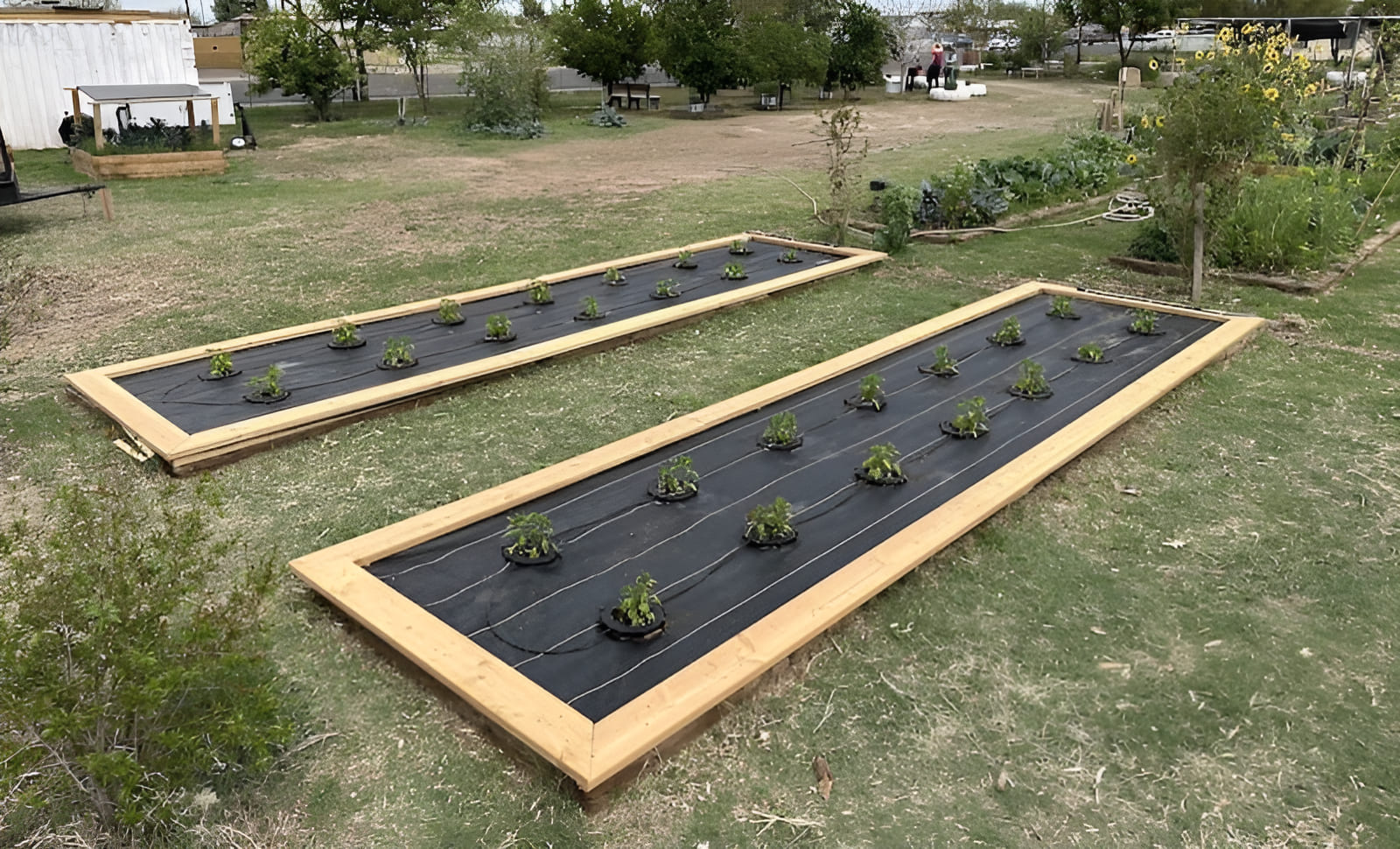
With support from our sponsors, Growing To Give transforms traditional garden beds by retrofitting them with innovative Crop Circle Gardens. These circular gardens, approximately 12 inches in diameter and 8 inches deep, are embedded in the soil contained within the raised wooden bed.
The remaining soil surface is covered with an agricultural-grade weed prevention material, exposing only the Crop Circle Gardens. These gardens are connected to a shared drip irrigation system, regulated by a timer to ensure precise watering. A wooden seat frames the garden bed, and a removable passthrough allows for easy removal of debris swept off the cover.
Plants are grown exclusively within the Crop Circle Gardens, leaving the surrounding space open for improved air circulation. This promotes temperature regulation, healthy plant growth, and optimal flowering and fruiting conditions.
For example, in a 20 x 5-foot raised bed with 100 square feet of surface area, only 15% (15 square feet) is used for planting, leaving 85% of the soil free to support a beneficial below-soil ecosystem. Once retrofitted, the soil no longer requires turning, and weeding is almost entirely eliminated.
A raised garden bed equipped with a “drill-don’t-till” Crop Circle Garden system uses 90% less water and 95% less fertilizer while supporting a wide variety of plants.
Sponsor a Tomato Volcano
Tomatoes are the most popular choice for community gardens and urban farms, prized not only for their widespread appeal but also for their profitability. Over the years, their immense popularity has led to the development of hundreds of varieties, all originating from heirloom types cultivated more than sixty years ago.
Tomato plants are generally classified into two main types: determinate and indeterminate. Determinate tomatoes grow to a fixed, genetically predetermined height, ranging from under a foot to just over two feet, making them ideal for container gardening.
Indeterminate tomato plants, on the other hand, produce vines that continue to grow several feet in length until the first frost. These sprawling vines often require structural support, typically provided by vertical wire trellises.
However, vertical growing methods have inadvertently reduced tomato yields, sometimes cutting production by more than half. When allowed to sprawl naturally across the ground, similar to cucumber plants, indeterminate tomatoes tend to produce more blooms and fruit, significantly boosting their yield.
Tomato Volcanoes provide a revolutionary way to grow tomatoes by offering natural plant support that encourages uninterrupted vine growth, resulting in increased flowering and fruit production.
Instead of forcing tomato plants to grow vertically on trellises, a Tomato Volcano creates a parabolic surface for vines to grow over. This surface replicates the natural, undulating ground that indeterminate tomato plants would use if left to grow freely.
For cherry tomatoes, this method could mean the difference between harvesting hundreds of tomatoes or thousands.
Urban community gardens and farms, tucked within city landscapes, face the universal challenge of limited growing space. Urbanization and development have largely replaced traditional tractor-pull farms, leaving only small plots of land, often no larger than a standard building lot. Despite these constraints, cities are home to hundreds of these compact plots, collectively presenting a significant opportunity to develop a thriving urban agricultural presence.
Crop Circle Market Gardens have transformed urban farming by dramatically improving production efficiency. These innovative gardens effectively double the yield per acre in limited spaces, making them a game-changer for urban agriculture. By turning small, often overlooked plots into highly productive areas, Crop Circle Market Gardens not only feed local communities but also create opportunities for financial sustainability.
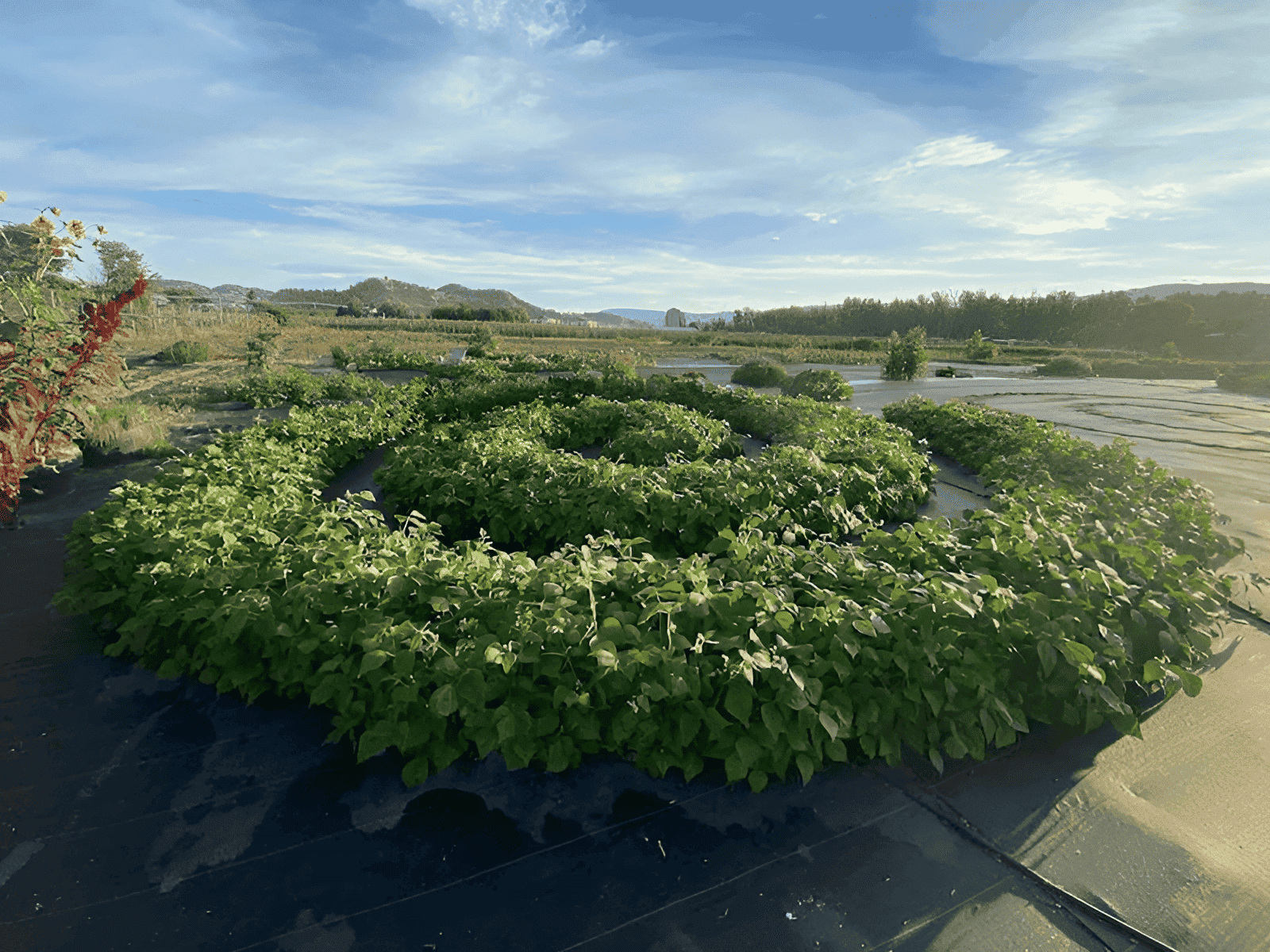
The design of a Crop Circle Market Garden is specifically tailored to maximize plant growth while conserving valuable resources such as water, fertilizer, land, and labor. A ground cover suppresses weed growth, reduces ground water evaporation, and fosters subterranean ecosystems that enhance soil health. Crop Circle Gardens, arranged in a spiral pattern and secured through the ground cover, remain stable against wind dislodgement.
Seeds or transplants are planted at the center of each garden and can be easily removed, fertilized, and reinstalled at the start of each growing season. Once installed, irrigation and fertilization are automated and managed by a timer, streamlining maintenance. Crop rotation, achieved by planting different crops each season, continues to enrich the soil over time. To maximize yield, Crop Circle Market Gardens are monocropped, focusing on one type of plant per plot.
Growing To Give Root Gardens are specifically designed to produce an abundant harvest of root vegetables in remarkably small spaces. By utilizing an off-site growing medium, these gardens can thrive virtually anywhere—community gardens, urban farms, parking lots, vacant city lots, or even rooftops.
The ground is covered with agricultural-grade weed prevention material, and panels are assembled to create a 10-foot raised circular garden filled with soil. An elevated stretch plank serves as a gangway for broadcasting carrot seeds evenly across the growing medium using a Growing To Give Seed Dispenser. This precise method eliminates the need to thin carrots while ensuring optimal spacing. The plank is also used for occasional weeding until the carrot tops grow dense enough to naturally suppress weeds. After broadcasting, the seeds are covered with a thin, half-inch layer of growth medium.
In just about three months, approximately 5,000 carrots can be hand-harvested in bunches as the panels are disassembled.
After the growing season, the raised root garden can be dismantled, cleaned, and stored in a dry location. Proper care of the panels ensures durability for decades—lasting up to 30 years with minimal maintenance. The ground cover can remain in place for 10 years or more before requiring replacement. Each season, only the garden panels and irrigation system need to be reassembled and disassembled.
The growing medium can be discarded, replaced, or recharged for the next season. Alternatively, creating an adjacent growing area allows for easy relocation of the 15-panel root garden, simplifying the soil recharging or replacement process and preparing for the following year.
Raised Vegetable Beds, Raised Flower Beds, and Garden Boxes
Raised beds are a versatile and popular solution for home gardeners, offering numerous benefits. Raised vegetable beds, often referred to as raised garden boxes, improve drainage and soil quality, making them ideal for growing a wide variety of vegetables. Constructed from materials like cedar or metal, these beds are both durable and visually appealing. Elevated garden beds and wooden raised beds are particularly favored for their accessibility and aesthetic charm, with wooden beds being perfect for retrofitting with Crop Circle Garden irrigators. Raised bed construction can be a rewarding DIY project, allowing gardeners to customize their spaces to fit their specific backyard or small-space needs. Stone raised beds add a rustic, durable touch to any garden layout.
Raised garden planters and raised planter boxes provide additional flexibility, particularly in small gardening spaces. These planters are ideal for growing plants at a comfortable height, reducing the need for bending or kneeling, and creating handicap-accessible gardening solutions. Backyard raised beds can be designed using budget-friendly ideas, ensuring gardening remains affordable and inclusive. Organic raised bed gardening is another growing trend, allowing gardeners to produce healthy, pesticide-free fruits and vegetables in their own backyards. For convenience, raised bed garden kits offer a quick setup solution, complete with all necessary components for success. These kits are available through Growing To Give sponsorships, making gardening even more accessible.
A well-designed raised bed irrigation system is key to maintaining healthy plants in raised bed vegetable gardens. Crop Circle Irrigation systems provide consistent moisture, promoting vigorous plant growth. Creative raised bed layout ideas can maximize the use of space, especially in small or irregularly shaped gardens. Raised beds can be built along fence lines, wrapped around corners, or used as striking features throughout community gardens or private yards. Raised bed vegetable gardens can be incredibly productive, yielding a plentiful harvest of fresh produce throughout the growing season. DIY raised bed gardens offer endless possibilities for personalization, enabling gardeners to incorporate Crop Circle plant propagation technology for enhanced growth. Whether built from wood, metal, or stone, raised beds bring both functionality and beauty to any garden.
How You Can Help
Become a Sponsor
Be part of the Community Raised Garden Retrofit Initiative by becoming a sponsor today. Your support, whether through in-kind donations like soil, compost, irrigation equipment, seedlings, or renewable power tools, helps us revitalize existing raised beds in schoolyards, backyards, church grounds, and city lots. These retrofitted gardens bring fresh food, beauty, and resilience to neighborhoods across the country. Together, we’re turning neglected spaces into thriving hubs of nourishment, learning, and hope. To explore sponsorship opportunities, contact us at sponsors@growingtogive.org.
Help Us Rebuild Community Gardens Across America
You are welcome to support in whatever way feels right for you.
Make a donation
Seeds & Plants
Your $25 donation supplies seeds and plants for a raised garden bed retrofit and from that small, living gift, a whole community garden begins to change.
What your gift does:
• Seeds & starter plants chosen for local climate and abundant harvests.
• Companion plants that reduce pests naturally and boost yields.
• Pollinator plants.
Timbers & Irrigation Components
Your $50 donation helps gather the supplies required to retrofit a raised box garden and includes timber frame members that stack to form the box, weed suppressing ground cover, assorted stainless steel fasteners, Crop Circle Garden Irrigators, 3-way emitters and timers.
What your gift does:
• Timber frame members that stack securely to form the raised box.
• Weed-suppressing ground cover to cut maintenance and protect soil.
• Assorted stainless fasteners for long-life.
• Crop Circle Garden Irrigators for balanced water and nutrient delivery.
• 3-way emitters to efficiently disperse liquid nutrient.
• Programmable timers to automate watering on a predictable schedule.
• Fittings & connectors to tie the system together without leaks.
A Complete Retro-fit
Your $100 helps retrofit an existing raised garden bed into a low-maintenance, high-yield Crop Circle system; on church grounds, a city lot, a schoolyard, or a backyard anywhere in the country.
What your gift does:
• Replaces old timbers with new timbers to rebuild the bed.
• Recharge the new bed with fertilized enriched soil.
• Installs weed suppression ground cover.
• Installs irrigation system.
• Sows seeds / plants plants.
All donations directly support raised bed retrofit installations. We are a registered nonprofit organization
Share our message
Spread the word on social media, in your community, or among friends and family to help us reach more communities that need support.
Together, We Grow Hope
When you give to Growing to Give, you're not just donating — you're sowing the seeds of transformation.
Starting a community garden begins with identifying local interest and securing a suitable site with adequate sunlight, water access, and soil safety. Successful gardens typically form a small leadership committee, define shared goals, and create clear participation guidelines before construction begins.
Next, design the layout for raised beds, walking paths, composting areas, and irrigation lines. We recommend water-efficient raised bed systems that reduce fertilizer use and improve yield per square foot. Installing drip irrigation or subsurface watering systems dramatically reduces evaporation and long-term maintenance costs.
Finally, establish planting plans, seasonal crop rotations, and volunteer schedules. Community gardens thrive when structure, education, and stewardship are built into the foundation from day one.
Benefits of Community Gardens for Cities and Neighborhoods
•Improves food security in urban neighborhoods
•Reduces water use through efficient irrigation systems
•Strengthens community engagement and volunteerism
•Increases yield per square foot in limited spaces
•Supports environmental resilience and soil health
Community gardens strengthen food security, improve neighborhood cohesion, and transform underutilized land into productive green space. Studies consistently show that gardens increase access to fresh produce, especially in food deserts where grocery options are limited.
Beyond food production, community gardens reduce urban heat, improve soil biology, support pollinators, and create educational opportunities for schools and youth programs. They also provide measurable economic benefits by increasing property values and reducing municipal landscape maintenance costs.
When designed with water-smart systems and regenerative soil practices, community gardens become long-term resilience assets for cities facing drought and climate uncertainty.
Water-Saving Irrigation Systems for Raised Garden Beds
Water efficiency is one of the most important factors in modern community garden design. Traditional overhead watering systems lose significant moisture to evaporation, wind drift, and runoff. Raised beds paired with drip irrigation or subsurface watering systems can reduce water use by up to 50–70%.
Mulching, soil organic matter improvement, and targeted root-zone watering allow plants to develop deeper root systems and stronger resilience. Combining these practices with precise planting density can significantly increase yield per square foot while lowering ongoing maintenance costs.
Investing in water-smart irrigation infrastructure ensures that community gardens remain sustainable, affordable, and productive for years to come.


.png)
.png)
.png)

.png)