Free-Range Chickens: Healthier Meat, Ethical Farming, and Sustainable Food Systems
Discover how free-range chickens produce healthier meat, improve animal welfare, regenerate soil, and support sustainable farming systems compared to conventional factory farming.
The Benefits of Free-Range Meat: A Healthier and More Ethical Choice 🐓
Free-range meat comes from animals raised in more natural environments, supporting better animal welfare, healthier farming systems, and a stronger connection between food production and land stewardship.
Quick answer: Free-range meat can be a healthier and more ethical choice because animals are allowed to roam, forage, and express natural behaviors, while regenerative systems can also improve soil fertility and nutrient cycling.
What Is Free-Range Meat?
Free-range meat comes from animals raised with outdoor access and more space to move, forage, and behave naturally. Compared with confined industrial systems, free-range farming is often associated with better animal welfare, lower stress, and more ecologically balanced food production.
Definition:Free-range farming is a system in which livestock are given access to outdoor environments where they can move more freely and engage in natural behaviors such as grazing, pecking, and social interaction.
In recent years, demand for free-range meat has grown as consumers become more aware of how food choices affect personal health, animal welfare, and environmental outcomes.
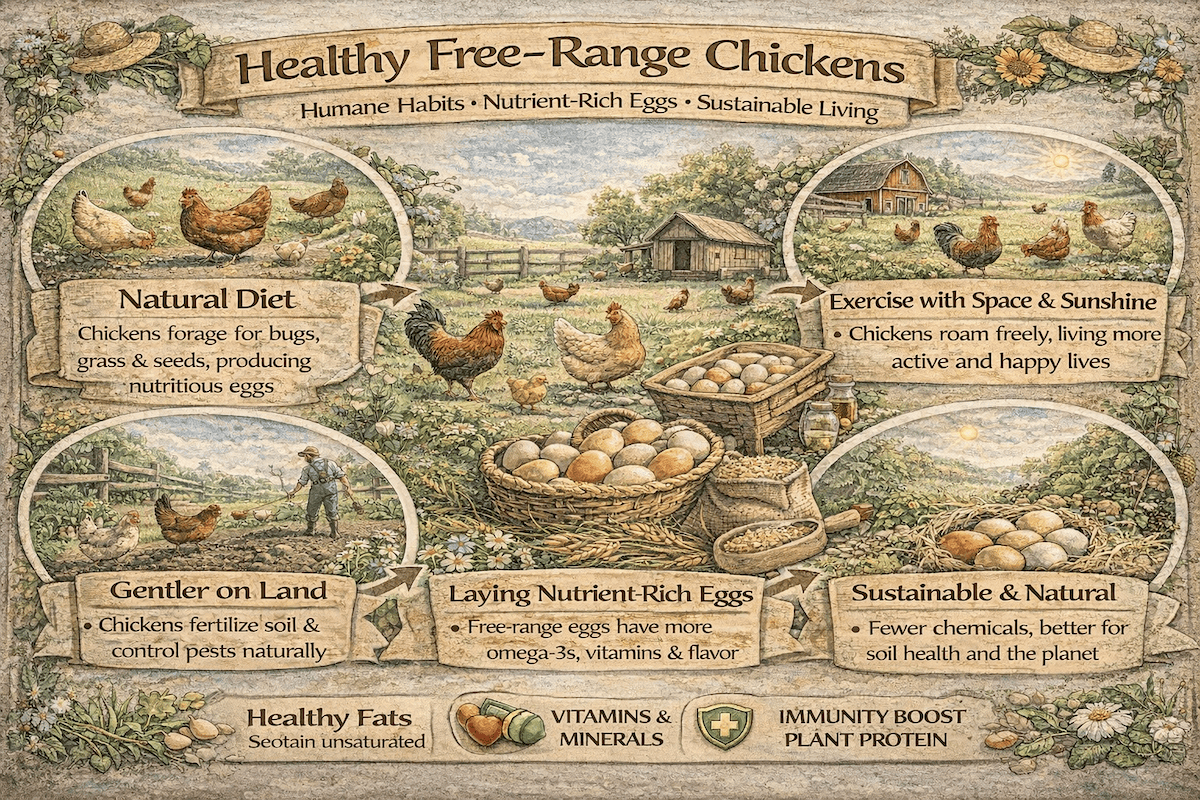
Did you know? In regenerative agriculture systems, livestock such as chickens can help control pests, build soil fertility, and cycle nutrients back into the land, turning animal management into an ecological benefit.
Unlike factory farming systems that confine animals in crowded spaces, free-range operations allow animals to live in ways that more closely reflect their natural instincts. This can reduce stress, improve overall health, and create farming systems that are more humane and resilient.
Free-range livestock also play an important role in integrated systems. In regenerative models, animals and plants work together to support healthier land, stronger ecosystems, and more sustainable food production.
Learn how regenerative agriculture restores soil and ecosystems.
You are welcome to share this infographic on your website or blog.
Please include a link back to this page as the source.
The environmental impact of factory farming is another significant concern. These operations are known for producing substantial pollution, including greenhouse gases, and contribute to water and soil contamination. They require vast amounts of resources like water and grain, exacerbating their ecological footprint. The ethical implications of such intensive farming practices are also profound, as animals are typically kept in distressing and inhumane conditions, raising serious questions about animal rights and welfare.
Factory farming doesn't just affect animals; it also poses risks to human health and local communities. Workers in these farms are frequently exposed to hazardous conditions, such as harmful chemicals and intense noise, leading to various health issues. Additionally, the presence of large-scale farming operations can adversely impact nearby communities, causing problems like unpleasant odors, water contamination, and a decline in property values. These multifaceted issues highlight the growing concerns and calls for reform in how society produces its meat and dairy products.
Healthier Meat for Consumption
Free-range meat is often considered a healthier option for consumers due to the natural diet and lifestyle of the animals. When animals are raised in open pastures, they tend to consume a diet that is closer to what they would naturally eat in the wild. This aspect of their upbringing significantly impacts the nutritional quality of the meat. For example, the diet of these animals often includes a variety of grasses, herbs, and insects, leading to a more balanced and nutrient-rich composition in their meat. This natural diet contributes to the meat being leaner and containing higher levels of beneficial nutrients compared to conventionally raised animals.
Specifically, studies have shown that free-range chickens offer distinct nutritional benefits. These chickens, which are allowed to roam freely and forage in a natural environment, have been found to have higher levels of omega-3 fatty acids. Omega-3s are essential fats that are beneficial for heart health and are not produced naturally by the human body. Additionally, the meat from free-range chickens tends to have lower levels of saturated fat, which is advantageous for maintaining a healthy cholesterol level and reducing the risk of heart disease.
Similarly, grass-fed beef, which comes from cattle raised on grass pastures, is known for its superior nutritional profile. This type of beef is richer in key nutrients such as antioxidants, vitamins (especially vitamin E), and minerals. Moreover, it contains a higher concentration of conjugated linoleic acid (CLA), a type of fat that has been linked to various health benefits, including a reduced risk of cancer and improved heart health. These nutritional advantages make grass-fed beef a desirable choice for health-conscious consumers, further emphasizing the benefits of free-range meat in a balanced diet.
Environmental Benefits
Free-range farming has a lower environmental impact compared to conventional farming. It promotes biodiversity, helps in soil regeneration, and often involves fewer chemical inputs like fertilizers and pesticides. Additionally, the natural grazing process aids in carbon sequestration, which can help mitigate climate change.
The movement of animals across the land naturally aerates the soil, enhancing its structure and fertility. This is in contrast to intensive farming, where the soil can become compacted and depleted from overuse. Free-range animals often feed on a natural diet, which reduces the need for chemical inputs such as synthetic fertilizers and pesticides that can be harmful to the environment. Their manure can be used as a natural fertilizer, which adds essential nutrients back into the soil, promoting healthier crop growth.
As free-range animals graze, they stimulate plant growth, leading to more photosynthesis, the process by which plants absorb carbon dioxide from the atmosphere. This natural grazing cycle can help to capture and store carbon in the vegetation and soil, acting as a carbon sink. By enhancing carbon sequestration, free-range farming can contribute to the mitigation of climate change. The less intensive nature of free-range farming also means that there is generally a lower output of greenhouse gases per animal compared to conventional farming, which is associated with high levels of methane and carbon dioxide emissions due to overcrowding and the use of fossil fuels.
Ethical Eating
Choosing free-range meat is a step towards more ethical eating. By supporting free-range farms, consumers are voting against inhumane practices prevalent in intensive animal farming. This choice not only benefits animal welfare but also supports small-scale farmers who are more likely to employ sustainable and ethical farming practices.
Taste and Quality
Many connoisseurs and chefs advocate for free-range meat, citing its superior taste and quality. The varied diet of free-range animals and their active lifestyles contribute to a more nuanced and desirable flavor profile in the meat.
Economic Impact
Supporting free-range meat production can have positive economic implications. It often involves purchasing from local farmers, which helps support the local economy. Additionally, it promotes agricultural diversity and can lead to more resilient rural economies.
While free-range meat can be more expensive and less accessible than conventionally farmed meat, its benefits are manifold. From improved animal welfare and health benefits to environmental sustainability and ethical consumption, free-range meat represents a holistic approach to food production and consumption. As awareness grows, hopefully, so will accessibility and affordability, making free-range meat a viable choice for more consumers worldwide.


.png)
.png)
.png)

.png)