FREEING PEOPLE FROM HUNGER
Changing Rainfall Patterns Worldwide 🌧️
Climate change is shifting global rainfall patterns—causing longer droughts, heavier storms, and major disruptions to agriculture, water systems, and ecosystems.
EXPLORE
FREEING PEOPLE FROM HUNGER
Climate change is shifting global rainfall patterns—causing longer droughts, heavier storms, and major disruptions to agriculture, water systems, and ecosystems.
EXPLORE
Climate Change • Rainfall Patterns • Global Agriculture
Changing rainfall patterns are one of the clearest signs of climate change, disrupting agriculture, water systems, and ecosystems across the globe.
Quick answer: Changing rainfall patterns occur when climate change alters when, where, and how much rain falls, leading to droughts, floods, crop failures, and water shortages that impact food production and global stability.
Changing rainfall patterns refer to shifts in the timing, intensity, and geographic distribution of precipitation. These changes can result in longer dry periods, more intense storms, delayed rainy seasons, or rainfall occurring in regions where it was previously uncommon.
Definition: Rainfall pattern shifts are long-term changes in precipitation cycles caused by climate variability and global warming, affecting water availability and agricultural productivity.
These disruptions are already being observed worldwide, impacting farming systems, water resources, and natural ecosystems. In some regions, rainfall has decreased significantly, while in others, extreme rainfall events are becoming more frequent and unpredictable.
Did you know? Even small shifts in rainfall timing can reduce crop yields significantly, especially in regions where agriculture depends on predictable seasonal rains.
Rainfall is the foundation of global agriculture. When precipitation patterns shift, it directly affects crop growth, soil moisture, irrigation planning, and water storage systems. Farmers who rely on predictable rainy seasons are often the first to feel the impact.
These changes can lead to crop failures, food shortages, rising food prices, and increased pressure on water supplies. In vulnerable regions, even a single failed rainy season can create widespread food insecurity.
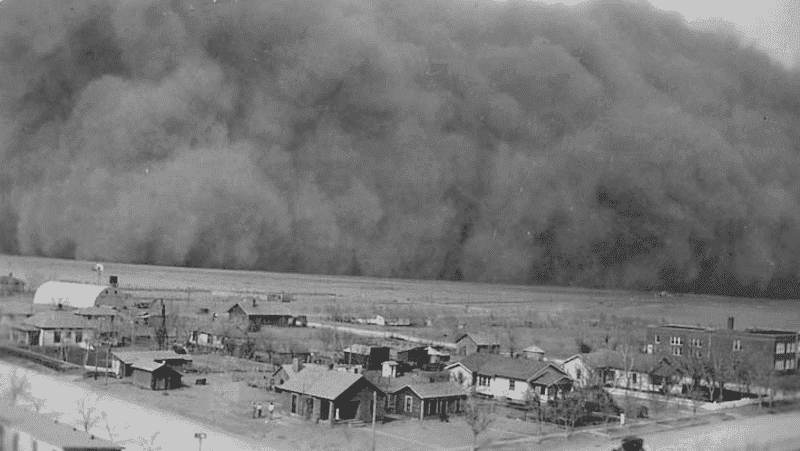
The Dust Bowl of the 1930s remains one of the most important historical examples of how changing climate conditions and poor land management can combine to create large-scale agricultural collapse. Severe drought, combined with unsustainable farming practices, led to massive dust storms and the loss of productive farmland across the United States.
The Dust Bowl demonstrated how fragile agricultural systems can be when they are not designed to withstand environmental stress. Today, it serves as a warning of what can happen when climate variability meets unsustainable land use.
Around the world, changing rainfall patterns are already reshaping agricultural regions. In Western Australia, the movement of the rain belt has affected traditional grain-producing areas. In the southwestern United States, prolonged drought conditions have placed pressure on water supplies and farming systems.
These examples highlight a broader global trend: rainfall is becoming less predictable, and regions that once depended on stable weather patterns must now adapt to new and uncertain conditions.
The takeaway: Adapting to changing rainfall patterns requires resilient agricultural systems, water-smart technologies, and improved land management practices that can withstand both drought and extreme weather events.

Western Australia stands as one of the regions profoundly impacted by shifting rainfall patterns. Over the previous decades, the area has witnessed a substantial decrease in rainfall, which has consequently resulted in a downturn in agricultural yield. The rain belt has shifted from the traditional grain belt in Western Australia to the desert in the interior of the continent. This transition has brought about a decrease in wheat output, a crop that has served as a cornerstone of Western Australia's economy for a considerable period. The altered precipitation trends have also caused many rivers and lakes in the area to dry up, leading to water scarcity and a reduction in the region's biodiversity.
The desert southwest has been gripped by an intense mega-drought lasting more than a decade, impacting various states like Arizona, New Mexico, and California. This drought arises from a mix of elements, including increased temperatures and shifting rainfall trends. The area has witnessed a substantial reduction in rainfall, resulting in decreased agricultural productivity and water scarcities. The prolonged drought has additionally escalated wildfire incidences, leading to the destruction of millions of acres of forest and posing threats to the lives and means of subsistence of thousands of individuals.
The Dust Bowl of the Dirty Thirties is another example of the devastating impact of changing rainfall patterns. The Dust Bowl represents a grave environmental catastrophe that transpired in the Great Plains area of the United States throughout the 1930s. The region experienced a prolonged drought, combined with high winds and poor soil conservation practices. This event triggered enormous dust storms (haboobs) that devastated crops, led to the death of livestock, and compelled thousands of individuals to abandon their residences in pursuit of employment and refuge.
In recent times, there has been a noticeable trend where rainfall is more prevalent over oceans than on land, a pattern anticipated to persist as global climate undergoes transformation. This phenomenon carries substantial consequences for agriculture, water supplies, and ecosystems. As rainfall patterns change, entire regions of grain crops are being uprooted, causing food shortages and economic disruption.
According to the Intergovernmental Panel on Climate Change (IPCC) Sixth Assessment Report, human-driven warming is intensifying the global water cycle. The report documents with high confidence that wet regions are generally becoming wetter, while dry regions are becoming drier, increasing the frequency and severity of both droughts and extreme rainfall events. These shifts in precipitation patterns are reshaping agricultural zones, water availability, and ecosystem stability worldwide.
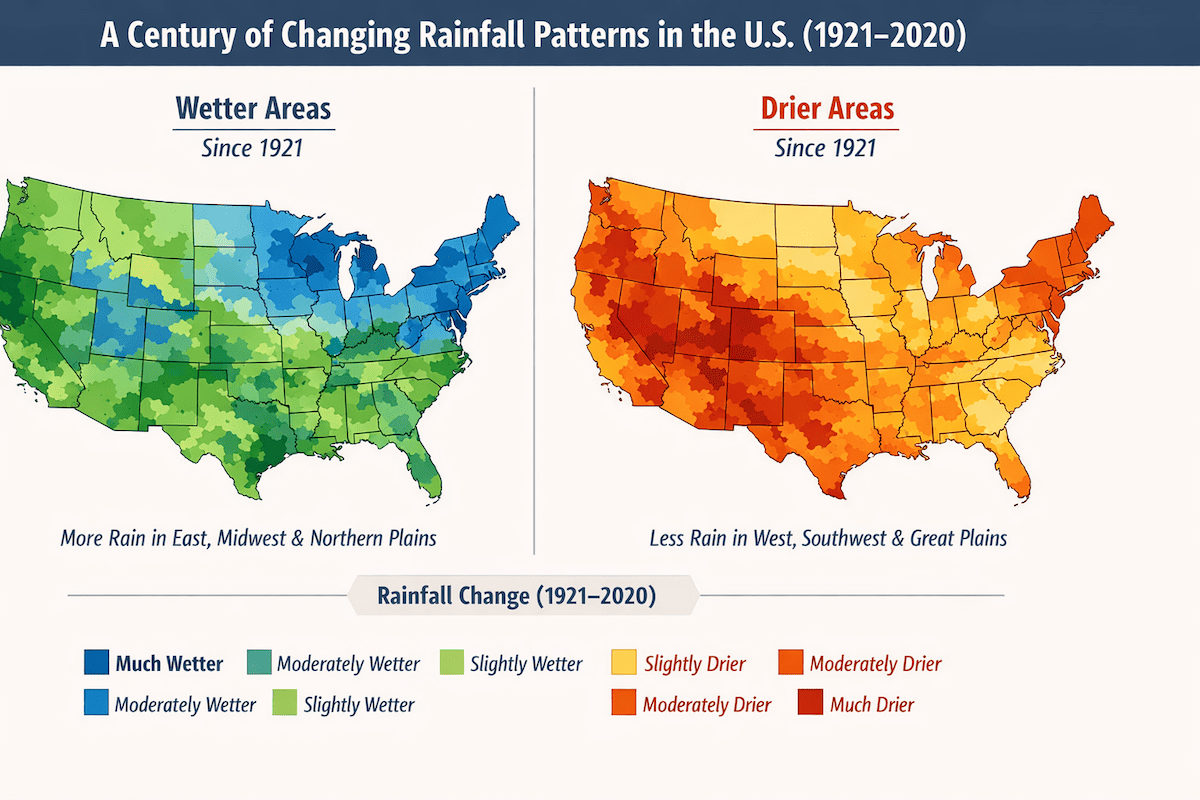
The IPCC AR6 Working Group I report expresses high confidence that human influence has intensified the global hydrological cycle since the mid-20th century. This means that precipitation variability is increasing in measurable and observable ways, not as isolated weather anomalies but as part of a broader systemic shift. While global averages provide important context, regional variability remains significant. Some subtropical regions are projected to experience longer and more frequent drought conditions, while high-latitude and monsoon regions may see heavier seasonal rainfall and stronger storm events.
Importantly, the assessment highlights that extremes are intensifying at both ends of the spectrum. Drought frequency and duration are increasing in vulnerable drylands, while extreme rainfall events are becoming more intense in many humid and temperate regions. These changes are closely linked to rising temperatures, which increase atmospheric moisture capacity and accelerate evaporation rates. As a result, water cycles through the atmosphere more rapidly, contributing to sharper contrasts between dry spells and heavy downpours. For agriculture, water management systems, and ecosystems, this growing instability in precipitation patterns represents one of the most consequential risks of climate change.
Satellite observations analyzed by NASA Earth Observatory further confirm that rising global temperatures are accelerating components of the water cycle, increasing atmospheric moisture levels and intensifying precipitation events in many regions.
In China, changing rainfall patterns have resulted in barely any rainfall falling anymore in some areas. This trend is leading to significant water scarcity, crop failures, and social unrest. The Chinese government has initiated an aggressive water preservation scheme to tackle this issue, yet it remains uncertain if these measures will sufficiently alleviate the repercussions of fluctuating rainfall patterns. These shifting rainfall patterns stand as one of the most tangible and significant effects of climate change. The instances explored in this article underscore the destructive impact these changing patterns can impose on agriculture, water resources, and ecosystems. As global warming, persists, we are likely to witness more extreme weather phenomena, such as droughts, floods, and hurricanes, which will intensify the impact of changing rainfall patterns. It's crucial that we act now to mitigate the consequences of climate change, ensuring that future generations do not endure the current experiences.
Large swaths of forests, home to millions of trees, have the potential to influence weather conditions and modify rainfall patterns. The Growing To Give forest initiative is grounded in ecological restoration science, working to rebuild regional tree cover and restore rainfall-supporting landscapes in climate-vulnerable agricultural regions.
Reversing the destabilization of rainfall patterns requires more than adaptation — it demands regeneration. Regenerative land management practices such as rebuilding soil organic matter, minimizing tillage, restoring native vegetation, and protecting watershed corridors can significantly improve water infiltration, reduce erosion, and stabilize local microclimates. Healthy soils act as living sponges, capturing rainfall when it comes and releasing moisture slowly during dry periods.
Forest restoration plays an equally critical role. Large-scale reforestation and agroforestry systems increase evapotranspiration, enhance atmospheric moisture recycling, and help restore regional rainfall dynamics over time. Scientific research increasingly suggests that intact forest systems contribute to rainfall stability far beyond their immediate boundaries.
Combined with water-smart agriculture — including drip irrigation, mulching, diversified cropping systems, and climate-adaptive planting strategies — communities can build resilience against both drought and extreme rainfall. While climate change intensifies hydrological instability, thoughtful stewardship of land, forests, and water resources offers a pathway toward restoring rainfall balance, protecting food systems, and strengthening long-term ecological and climate security.

.png)
.png)
.png)

.png)
Copyright Ⓡ 2026. All Rights Reserved. Growing To Give