China Food and Water Crisis: Resource Shortages, Agriculture Stress, and Global Impact
Discover how water scarcity, soil degradation, pollution, and rapid industrial growth are placing pressure on China’s food system—shaping global markets, food prices, and long-term stability.
Food Security • Water Scarcity • Global Agriculture
The Growing Crisis in Asia: Is China Facing Long-Term Food and Water Stress? 🐼
China’s food system faces increasing pressure from water scarcity, soil degradation, and rapid development—raising important questions about long-term sustainability and global food security.
Quick answer: China faces growing food and water stress due to limited freshwater resources, land pressures, pollution, and climate variability, making sustainable agriculture and resource management critical for long-term stability.
What Is Food and Water Security?
Food and water security refers to the reliable availability of sufficient, safe, and nutritious food along with sustainable access to clean water for drinking, sanitation, and agriculture.
Definition:Food and water security is the ability of a nation to maintain stable access to food and clean water through healthy soils, reliable water supplies, and resilient agricultural systems.
China plays a central role in the global food system. As one of the world’s largest agricultural producers and most populous countries, it must balance food production with industrial growth, urban expansion, and environmental protection.
Did you know? China has access to a relatively limited share of the world’s freshwater compared to its population, creating ongoing challenges for agriculture and long-term food production.
Food and water systems in China are deeply interconnected. Agriculture depends on water availability, soil health, and stable climate conditions—yet pressures such as pollution, land use change, and uneven water distribution are increasing strain on these resources.
While China has invested heavily in agricultural modernization and water infrastructure, long-term sustainability challenges remain. These issues not only affect domestic food production but also have global implications for supply chains, commodity markets, and food prices.
Understanding these pressures highlights the importance of sustainable agriculture, water conservation, and resilient food systems—both within China and across the global food landscape.
Factors Contributing to the Crisis: Resource Exploitation, Dam Construction, Environmental Degradation, and Pollution
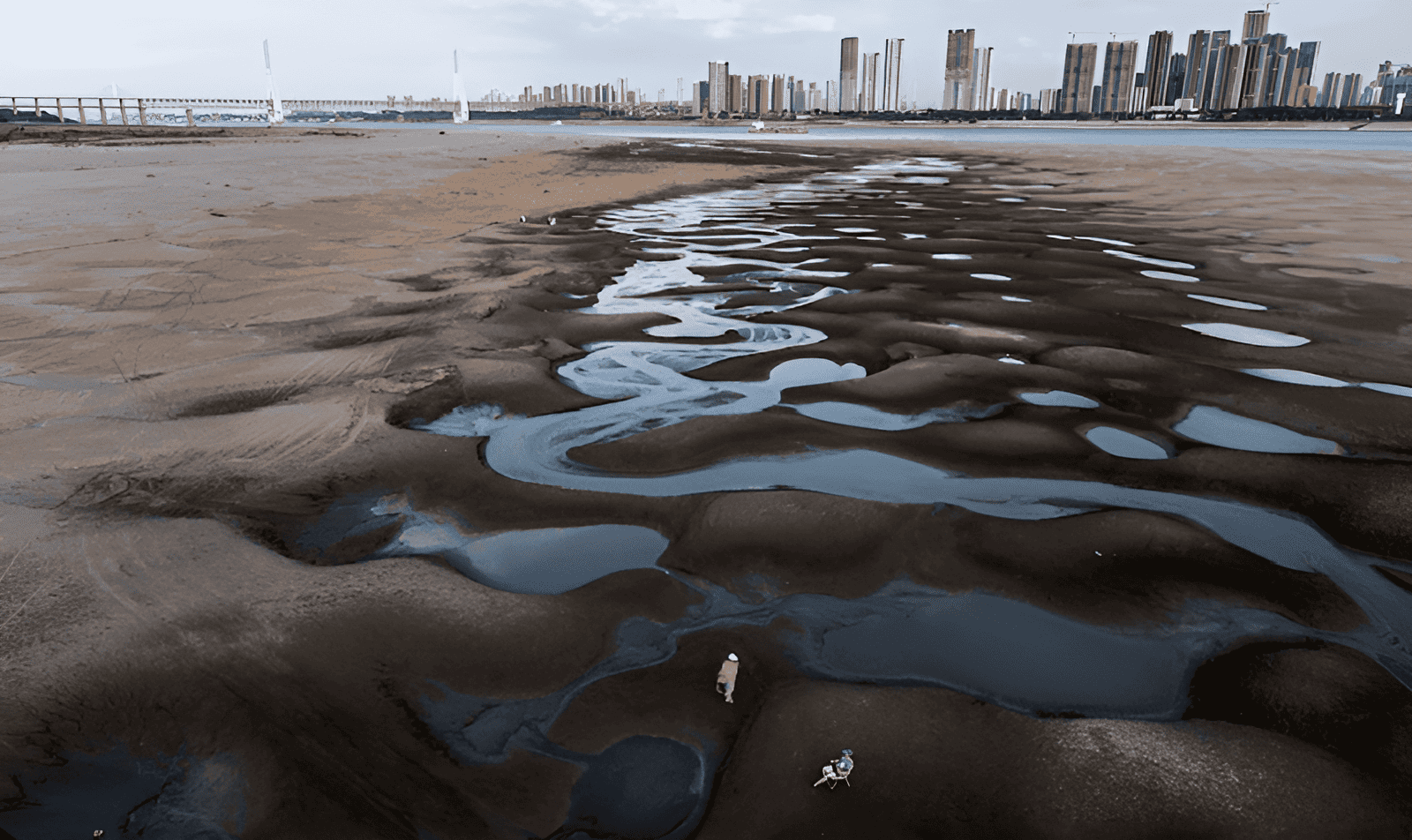
One of the main pressures on China’s food and water systems is the intensive use of natural resources over a long period of rapid industrialization and urbanization. Economic growth has increased demand for water, energy, housing, transport infrastructure, and industrial production. These demands have placed enormous strain on rivers, aquifers, and productive farmland. In many regions, groundwater has been extracted faster than it can naturally recharge, reducing long-term water availability for farming and increasing pressure on already stressed agricultural landscapes.
Agriculture remains a major consumer of water, particularly in heavily cultivated areas where irrigation is necessary to stabilize crop production. When groundwater declines and surface water becomes less reliable, farmers face increasing difficulty maintaining yields. This is especially concerning in areas where high agricultural output depends on irrigation and where water shortages can translate directly into lower production, higher costs, and greater dependence on outside inputs. The condition of arable land also matters greatly, because water stress and soil degradation often reinforce each other.
Another major factor is the transformation of land and river systems through large infrastructure projects. China’s dams have provided electricity, flood control, navigation benefits, and water management capacity, but large reservoirs have also submerged farmland, displaced rural communities, and altered downstream ecosystems. Projects such as the Three Gorges Dam represent the scale of this tradeoff. While such infrastructure can support economic development, it can also remove productive agricultural land from cultivation and disrupt long-established farming systems. The conversion or flooding of fertile land can reduce local food production capacity and intensify pressure on remaining farmland.
Environmental degradation has further complicated the situation. Industrial pollution, untreated or poorly treated wastewater, mining activity, and emissions from factories have contributed to contamination of water bodies and surrounding land in some regions. Polluted water cannot be safely used for drinking or irrigation without treatment, and contaminated soils can reduce agricultural productivity and pose food safety concerns. In addition, land clearing, erosion, and the loss of tree cover through deforestation have weakened landscapes that once helped regulate water flows, retain soil, and support local ecological stability.
Taken together, these pressures create a system in which water scarcity, land degradation, and pollution are not separate problems but overlapping constraints. The result is a more vulnerable agricultural system facing increasing difficulty producing food efficiently and sustainably under rising environmental stress.
How Food and Water Stress Affects Households and Communities
Food and water stress in China is not only a macroeconomic or environmental issue. It also affects the daily lives of households, farmers, and communities. When food prices rise or water becomes less reliable, the burden is often felt first by lower-income families, rural populations, and regions with fewer alternatives. These households may have limited capacity to absorb higher costs for staple foods, clean water, or agricultural inputs.
In practical terms, food stress can mean reduced dietary diversity, greater dependence on cheaper calories, and more difficulty accessing fresh produce, meat, or other nutrient-dense foods. Water stress can mean more time spent securing water, reduced sanitation reliability, and greater public health risk where water quality is poor. In some locations, communities also face the compounding effects of drought, pollution, and changing rainfall patterns, which can further disrupt rural livelihoods and local food production. These pressures are connected to broader patterns explored in discussions of water scarcity and hydrological instability.
Farmers are especially exposed. Reduced access to irrigation water, declining soil quality, and rising input costs all make agricultural production more difficult. When farm productivity declines, household incomes may fall at the same time that food prices rise, placing double pressure on rural communities. This can encourage migration, land abandonment in some areas, or heavier dependence on imported feed, grain, and fertilizer systems.
Consequences of the Crisis: Higher Food Prices, Water Scarcity, and Social Pressure
One of the clearest outcomes of food system stress is rising food prices. When production is constrained by water shortages, pollution, land loss, or changing weather patterns, supplies can tighten and prices can rise. Staple foods, vegetables, meat, and animal feed can all be affected when domestic production becomes more expensive or less reliable. These price increases can place strain on household budgets and contribute to inflationary pressure across the wider economy.
The effect of rising food prices extends beyond direct food purchases. Higher food costs can reduce consumer spending power in other sectors, increase pressure on social safety systems, and widen inequality between urban and rural populations or between wealthier and poorer households. Food affordability is therefore not only a nutritional issue but also an economic stability issue.
Water scarcity adds another layer of risk. China’s water challenges affect not only households but also agriculture, industry, and energy production. Some manufacturing sectors require large volumes of water, and agricultural production in heavily irrigated regions remains especially vulnerable when water allocations tighten. Water stress can also affect thermal and hydropower systems, increasing competition among sectors that all depend on stable supply. This creates a broader systems challenge in which agriculture is competing for water with cities, industry, and infrastructure.
These pressures can also increase social tension. Food shortages, water shortages, and price spikes have historically contributed to unrest in many parts of the world. In China, the risk is not simply famine in a conventional sense, but rather the destabilizing effect of persistent resource stress combined with inequality, rising costs, and reduced access to basic necessities. Concerns over affordability, food safety, pollution, and water access can become politically and socially significant when they affect large populations over time.
The Strategic Importance of Sustainable Agricultural Technologies
Addressing long-term food and water stress requires more than expanding production through conventional industrial methods. In many cases, the challenge is not simply to grow more food, but to grow food more efficiently while protecting water resources, rebuilding soil health, and reducing ecological damage. For this reason, the adoption of sustainable agricultural technologies is increasingly important.
Water-efficient irrigation systems such as drip irrigation can reduce losses and deliver moisture more directly to plant root zones. Precision agriculture tools can help farmers apply water, nutrients, and other inputs more accurately, reducing waste while maintaining productivity. Regenerative and organic soil-building approaches can improve infiltration, enhance microbial activity, and strengthen long-term resilience, particularly where soil degradation has reduced the productive potential of farmland.
Soil protection is especially important because water security and food security depend heavily on the condition of agricultural soils. Healthy soils store more water, hold nutrients more effectively, and support more resilient cropping systems. Protecting soil fertility is therefore a central part of any serious strategy for long-term agricultural stability.
In addition, diversified farming systems, protected growing systems, wastewater treatment improvements, and landscape restoration can all play a role in strengthening resilience. Approaches that reduce dependence on excessive chemical inputs and conserve water are likely to become more important as climate variability, drought risk, and competition for land and water continue to intensify.
Long-term food and water security ultimately depends on the health of the ecosystems that support agriculture. Changes in temperature, shifting rainfall patterns, prolonged droughts, and more frequent extreme weather events are already altering growing conditions in many parts of the world. These trends are closely examined in discussions of
climate change and agriculture, where scientists increasingly emphasize the importance of adapting farming systems to a changing climate. At the same time, rebuilding soil fertility is essential for improving resilience. Healthy soils store water, support microbial life, and maintain the nutrient cycles that sustain crop production. Approaches associated with
soil health and regenerative agriculture—including cover cropping, reduced tillage, organic matter restoration, and diversified farming systems—can help farmers maintain productivity while protecting water resources and restoring degraded land. When climate adaptation and soil restoration strategies are implemented together, they create more resilient food systems capable of sustaining communities even under increasing environmental pressure.
Without timely and effective action, pressures associated with groundwater depletion, farmland loss, pollution, industrialized agriculture, and environmental degradation are likely to deepen. The most durable response will involve a transition toward water-smart, climate-resilient production systems that protect natural resources while improving agricultural efficiency. In that context, food and water security are not separate issues; they are part of the same long-term challenge of building a more resilient and ecologically sustainable food system.


.png)
.png)
.png)

.png)