Food Systems • Land & Water • Planetary Limits
Food Planet: Only So Much Land and Water 🌍
Our food systems depend on finite land, water, and soil resources—making sustainable agriculture essential for feeding a growing population while protecting the planet.
Quick answer: There is only so much land, freshwater, and fertile soil available to grow food, so sustainable farming practices are critical to ensure long-term food security and environmental balance.
Why Land and Water Limits Matter
Land and water are the foundation of global food production. Agriculture relies on fertile soil and reliable freshwater, yet both are under increasing pressure from climate change, urban expansion, soil degradation, and population growth.
Definition: Land and water limits refer to the finite natural resources available for food production and the need to manage them sustainably to support future generations.
Our planet—often called the “blue marble”—is a complex, interconnected system of forests, rivers, oceans, soils, and atmosphere. Yet the systems that feed us are under strain as fertile land declines, freshwater becomes scarce, and soil erosion accelerates.
Did you know? Agriculture uses about 70% of the world’s freshwater, making water efficiency one of the most critical factors in sustainable food production.
Agriculture sits at the center of this challenge. It feeds billions of people, yet also contributes to deforestation, water depletion, biodiversity loss, and
greenhouse gas emissions.
The question is no longer whether we can grow enough food—but whether we can do so in ways that protect ecosystems, conserve resources, and sustain both people and planet.
Around the world, new approaches such as regenerative agriculture, water-smart systems, and local food production are helping restore balance—demonstrating that food systems can be both productive and sustainable.
We Lose an Acre of Farm Land Every 20 Minutes
The impact of climate change on agriculture is profound. Rising temperatures, prolonged droughts, floods, wildfires, soil salinization, and sea-level rise are steadily removing fertile land from production. Urban expansion also consumes prime farmland near growing cities. The result is a steady erosion of our food-producing base.
In the United States, California’s Central Valley — one of the most productive agricultural regions in the world — faces increasing groundwater depletion and land subsidence. Farmers are being forced to fallow hundreds of thousands of acres due to water restrictions and drought. Similarly, in the Midwest, heavier rainfall events linked to climate change contribute to erosion and nutrient runoff, washing away topsoil and polluting waterways.
Globally, desertification threatens vast areas of sub-Saharan Africa and parts of India and China. In response, initiatives like the Great Green Wall project across Africa aim to restore degraded land by planting trees and implementing sustainable land management practices across 11 countries. In Niger, farmer-managed natural regeneration has restored millions of hectares by allowing native trees to regrow naturally on farmland, improving soil fertility and crop yields.
70 Percent of Earth’s Freshwater Is Used to Grow Food
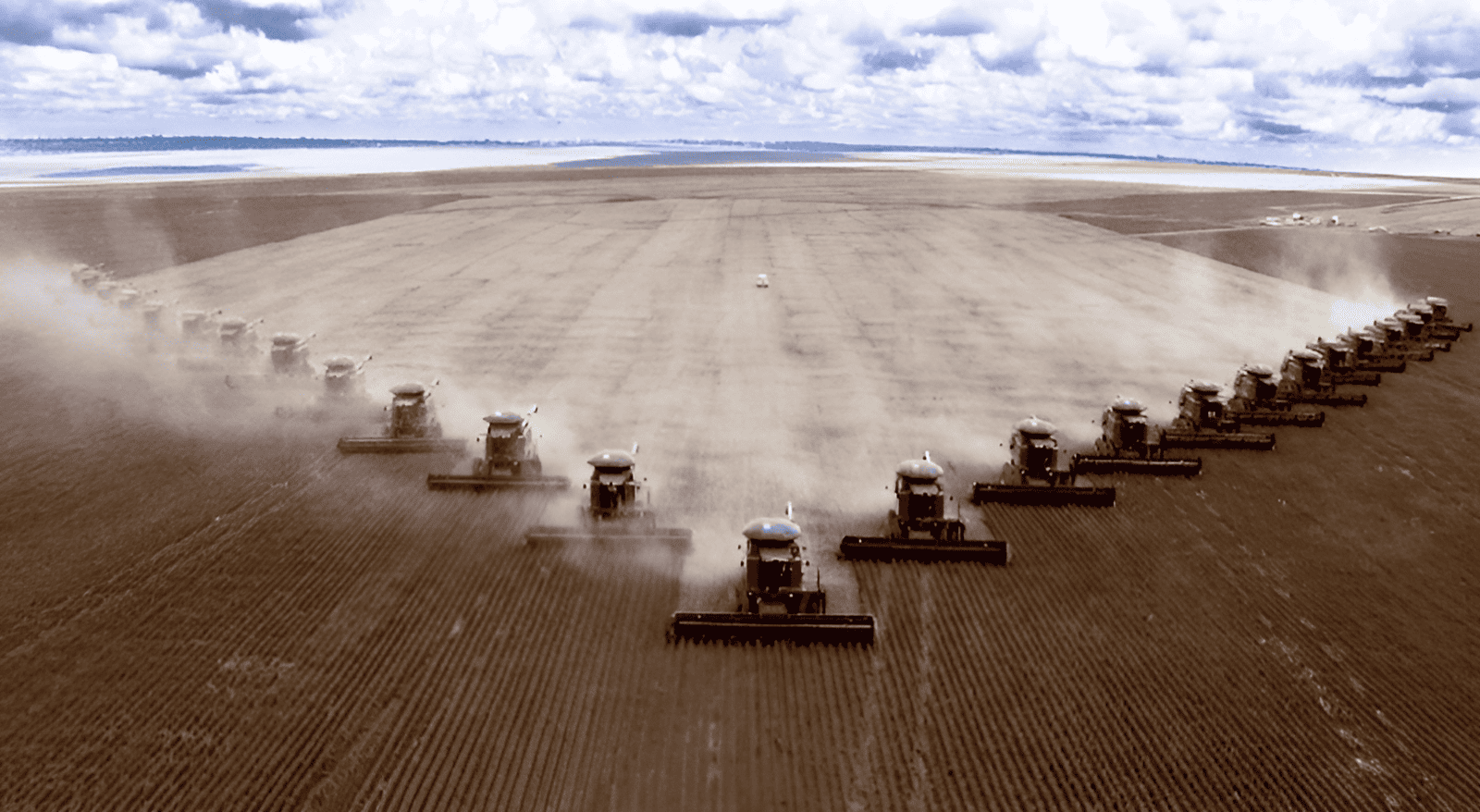
Water is the lifeblood of agriculture. Approximately 70% of global freshwater withdrawals are used for irrigation. Yet much of this water is lost due to inefficient flood irrigation, evaporation, and leaky infrastructure.
In the western United States, the Colorado River — which supports agriculture across seven states — is under severe stress. Prolonged drought and over-allocation have left reservoirs like Lake Mead and Lake Powell at historic lows. Farmers are being asked to reduce water use, and cities are reevaluating water policy.
At the same time, innovation is emerging. In Israel, drip irrigation technology has revolutionized water efficiency, delivering water directly to plant roots with minimal waste. Israeli farmers have pioneered precision irrigation and wastewater recycling, reusing more than 80% of treated wastewater for agriculture.
In India, smallholder farmers are adopting micro-irrigation systems and rainwater harvesting to reduce groundwater depletion. In California and Arizona, regenerative farmers are experimenting with soil-building practices that increase water retention, reducing irrigation demand.
Seed Sovereignty and Genetic Uniformity
Modern agriculture relies heavily on hybrid and genetically modified seeds. While many GMO crops provide pest resistance or drought tolerance, hybrid systems often prevent farmers from saving seeds year to year. This increases dependence on seed corporations and reduces on-farm biodiversity.
In the United States, over 90% of corn, soy, and cotton acreage is planted with genetically engineered varieties. While productive, this level of genetic uniformity increases vulnerability to disease and pest outbreaks.
Around the world, seed-saving movements are working to preserve genetic diversity. In India, the Navdanya movement founded by Dr. Vandana Shiva has established community seed banks that protect indigenous crop varieties. In the U.S., organizations like Seed Savers Exchange in Iowa preserve heirloom seeds to maintain biodiversity and resilience.
Pesticides, Pollinators, and Ecological Balance
The widespread use of pesticides and herbicides has contributed to declining insect populations. Pollinators such as bees, butterflies, and beetles are essential for roughly one-third of the world’s food crops.
In the United States, commercial beekeepers report significant colony losses each year. In response, regenerative farms are planting pollinator strips, reducing chemical use, and integrating integrated pest management (IPM) systems.
In the European Union, certain neonicotinoid pesticides have been restricted due to their impact on pollinators. Meanwhile, countries like Costa Rica are investing in biological pest control methods and agroforestry systems that naturally reduce pest pressure.
Freshwater: Scarce and Precious
Of all the water on Earth, only a small fraction is freshwater accessible for human use. Pollution from industrial discharge, agricultural runoff, and inadequate sanitation systems further reduces drinkable supplies.
In Flint, Michigan, water contamination highlighted vulnerabilities in aging infrastructure. Globally, regions from Cape Town, South Africa, to Chennai, India, have faced “Day Zero” water crises.
Solutions include watershed restoration, wetland protection, and regenerative farming practices that reduce chemical runoff. In the U.S., conservation programs through the USDA support farmers who implement buffer strips and cover crops to protect waterways.
Topsoil: The Foundation of Civilization
We lose significant amounts of topsoil every year due to mechanized agriculture, monocropping, and tillage. Topsoil contains organic matter, microbes, and nutrients essential for plant growth. Once lost, it can take centuries to regenerate naturally.
In Iowa and other Corn Belt states, soil erosion remains a serious challenge. However, regenerative farmers are reversing this trend through no-till farming, cover cropping, crop rotation, and livestock integration. Gabe Brown’s ranch in North Dakota is often cited as a leading example of regenerative agriculture restoring soil health while maintaining profitability.
In Brazil, large-scale regenerative efforts are underway to restore degraded pastureland in the Cerrado region. In China’s Loess Plateau, a massive government-led restoration project transformed eroded land into productive farmland through terracing, replanting vegetation, and sustainable water management.
Building a Regenerative Food Future
Around the world, farmers, scientists, and communities are proving that agriculture can shift from extractive to regenerative. Agroforestry systems in Kenya combine crops and trees to improve soil fertility and provide diversified income. Urban farming projects in Detroit transform vacant lots into productive gardens. Vertical farms in Singapore reduce land pressure while conserving water.
In Maine and Alaska, kelp aquaculture is expanding as a sustainable “blue economy” crop that absorbs carbon and improves ocean health. In Nevada and Arizona, water-smart agricultural models are emerging that use precision irrigation and soil regeneration to reduce consumption.
These examples demonstrate that while land and water are finite, innovation and stewardship can extend their productivity. Sustainable agriculture is not about producing less — it is about producing wisely.
Our food planet operates within ecological limits. There is only so much arable land. Only so much freshwater. Only so much fertile soil. Yet within those limits lies immense opportunity. By protecting topsoil, conserving water, restoring biodiversity, and empowering local food systems, we can shift toward a regenerative model that feeds humanity without exhausting the Earth.
The decisions made by farmers, policymakers, businesses, and consumers in this decade will determine whether future generations inherit degraded landscapes or thriving ecosystems. The clock is ticking — but solutions are already growing in fields, forests, cities, and coastal waters around the world.

.png)
.png)
.png)

.png)