United States • Food Access • Food Deserts
The Struggle for Fresh Food in America: Understanding Food Deserts
Food deserts in America limit access to fresh, nutritious food—especially in low-income communities—creating long-term health, economic, and social challenges.
Quick answer: A food desert is an area where people have limited access to affordable, healthy food—often due to distance, transportation barriers, and lack of grocery stores—leading to reliance on processed and less nutritious options.
What Is a Food Desert in America?
A food desert is a geographic area where residents have limited access to affordable, nutritious food—especially fresh fruits and vegetables.
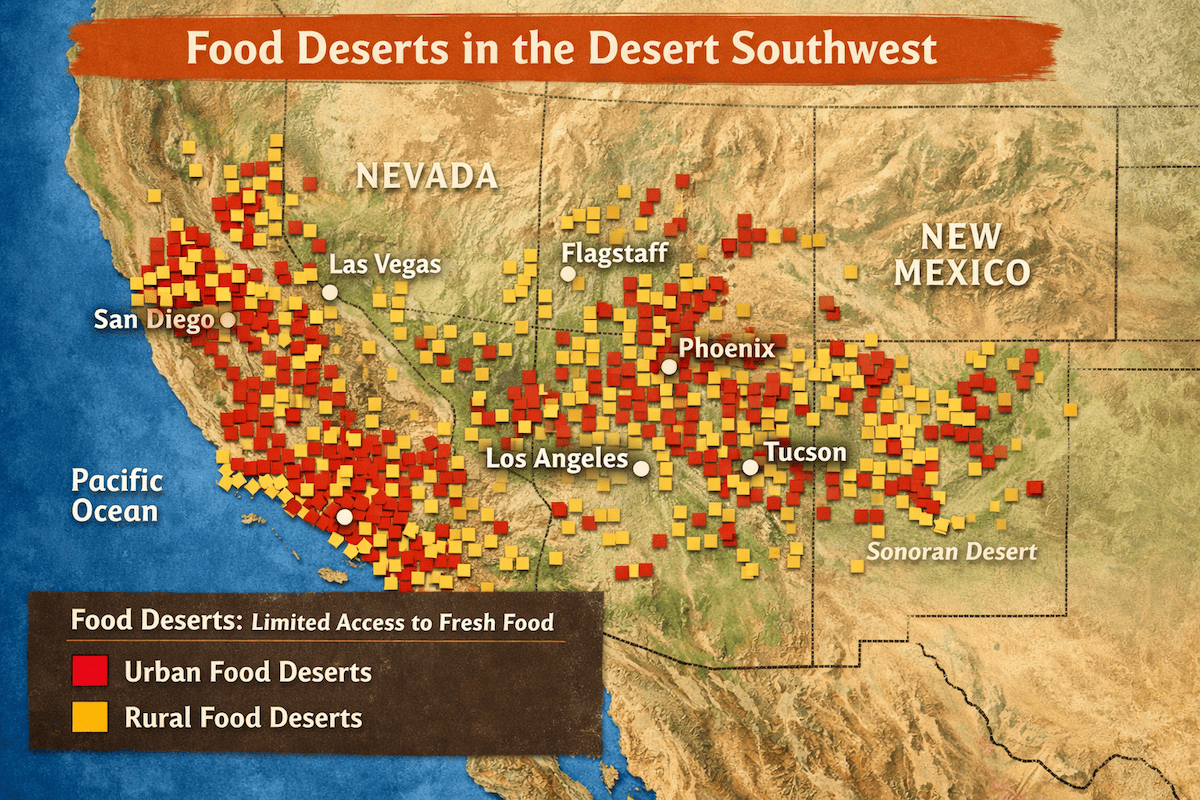
In the United States, these gaps are most common in low-income urban and rural communities where full-service grocery stores are scarce and transportation options are limited.
Definition: Food deserts are regions where access to healthy, affordable food is restricted due to economic, geographic, and infrastructure barriers.
Did you know? In many U.S. food deserts, residents rely on convenience stores and fast food outlets where fresh produce is limited or unavailable.
Why Food Deserts Exist
Food deserts are not simply about distance to a grocery store. They reflect deeper structural challenges, including historic disinvestment, transportation barriers, zoning patterns, retail location decisions, and rising food costs.
These factors combine to create environments where healthy food is harder to access than processed alternatives, reinforcing cycles of poor nutrition and limited food choice.
The Impact of Food Deserts in America
When fresh food is difficult to access, households are often pushed toward ultra-processed foods high in salt, sugar, and unhealthy fats. This can lead to long-term health challenges, including obesity, diabetes, and heart disease.
Beyond health, food deserts also have economic and social consequences. Limited access to nutritious food can affect productivity, education outcomes, and overall quality of life within communities.
Addressing Food Deserts Through Local Solutions
Solving food deserts requires more than increasing grocery store access—it requires building localized, resilient food systems. Community gardens, urban farming, and water-smart growing systems can help bring fresh food directly into underserved neighborhoods.
By shifting food production closer to where people live, communities can reduce reliance on distant supply chains and create more reliable access to nutritious food.
The solution: Expanding local food production through community-based growing systems can help eliminate food deserts and ensure that fresh, healthy food is accessible to all.
📊 American Food Desert Snapshot
- 33+ million Americans live in food deserts
- 1 in 10 U.S. households experiences food insecurity
- Food desert areas often show higher rates of diabetes, obesity, and cardiovascular disease
- Disproportionate impact on children, seniors, and communities facing long-term disinvestment
Sources: USDA Economic Research Service (Food Access Research Atlas) and CDC PLACES datasets.
Across the country—from neighborhoods in Las Vegas to communities throughout Arizona—local leaders,
nonprofits, and residents are working to restore access to fresh food. Community-led growing systems, urban agriculture, and neighborhood food networks
are helping reverse decades of imbalance.
Initiatives such as community gardens, regenerative growing models, and programs aligned with the
Food Planet Hero Initiative demonstrate how local food production can strengthen health outcomes,
increase resilience, and rebuild community stability—one neighborhood at a time.
What Is a Food Desert, and How Does It Affect Families?
A food desert is typically defined as a neighborhood where residents lack convenient access to affordable, nutritious food—especially fresh fruits and vegetables.
For families, this often translates into real daily hardship: carrying heavy grocery bags on public transportation, traveling miles without reliable transit,
or relying on processed, shelf-stable foods because fresh items are too expensive or difficult to reach.
In dense urban areas, a supermarket may technically be only a few miles away—but without a car, those miles become a significant barrier.
For seniors, parents working multiple jobs, and households managing tight budgets, limited access can quietly shape long-term eating patterns,
health outcomes, and financial stress.
How to Identify a Food Desert in Your Community
You can identify a potential food desert by looking at access, income levels, and local food infrastructure.
The checklist below reflects commonly used public health and USDA access criteria.
| Indicator |
What to Look For |
Why It Matters |
| Distance to Grocery Store |
More than 1 mile (urban) or 10 miles (rural) to a full-service grocery store |
Limited proximity reduces regular access to fresh produce |
| Transportation Access |
Low vehicle ownership or limited public transit options |
Even short distances become major barriers without reliable transport |
| Income Level |
High percentage of households below poverty line |
Lower income reduces ability to travel or pay higher local prices |
| Food Retail Mix |
High density of convenience stores and fast-food outlets |
Healthy options are crowded out by calorie-dense, processed foods |
| Store Closures |
Recent grocery store shutdowns in the area |
Retail contraction often widens access gaps quickly |
To explore official data, visit the USDA Food Access Research Atlas or use tools like our
Food Desert Impact Estimator to model local access gaps.
Why Do Food Deserts Exist in a Country That Wastes So Much Food?
The United States produces more than enough food to feed its population, yet millions of people still live in areas without reliable access to fresh groceries.
This paradox exists because food distribution is driven largely by economic incentives rather than geographic equity.
Grocery chains prioritize neighborhoods with higher projected spending and lower operating risk, while communities facing lower income levels,
higher insurance costs, or limited infrastructure often see fewer retail investments.
Meanwhile, food waste occurs across the supply chain—on farms, in distribution centers, at retail stores, and in households.
Abundance in one region can coexist with scarcity in another. Initiatives such as Food Islands and localized distribution networks
seek to shorten supply chains, redirect surplus, and build neighborhood-level food resilience that reduces both waste and inequity.
Food Deserts vs. Food Swamps: Understanding the Difference
In some neighborhoods, the challenge is not simply the absence of grocery stores—but the overwhelming presence of fast food outlets,
convenience stores, and highly processed options. This condition is often referred to as a “food swamp.”
When calorie-dense, nutrient-poor foods dominate the local landscape, healthy eating requires additional time, travel, and expense.
The imbalance influences everyday decisions for working families, seniors, and children—making long-term health outcomes
closely tied to neighborhood infrastructure.
The Expansion of Food Deserts in the United States
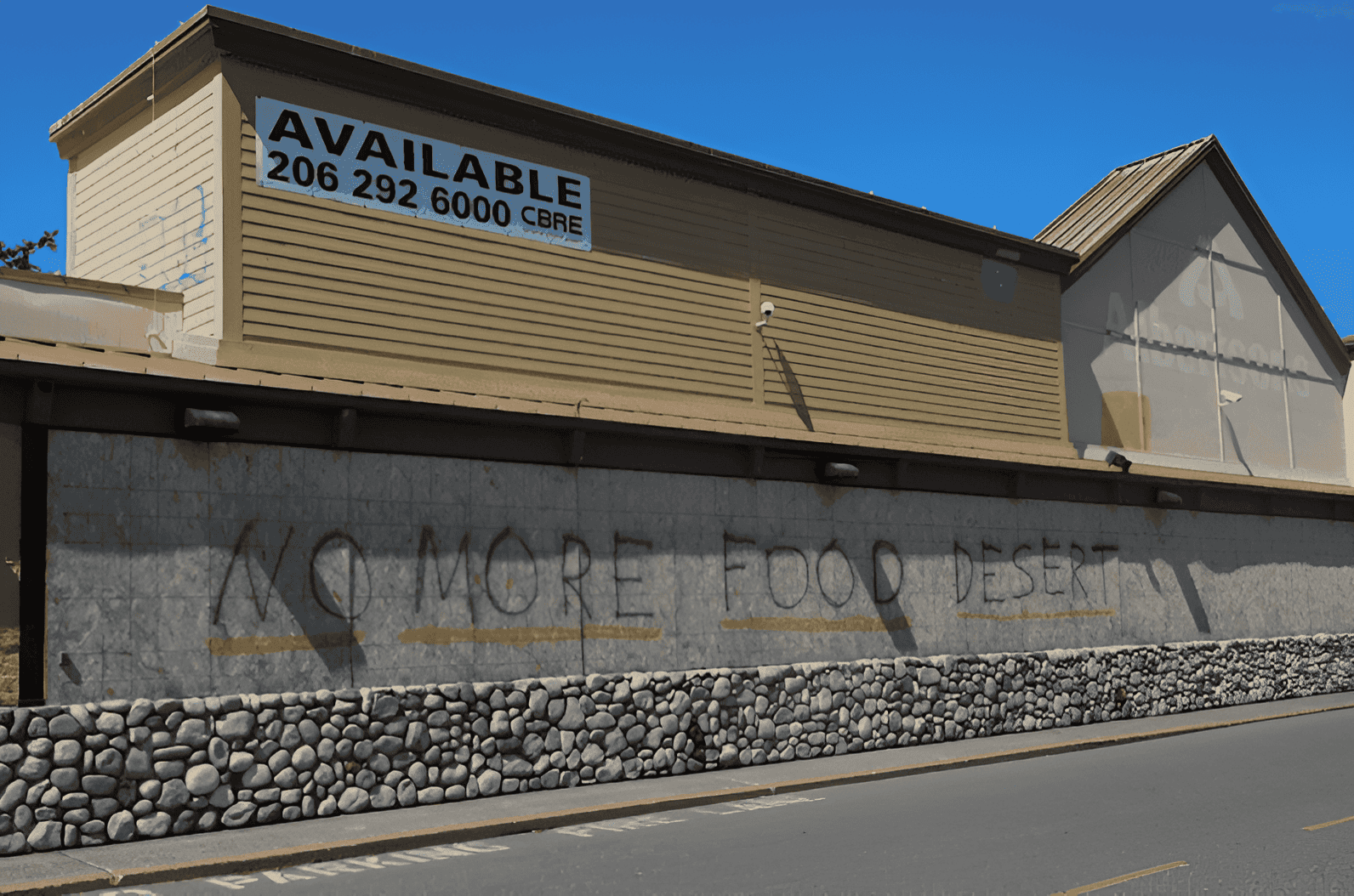
In recent years, food access challenges have intensified. Store closures, supply chain disruptions, rising food prices,
and extreme weather events have widened gaps in both urban and rural communities. The COVID-19 pandemic accelerated these disparities,
and many neighborhoods continue to face reduced retail options and higher grocery costs.
Climate pressures, economic volatility, and transportation constraints compound the issue.
As explored in climate change and agriculture,
extreme weather and global supply disruptions increasingly affect local food availability—especially in already vulnerable areas.
Can We Change This? Community-Driven Solutions
There is no single fix for food deserts. The challenge is systemic, and so are the solutions.
Yet across the country, community-led initiatives consistently demonstrate that access improves
when residents participate directly in rebuilding local food systems.
The most effective models combine production, distribution, education, and leadership—creating
durable systems rather than short-term relief.
1) Community Gardens and Urban Agriculture
Community gardens and neighborhood farms create
hyper-local sources of fresh produce while transforming vacant lots, schoolyards, and underused land
into productive community assets. Programs such as
inner-city community gardens and
gardens for veterans demonstrate that growing food also strengthens
mental health, social cohesion, and practical skill-building.
These spaces rebuild food confidence. When residents learn to plant, harvest, cook, and share produce,
food shifts from being a distant commodity to a shared neighborhood resource.
Urban growing initiatives also align with broader strategies like
edible landscapes in cities,
where public spaces serve both ecological and nutritional purposes.
2) Scalable Grow-Anywhere Systems
In areas with limited land or water, modular and water-efficient growing systems can expand local food production
without requiring large parcels of land. These adaptable approaches reduce barriers to entry and make
neighborhood-level food projects more feasible.
By shortening supply chains and strengthening local capacity, scalable systems reduce dependency on distant
distribution networks—making communities more resilient during economic disruptions or climate-related events.
3) Mobile Markets and Direct Distribution
Mobile markets, food hubs, and direct-to-neighborhood delivery programs can bring fresh produce directly
into underserved areas. When paired with SNAP acceptance, predictable schedules, and partnerships with
schools or health clinics, these programs significantly expand access without requiring permanent store infrastructure.
4) Food Banks, Partnerships, and Local Leadership
Food banks remain essential in bridging short-term gaps, but many are now shifting toward fresh produce distribution
and nutrition education. Collaboration with growers, nonprofits, and local leaders strengthens long-term impact.
Community-based leaders—often referred to as
food ambassadors—play a critical role in outreach, cultural alignment,
and trust-building. Sustainable food access depends not only on supply, but on relationships and local ownership.
Growing To Give: Strengthening Local Food Resilience
Growing To Give works to strengthen food security in both urban and rural food deserts through
scalable growing systems, education, and collaborative partnerships. By supporting
community gardens, promoting
inner-city food initiatives,
and advancing regenerative growing models, the organization helps communities shift
from dependency toward long-term resilience.
Ultimately, addressing food deserts is about restoring capacity.
When neighborhoods can grow, distribute, and share fresh food locally,
they improve public health outcomes, stabilize household budgets,
and strengthen social bonds. Food access is not just about what appears on store shelves—
it is about infrastructure, education, and community stewardship over time.

.png)
.png)
.png)

.png)