Refugee Camps • Humanitarian Aid • Food Security
Providing Aid and Shelter: Growing To Give’s Role in Refugee Camps
Refugee camps provide emergency shelter and safety, but long-term resilience depends on access to food, clean water, and sustainable community systems.
Quick answer: Refugee camps are temporary settlements for displaced people, but improving conditions requires localized food production, clean water systems, and scalable, sustainable solutions that support long-term stability.
What Are Refugee Camps?
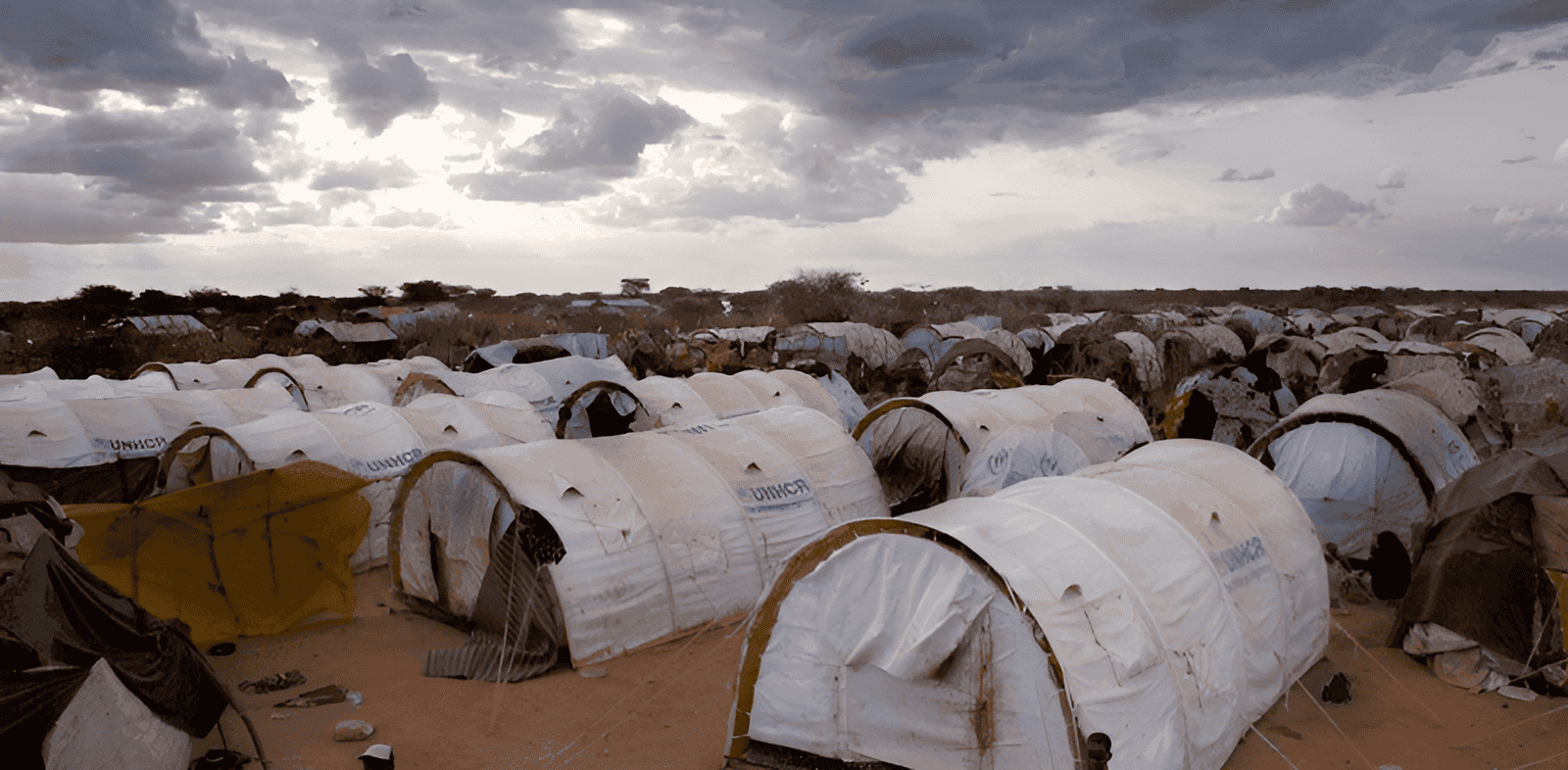
Refugee camps are temporary settlements established to provide shelter, food, water, and safety to people displaced by conflict, persecution, economic collapse, or natural disasters. While they are designed as short-term solutions, many camps remain in place for years or even decades.
Definition: Refugee camps are organized settlements that provide basic humanitarian support for displaced populations, often managed by governments and international organizations.
Today, more than 26 million people worldwide are classified as refugees, with millions living in camp environments where access to resources is limited and conditions can be challenging.
Did you know? Many refugee camps, originally intended to be temporary, evolve into long-term settlements where families may live for years or even generations.
Challenges in Refugee Camps
Refugee camps often face significant challenges, including overcrowding, limited sanitation, food insecurity, water shortages, and fragile infrastructure. These conditions can place immense strain on both residents and aid systems.
Food supply in camps is typically dependent on external aid, which can be disrupted by funding shortages, logistics, or geopolitical instability. This creates a need for more resilient, localized approaches to food production and resource management.
Why Localized Solutions Matter
Strengthening refugee camp systems requires moving beyond emergency relief toward self-sustaining, community-driven solutions. Local food production, water-smart agriculture, and efficient resource use can help reduce dependency and improve quality of life.
By introducing scalable growing systems and sustainable infrastructure, camps can begin to support nutrition, education, and economic activity, helping restore dignity and stability for displaced families.
Growing To Give’s Role
Growing To Give supports the development of high-efficiency, water-smart food systems that can be deployed in refugee camp environments. These systems are designed to operate in limited space, with minimal water and inputs, while producing meaningful amounts of fresh food.
By integrating sustainable agriculture into humanitarian settings, Growing To Give helps create pathways toward food security, resilience, and long-term community empowerment.
The mission: To transform refugee camps from aid-dependent environments into resilient communities with access to food, water, and sustainable systems that support dignity and long-term stability.
What Are Refugee Camps and Why Are They Established?
Refugee camps are emergency settlements created when large populations are forced to flee their homes due to violence, persecution, famine, or environmental collapse. In many cases, they are established alongside broader disaster relief operations designed to stabilize regions experiencing humanitarian breakdown.
Although camps are intended as temporary solutions, displacement often becomes prolonged. Residents depend on coordinated humanitarian systems for emergency shelters, medical care, sanitation infrastructure, and food distribution.
In regions facing chronic instability — including drought-stricken parts of Ethiopia and areas affected by the Ethiopia drought and famine crisis — refugee camps may remain operational for years or decades.
Food Security Challenges in Refugee Camps
Food insecurity is one of the most pressing challenges within refugee settlements. Aid agencies distribute staple rations, but these often lack dietary diversity and access to fresh produce. Prolonged dependence on food distributions increases vulnerability to malnutrition, especially among children.
Global displacement intersects directly with broader food system instability. As explored in Land, Water & the Food Future, climate stress, soil degradation, and water scarcity are intensifying global competition for resources. In some regions, mounting pressure has contributed to instability, as discussed in China Resource Shortages and Social Unrest.
For displaced families, these pressures are immediate. Limited land access, restricted movement, and scarce employment opportunities reduce the ability to grow or purchase food independently. Programs aligned with the mission of Ending Child Hunger emphasize the importance of localized food production as a stabilizing force inside humanitarian settings.
Sanitation, Water, and Disease Risks
High population density combined with fragile sanitation systems creates elevated risk of infectious disease outbreaks. Limited clean water access increases the spread of waterborne illnesses, including cholera and typhoid, which can escalate rapidly in overcrowded conditions.
Integrating food production into refugee settings must align with WASH (Water, Sanitation, and Hygiene) principles to ensure safe irrigation, clean harvesting, and contamination prevention. Garden systems must be designed to minimize stagnant water and reduce pathogen exposure.
Case Study: Kutupalong in Bangladesh
The Rohingya refugee crisis intensified in 2017, forcing more than 700,000 people to flee Myanmar. Many sought safety in Bangladesh, where the Kutupalong settlement near Cox’s Bazar has grown into the largest refugee camp in the world.
Kutupalong now shelters approximately 900,000 Rohingya refugees. Built across vulnerable hillsides, the camp faces severe population density, monsoon flooding risks, and limited agricultural land. Despite immense challenges, residents demonstrate resilience through education programs, micro-enterprises, and small-scale food production initiatives.
Sustainable food systems within camps reduce pressure on supply chains and align with broader global efforts such as the Food Planet Hero Initiative, which connects climate resilience and localized agriculture to humanitarian response.
How Growing To Give Supports Refugee Camp Food Systems
Growing To Give works within humanitarian frameworks to deploy compact, water-efficient garden systems that increase access to fresh produce while conserving limited resources.
These systems are integrated alongside disaster relief programs and shelter support efforts to ensure food security becomes part of long-term recovery — not just short-term aid.
Programs emphasize:
• Space-efficient raised or container beds
• Water-smart irrigation methods
• Soil-building and compost training
• Seed access and seasonal crop planning
• Nutrition education workshops
By integrating food production with shelter and sanitation planning, these initiatives promote self-reliance and resilience in communities facing prolonged displacement.
Water-Smart Garden Solutions for Displaced Communities
Traditional agriculture is rarely feasible inside refugee camps due to land scarcity and water limitations. Growing To Give implements compact systems designed specifically for dense and constrained environments.
Solutions may include:
• Vertical growing systems and container gardens
• Mulching and soil moisture retention strategies
• Drip irrigation to reduce water waste
• Fast-maturing, nutrient-dense crop selection
These water-smart approaches increase harvest frequency while lowering irrigation demand — particularly important in drought-prone regions such as Ethiopia and other climate-stressed areas.
Building Long-Term Resilience Beyond Emergency Aid
While refugee camps are emergency responses, long-term displacement requires structural solutions. Integrating localized agriculture reduces dependency on food shipments, strengthens nutrition, and supports psychological well-being.
By combining emergency shelters, sanitation standards, and resilient food systems, humanitarian response evolves from temporary survival to sustainable recovery.
Growing To Give’s broader mission aligns humanitarian action with regenerative food production, helping communities transition from crisis to resilience.
Frequently Asked Questions
How many refugees live in camps worldwide?
According to UNHCR, more than 26 million people are classified as refugees globally. While not all reside in formal camps, millions depend on structured settlements for shelter, food, and sanitation services.
What are the biggest challenges in refugee camps?
Major challenges include food insecurity, overcrowding, limited clean water access, sanitation infrastructure strain, unemployment restrictions, and vulnerability to disease outbreaks.
Can refugees grow their own food inside camps?
Yes. With appropriate space-efficient and water-smart systems, refugees can grow vegetables and nutrient-dense crops that supplement food distributions and improve dietary diversity.
How does Growing To Give support refugee communities?
Growing To Give installs compact garden systems, provides training and seeds, integrates WASH standards, and connects humanitarian relief efforts with long-term food resilience strategies.

.png)
.png)
.png)

.png)