Carnivore Diet and Cancer: Benefits, Risks, and What the Science Says 🥩
Explore how a carnivore diet focused on meat, fish, and animal fats may influence cancer risk, inflammation, and metabolism—along with key risks, limitations, and current scientific evidence.
Carnivore Diet • Nutrition Science • Cancer Research
The Carnivore Diet and Cancer: What We Know So Far 🥩
The carnivore diet eliminates plant foods and focuses entirely on animal-based nutrition—but how does this approach relate to cancer risk and overall health?
Quick answer: There is limited scientific evidence on the carnivore diet and cancer. While some report metabolic benefits, long-term effects and cancer-related outcomes remain unclear.
What Is the Carnivore Diet?
The carnivore diet is an eating pattern based almost entirely on animal foods such as meat, fish, eggs, and animal fats, while excluding plant-based foods including fruits, vegetables, grains, and legumes.
Definition:Carnivore diet is a restrictive dietary pattern that focuses on animal-derived foods and eliminates carbohydrates and plant-based nutrition sources.
Interest in the carnivore diet has grown in recent years, particularly among those exploring low-carbohydrate or elimination diets for metabolic health.
Did you know? Long-term research on highly restrictive diets—such as the carnivore diet—is still limited, especially in relation to chronic diseases like cancer.
Some proponents suggest that eliminating processed foods and carbohydrates may improve metabolic markers and reduce inflammation. However, the absence of plant-based nutrients such as fiber, antioxidants, and phytochemicals raises important questions about long-term health effects.
Current research on diet and cancer generally supports balanced dietary patterns that include a variety of whole foods—particularly plant-based foods—while limiting processed meats and excess red meat.
This page explores the potential connections between the carnivore diet and cancer, including proposed mechanisms, existing research, and important considerations for long-term health.
Growing to Give does not provide medical advice, diagnosis, or treatment. The information shared is for educational and community-support purposes only. Always consult a qualified healthcare professional regarding any medical condition or treatment decisions.
Introduction
The carnivore diet, a nutritional approach consisting almost entirely of animal-based foods such as meat, fish, and animal fats, has gained attention as both a radical elimination diet and a potential therapeutic option. Advocates claim benefits ranging from weight loss to reduced inflammation. However, when it comes to cancer, the role of the carnivore diet sparks significant debate among researchers and health professionals. Can eating only animal-based foods reduce cancer risk—or might it increase it?
Growing to Give does not provide medical advice, diagnosis, or treatment. The information and personal stories shared on this site are for informational and community support purposes only. Always seek the guidance of your doctor or other qualified healthcare professional with any questions you may have regarding your health, medical condition, or treatment options.
Understanding the Carnivore Diet
The carnivore diet is essentially a zero-carbohydrate plan. Followers typically eat:
• Red and white meats
• Fish and seafood
• Eggs
• High-fat dairy (optional, depending on tolerance)
Plant-based foods—vegetables, fruits, grains, legumes are excluded entirely. This makes it one of the most restrictive diets and one that eliminates common sources of fiber, antioxidants, and phytonutrients.
Scientific Evidence on Meat-Based Diets and Cancer Risk
Research on meat-heavy diets and cancer risk is complex and sometimes controversial. Most large studies evaluate
broader dietary patterns over time rather than strict “all-meat” diets, so the evidence for a true carnivore diet
is limited. However, there is substantial research on processed meat, high red-meat intake,
and low-carbohydrate dietary patterns—all of which can inform a cautious, evidence-aware conversation.
Processed Meat and Colorectal Cancer Findings
The strongest and most consistent findings in this area involve processed meats (such as bacon, sausage,
deli meats, and hot dogs). In population studies, higher processed meat intake is associated with increased risk of
colorectal cancer. Possible mechanisms include compounds formed during processing (e.g., nitrites/nitrates),
heme-iron related reactions, and inflammation-promoting byproducts. For anyone evaluating carnivore-style eating,
a practical evidence-based step is to prioritize unprocessed animal foods and minimize processed meats.
Red Meat Epidemiology and How to Interpret It
Evidence on red meat is more mixed than processed meat. Some studies show associations between higher
red-meat intake and certain cancer risks, while others find weaker or inconsistent links after adjusting for
lifestyle factors (smoking, alcohol, low fiber intake, low activity, and overall dietary quality). This is one
reason why many experts emphasize overall pattern—such as a
Mediterranean-style diet
or
plant-forward diets
—alongside sustainable habits.
Low-Carb Metabolism, Insulin Signaling, and Cancer Pathways
Carnivore eating typically reduces carbohydrates substantially, which can lower post-meal blood glucose and
may reduce insulin demand in some people. Because insulin and related growth pathways (including IGF-1 signaling)
are studied in metabolic disease and cancer biology, some supporters argue that lowering carbohydrates could be
beneficial for certain metabolic profiles. That said, clinical outcomes depend on context—overall calorie balance,
body composition, treatment status, and individual medical needs—and the long-term data on strict carnivore
approaches is still limited.
Inflammation: Potential Positives and Potential Tradeoffs
Some people report less inflammation when they remove ultra-processed foods, sugar, and refined carbohydrates.
However, strict meat-only patterns can also introduce tradeoffs, such as higher saturated fat intake for some
individuals, reduced intake of anti-inflammatory phytonutrients, and fewer sources of potassium, magnesium, and
vitamin C unless carefully planned. For many people, inflammation outcomes are driven less by “meat vs plants”
and more by the shift from processed foods to whole foods.
Fiber, the Gut Microbiome, and What Gets Removed
One major difference between carnivore and plant-forward diets is fiber. Fiber supports gut
microbiome diversity and the production of short-chain fatty acids (such as butyrate), which are associated with
colon health and immune regulation. Eliminating plant foods removes most fiber, which may matter for long-term
gut health—especially for colorectal cancer risk factors. This doesn’t mean a carnivore diet “causes” cancer, but
it does mean the diet removes a protective dietary component that many public health recommendations emphasize.
Practical, Evidence-Aware Takeaway
If someone chooses a carnivore-style approach, the most evidence-aligned harm-reduction steps are:
minimize processed meats, emphasize higher-quality protein sources, monitor cardiovascular and digestive markers,
and involve a qualified clinician—especially during cancer treatment or recovery. For additional support resources,
explore our cancer support programs and listen to the
Cancer Bites Podcast.
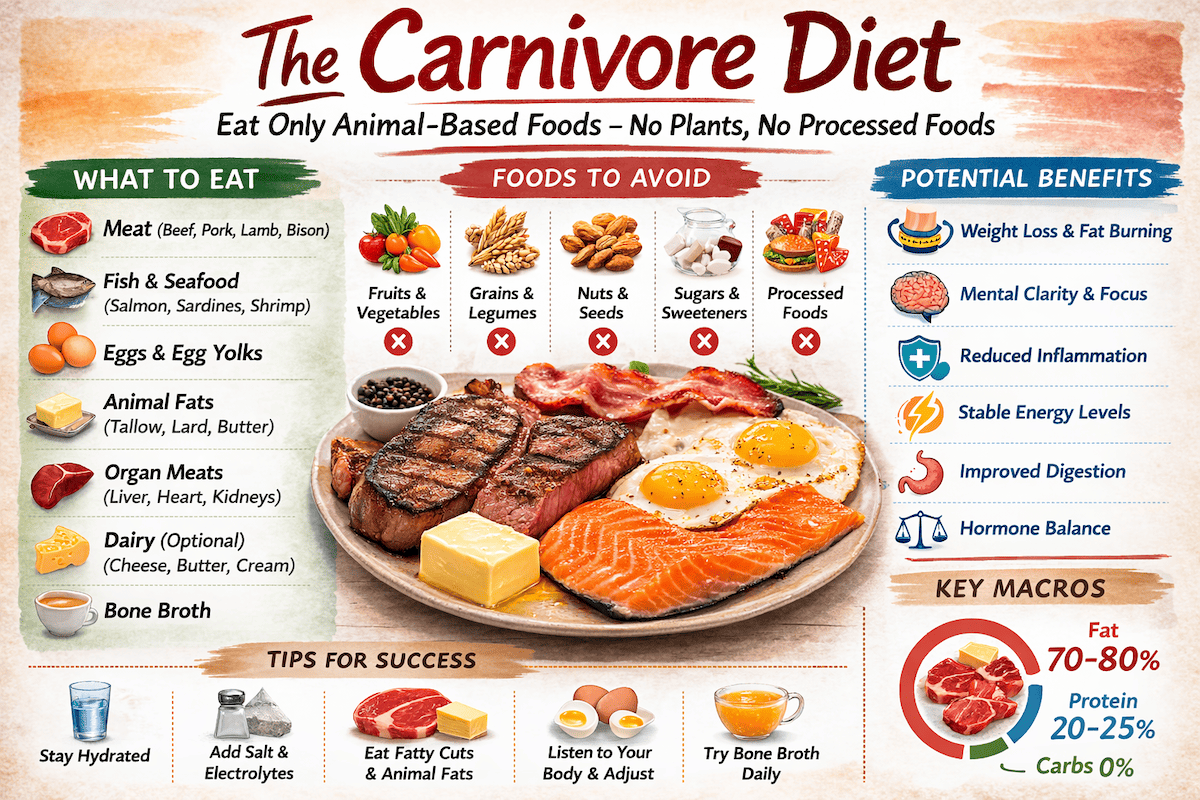
Share This Infographic
You are welcome to share this infographic on your website or blog.
Please include a link back to this page as the source.
Carnivore Diet vs Plant-Based Diets
People searching for the “best” diet often compare carnivore eating with more researched patterns like the
plant-based diet and the
Mediterranean diet. The biggest differences come down to
food variety, fiber intake, and the depth of long-term research behind each approach.
Diet Type
Main Foods
Fiber Intake
Research Support
Carnivore
Meat, fish, eggs, animal fats
Very low
Limited (strict carnivore long-term data is sparse)
If your priority is the strongest long-term evidence base, most research supports Mediterranean and plant-forward
eating patterns. If you’re exploring carnivore for blood sugar or symptom management, consider an evidence-aware approach:
avoid processed meats, monitor key health markers, and talk with a clinician—especially during cancer treatment or recovery.
Potential Risks and Concerns
While the carnivore diet may offer theoretical benefits, it also carries potential risks that cannot be ignored:
1. High Saturated Fat Intake – Excess red and processed meat have been linked in studies to colorectal and other cancers.
2. Lack of Plant Compounds – Phytonutrients and antioxidants from fruits and vegetables help protect cells from oxidative damage; these are missing on the diet.
3. Digestive Health – The absence of fiber could lead to gut microbiome imbalances, which play a role in both immunity and cancer defense.
4. Individual Variability – Genetic and lifestyle factors greatly influence how one responds to an all-meat diet.
What the Research Shows
Current research is limited. While ketogenic diets have shown promise in cancer-related studies, the carnivore diet specifically lacks long-term, peer-reviewed research. Most evidence comes from anecdotal reports rather than clinical trials. For now, mainstream cancer organizations such as the American Cancer Society recommend diets rich in vegetables, fruits, whole grains, and lean proteins rather than an all-animal approach.
However, the carnivore diet highlights an important truth: sugar and refined carbohydrates can fuel cancer cell growth, and reducing them may offer protective benefits. However, the exclusion of nutrient-rich plant foods raises concerns. More research is needed before the carnivore diet can be considered a safe or effective cancer-prevention strategy. Patients interested in exploring this diet should consult their oncologist or nutrition professional to tailor an approach that balances potential benefits with proven risks.
Should Someone With Cancer Follow a Carnivore Diet?
Nutrition recommendations during cancer treatment or recovery are highly individualized. While some people explore
low-carbohydrate or carnivore-style diets to reduce sugar intake or manage metabolic conditions, the scientific
evidence specifically evaluating strict carnivore diets and cancer outcomes is still limited. Most large nutrition
studies examine broader dietary patterns rather than single-food or extreme diets.
Because of this, many healthcare professionals recommend balanced eating patterns supported by stronger long-term
research, such as the Mediterranean diet or
plant-forward dietary approaches.
These diets emphasize whole foods, fiber, healthy fats, and nutrient diversity that may support metabolic health,
immune function, and overall well-being.
For individuals considering the carnivore diet, the most responsible approach is to view it as one possible dietary
strategy rather than a universal solution. Factors such as cancer type, treatment plan, metabolic health,
digestive tolerance, and personal nutritional needs all influence what type of diet may be appropriate.
Important Reminder
Anyone living with cancer should consult their oncologist, registered dietitian, or healthcare provider before
making major dietary changes. Nutrition during cancer treatment can affect energy levels, treatment tolerance,
immune health, and recovery outcomes. If you are seeking guidance, explore our
cancer support resources
or listen to expert conversations on the
Cancer Bites Podcast.
Frequently Asked Questions About the Carnivore Diet
Quick answers to common questions about the carnivore diet and health.
What is the carnivore diet?
The carnivore diet is an eating pattern that focuses almost entirely on animal-based foods such as
meat, fish, eggs, and animal fats. Plant foods like vegetables, fruits, grains, and legumes are typically eliminated.
Supporters of the diet believe reducing carbohydrates and plant compounds may improve metabolic health and simplify nutrition.
Is the carnivore diet linked to cancer risk?
Research on strict carnivore diets is still limited. Some epidemiological studies have linked high consumption of
processed meats with increased cancer risk, particularly colorectal cancer. However, overall cancer risk
is influenced by many factors including lifestyle, genetics, food quality, and overall dietary patterns.
Why do some people try the carnivore diet?
Some individuals explore the carnivore diet for reasons such as weight loss, blood sugar control, autoimmune symptoms,
or digestive issues. Because responses vary widely between individuals, anyone considering significant dietary changes
should consult a healthcare professional before adopting an extreme diet pattern.
How does the carnivore diet compare to plant-based diets?
The carnivore diet focuses exclusively on animal foods and contains very little dietary fiber. In contrast,
plant-based diets emphasize fruits,
vegetables, legumes, whole grains, nuts, and seeds, which provide fiber and a wide range of phytonutrients.
These dietary patterns are often studied for their potential role in supporting long-term health and reducing chronic disease risk.
What nutrients might be missing from a carnivore diet?
Because the carnivore diet excludes plant foods, it may provide limited amounts of nutrients commonly found in plants,
including fiber, certain antioxidants, and various phytochemicals. Fiber plays an important role in supporting the
gut microbiome, which can influence digestion, immune function, and metabolic health.
Should someone with cancer follow the carnivore diet?
Nutrition during cancer treatment should always be personalized. While some people explore low-carbohydrate diets,
most oncology nutrition experts recommend working with a clinician or registered dietitian to develop an eating plan
that supports treatment tolerance, energy needs, and overall health. You can explore additional guidance through our
cancer support programs and expert conversations on the
Cancer Bites Podcast.

.png)
.png)
.png)

.png)