Rainwater Harvesting Techniques: Capture, Store, and Use Water for Sustainable Agriculture
Learn how rainwater harvesting systems—from rooftop collection to soil-based basins and root-zone irrigation—capture rainfall, reduce runoff, and build resilient food systems in dry and changing climates.
Rainwater Harvesting • Water Conservation • Sustainable Agriculture
Rainwater Harvesting Techniques for Sustainable Water Management 💧
Rainwater harvesting captures and stores rainfall for reuse—helping conserve water, improve soil moisture, and support resilient agriculture in water-scarce regions.
Quick answer: Rainwater harvesting collects and redirects rainfall using catchment systems, storage tanks, and landscape design to improve water efficiency and reduce dependence on external water sources.
What Is Rainwater Harvesting?
Rainwater harvesting is the practice of capturing, storing, and using rainfall for agricultural, domestic, and environmental purposes. It is one of the oldest and most effective methods for managing water sustainably.
Definition:Rainwater harvesting is the collection and storage of rainwater for later use, helping reduce runoff, increase soil moisture, and support water security.
In many regions, rainfall occurs in short, intense bursts. Without systems to capture it, much of this water is lost as runoff. Rainwater harvesting redirects that water into storage or the soil where it can be used productively.
Did you know? Landscape-based systems—such as shallow basins and in-field depressions—can slow runoff, increase infiltration, and store water directly in the root zone for crops.
Techniques range from simple rooftop collection systems to advanced landscape designs that reshape how water moves across land. These approaches help recharge groundwater, reduce erosion, and improve crop productivity.
Rainwater harvesting is especially important in drought-prone regions, where capturing seasonal rainfall can make the difference between crop success and failure. Conditions seen in
Madagascar,
Ethiopia, and
parts of Asia highlight the importance of water-smart systems.
As part of broader
land and water solutions for future food systems, rainwater harvesting helps communities build resilience, conserve resources, and create more sustainable agricultural systems.
The Benefits of Using Water Storage Depressions for Plant Growth
Water storage depressions are landscape features designed to capture and hold rainfall or runoff near plant root zones. By slowing the movement of water across the soil surface, these depressions allow moisture to infiltrate gradually into the ground rather than being lost as runoff. The result is a more stable and reliable supply of water for plants, particularly in environments where rainfall is seasonal or unpredictable.
One of the primary advantages of water storage depressions is their ability to reduce reliance on frequent irrigation. In regions experiencing irregular precipitation or prolonged dry periods, captured rainfall can sustain crops long after storms have passed. This stored moisture helps maintain plant hydration, supports root development, and improves resilience during drought conditions.
These systems also play an important role in water conservation. By capturing rainwater that would otherwise flow away, water storage depressions make more efficient use of natural precipitation. This approach reduces water waste while supporting sustainable agricultural practices that protect limited freshwater resources. As global water pressures increase, methods that maximize the value of every rainfall event are becoming increasingly important.
Cavitated Plant Cultivation and Its Impact on Water Conservation
Cavitated plant cultivation represents an innovative extension of this concept. Instead of relying solely on surface depressions, the technique introduces small cavities or basins in the soil surrounding plant roots. These cavities function as localized reservoirs that capture water and allow it to infiltrate slowly into the root zone.
By concentrating water where plants need it most, cavitated systems significantly improve water-use efficiency. Moisture stored within the soil cavities is gradually absorbed by the surrounding earth, maintaining consistent hydration for plants while minimizing evaporation losses. This targeted delivery system allows crops to access water over longer periods, even when rainfall is limited.
The ability to store water directly within the root zone provides an important buffer against drought stress. During dry spells, plants can continue drawing on the stored moisture contained within the soil cavities. This improves crop survival rates and helps stabilize production in regions where water availability fluctuates throughout the growing season.
Innovative Techniques for Creating Water Storage Soil Cavities
Types of Rainwater Harvesting Systems
The most common rainwater harvesting systems range from simple household collection methods to larger landscape-scale water management systems. The table below summarizes several widely used techniques.
System Type
Description
Typical Use
Rooftop Collection
Rainwater captured from rooftops and directed through gutters into storage tanks or cisterns.
Homes, schools, and commercial buildings
Surface Runoff Harvesting
Rainwater collected from land surfaces and stored in ponds, reservoirs, or catchment basins.
Farms and rural communities
Recharge Pits
Rainwater directed into underground pits or wells to replenish groundwater supplies.
Urban groundwater recharge
Rain Barrels
Small storage containers connected to roof downspouts that capture rainwater for garden irrigation.
Household gardens and small landscapes
Check Dams
Small barriers built across streams or drainage channels that slow water flow and encourage groundwater recharge.
Watershed restoration and drought-prone regions
Several innovative approaches have been developed to implement water storage cavities in agricultural landscapes. One example is the use of Root Tubes. These vertical tubes are inserted into the soil to create pathways that channel water directly toward plant roots. By delivering moisture deeper into the soil profile, root tubes help maintain consistent hydration while reducing surface evaporation and runoff.
Another method involves the use of Crop Circle Irrigators. In this system, circular basins are formed around individual plants or groups of crops. These shallow depressions collect rainfall and irrigation water, allowing it to infiltrate evenly around the plant. The circular design distributes moisture across the entire root zone, helping ensure that plants receive balanced hydration while preventing localized waterlogging.
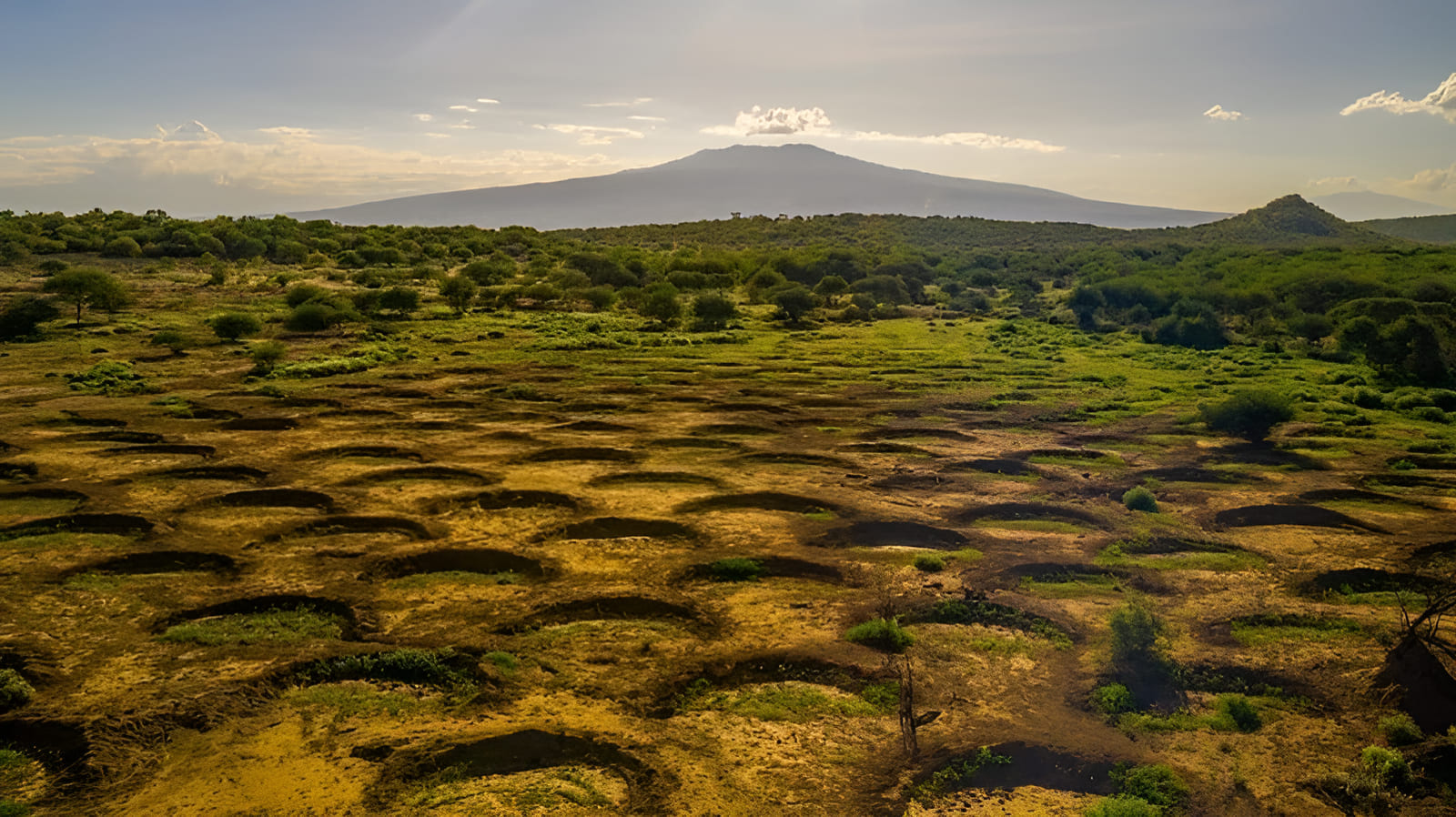
A third approach uses semi-circular or crescent-shaped indentations formed in the soil. These half-moon shaped depressions are particularly effective in dryland agriculture and drought-prone regions. Positioned strategically across a landscape, they capture seasonal rainfall and slow runoff during storms. The collected water gradually seeps into the surrounding soil, providing sustained moisture for crops during the dry season.
Together, these techniques demonstrate how simple modifications to soil structure can significantly improve water retention and agricultural productivity. By capturing rainfall, directing moisture into root zones, and reducing evaporation losses, water storage depressions offer a practical and scalable strategy for strengthening climate-resilient food systems.
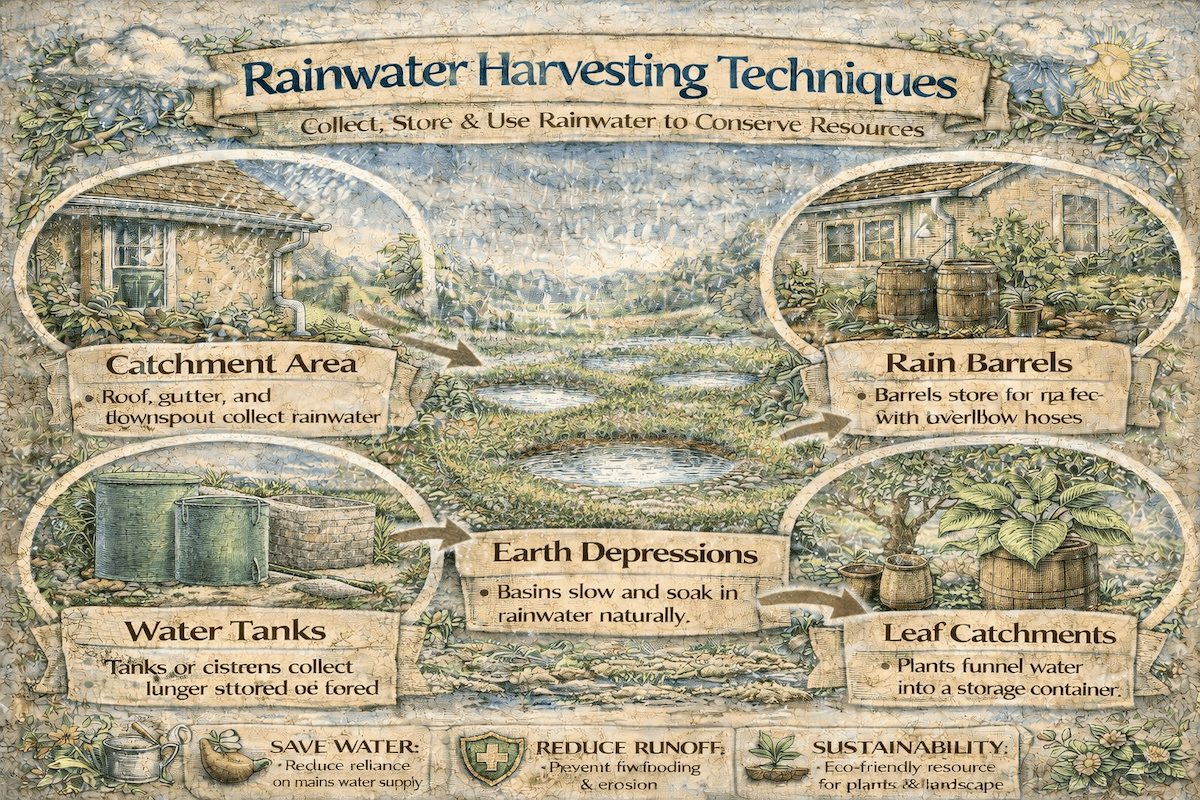
Rainwater Harvesting Techniques Infographic
Feel free to share this infographic on your website or blog. Please include a link back to this page as the source.
Share This Infographic
You are welcome to share this infographic on your website or blog.
Please include a link back to this page as the source.
The role of water storage depressions in re-building subterranean ecosystems
Water storage depressions not only benefit plant growth but also play a vital role in re-building subterranean ecosystems. These depressions create microhabitats that support diverse underground organisms, such as earthworms and beneficial microbes. These organisms contribute to soil health and fertility, enhancing overall ecosystem resilience.
By promoting the growth of subterranean organisms, water storage depressions improve soil structure and nutrient cycling. They facilitate the movement of water and nutrients through the soil profile, ensuring their availability to plants. This symbiotic relationship between plants and subterranean organisms creates a thriving ecosystem that is essential for sustainable agriculture.
Implementing water storage depressions to collect and store water for higher yield
The term "half-moon rainwater depressions" refers to a specific type of water conservation technique commonly used in arid and semi-arid regions. These depressions are crescent-shaped pits dug into the earth, designed to capture and store rainwater. The unique shape and strategic placement of these depressions help in maximizing water collection, especially during scarce rainfall periods. They are often aligned on the contours of sloping land, which allows them to intercept runoff water efficiently. This technique not only aids in water conservation but also helps in soil moisture retention, crucial for plant growth in dry areas.
For instance, in the Sahel region of Africa, where water scarcity is prevalent, half-moon rainwater depressions have been effectively used to combat desertification and improve agricultural productivity. Farmers dig these depressions in their fields before the rainy season. When the rains come, the depressions fill with water, which slowly percolates into the soil, providing moisture for crops long after the rains have stopped. In Burkina Faso, this technique has transformed barren lands into productive fields, enabling communities to grow crops such as millet and sorghum, which are staples in their diet. Similarly, in parts of India, half-moon rainwater depressions have been used to revitalize parched lands, allowing for the cultivation of vegetables and other crops, thus improving food security and livelihoods in rural areas.
Resources and tools for designing and building water storage depressions
Various resources and tools are accessible for farmers and gardeners interested in creating water storage depressions in agricultural settings. Online resources, such as agricultural forums and platforms, offer insights into new techniques and established best practices. For practical implementation, there are specialized suppliers that farmers and gardeners can access that provide an array of equipment, including both mechanical and manual diggers, as well as root tubes and crop circle irrigators.
Technique
Primary Function
Best Environment
Half-Moon Basins
Capture seasonal runoff and direct water to plant roots
Dryland agriculture and sloped landscapes
Root Tubes
Channel water directly into deeper root zones
Tree planting and orchard systems
Crop Circle Irrigators
Distribute rainfall evenly around plant root zones
Vegetable gardens and small farms
Recharge Pits
Restore groundwater aquifers
Urban water management
Rain Barrels
Capture roof runoff for irrigation
Homes and urban gardens
Staying updated with the latest developments in water storage technology is crucial. This can be achieved through participation in workshops, webinars, and conferences focused on sustainable agriculture and water conservation. For instance, Crop Circle Farms provides video tutorials demonstrating the installation of their irrigators and root tubes. Continually enhancing their knowledge helps farmers and gardeners make well-informed decisions, ensuring the effective establishment of water storage depressions in gardens and farms.
Harnessing the power of water storage depressions for sustainable plant growth
Artificially created depressions that collect and store water for plants offer a promising solution for sustainable agriculture. They provide a consistent water supply, reduce reliance on rainfall and irrigation, and promote water conservation. Techniques like cavitated plant cultivation, root tubes, and crop circle irrigators enable efficient water usage and contribute to increased crop yield.
Water storage depressions also play a crucial role in re-building subterranean ecosystems, enhancing soil health, and supporting diverse underground organisms. By implementing these innovative techniques farmers and gardeners can contribute to the sustainable growth of plants and ensure a more resilient agricultural system even in the driest of climates.

.png)
.png)
.png)

.png)