Canary Islands • Food Security • Island Agriculture
Food Insecurity in the Canary Islands: Challenges and Solutions for Island Food Systems 🦜
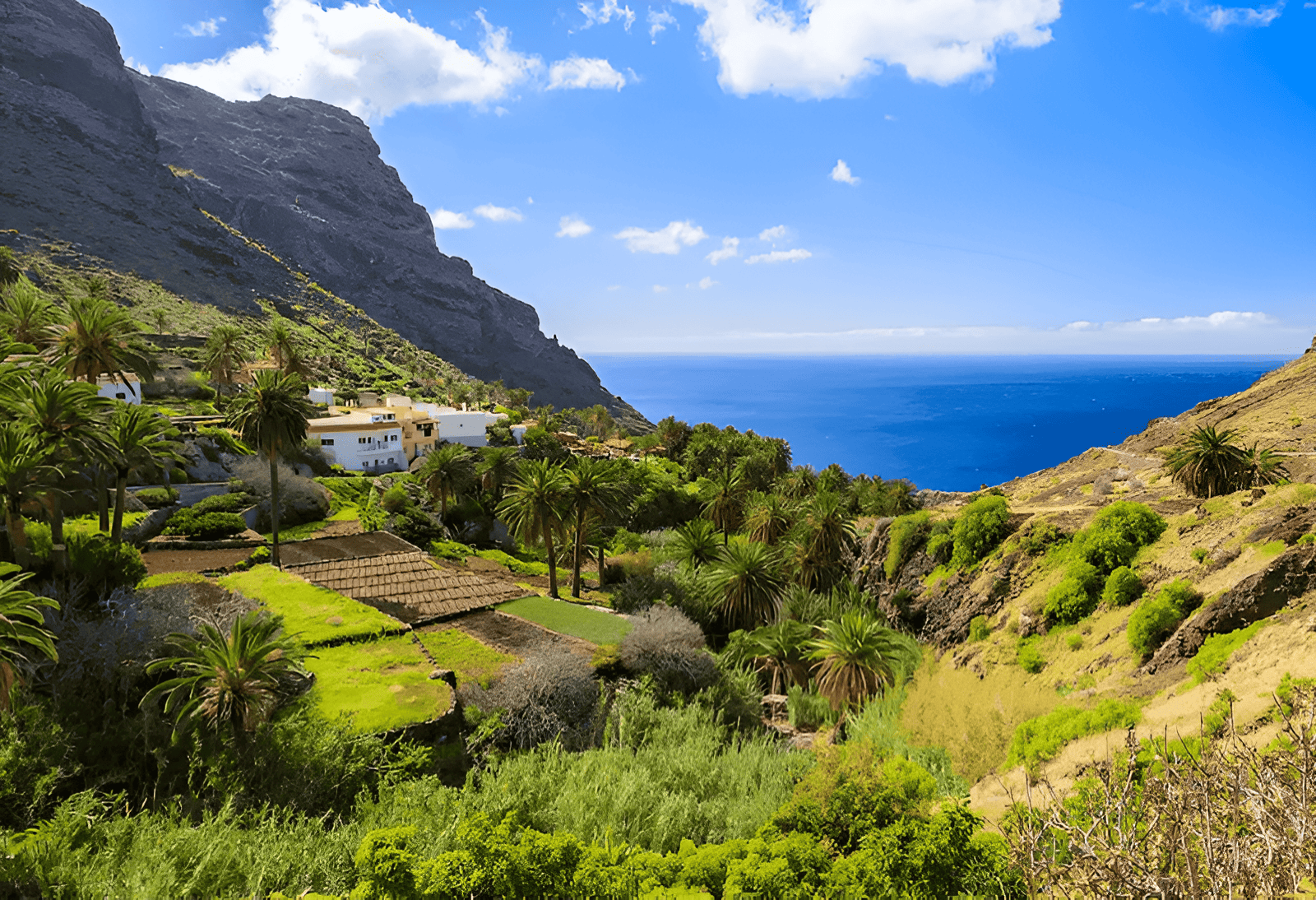
Despite fertile soils and a favorable climate, the Canary Islands face food insecurity due to import dependence, water scarcity, and changing environmental conditions.
Quick answer: The Canary Islands face food insecurity because of heavy reliance on imported food, limited freshwater resources, and reduced local agricultural production, making resilient local systems increasingly important.
What Is Food Insecurity in the Canary Islands?
Food insecurity in the Canary Islands refers to the lack of reliable access to affordable, nutritious food due to structural challenges such as import dependence, limited land and water resources, and climate-related pressures.
Definition: Food insecurity occurs when communities cannot consistently access sufficient, safe, and nutritious food to support a healthy life.
Although the islands are known for their volcanic soils and agricultural history, much of their current food supply depends on imports, creating vulnerability to global supply disruptions and rising costs.
Did you know? Many island regions—including the Canary Islands—import a majority of their food, making them highly sensitive to supply chain disruptions and price fluctuations.
Water scarcity, historical export-focused agriculture, and limited arable land have further reduced local food production, increasing dependence on external food systems.
Addressing these challenges requires integrated solutions such as water-smart agriculture, soil regeneration, diversified crops, and community-based food systems like those supported by
Growing To Give.
The Canary Islands serve as a powerful example of the broader challenges facing island and climate-vulnerable regions worldwide—and the importance of building resilient, locally rooted food systems for the future.
Historical Agricultural Practices and Their Impact on Food Security
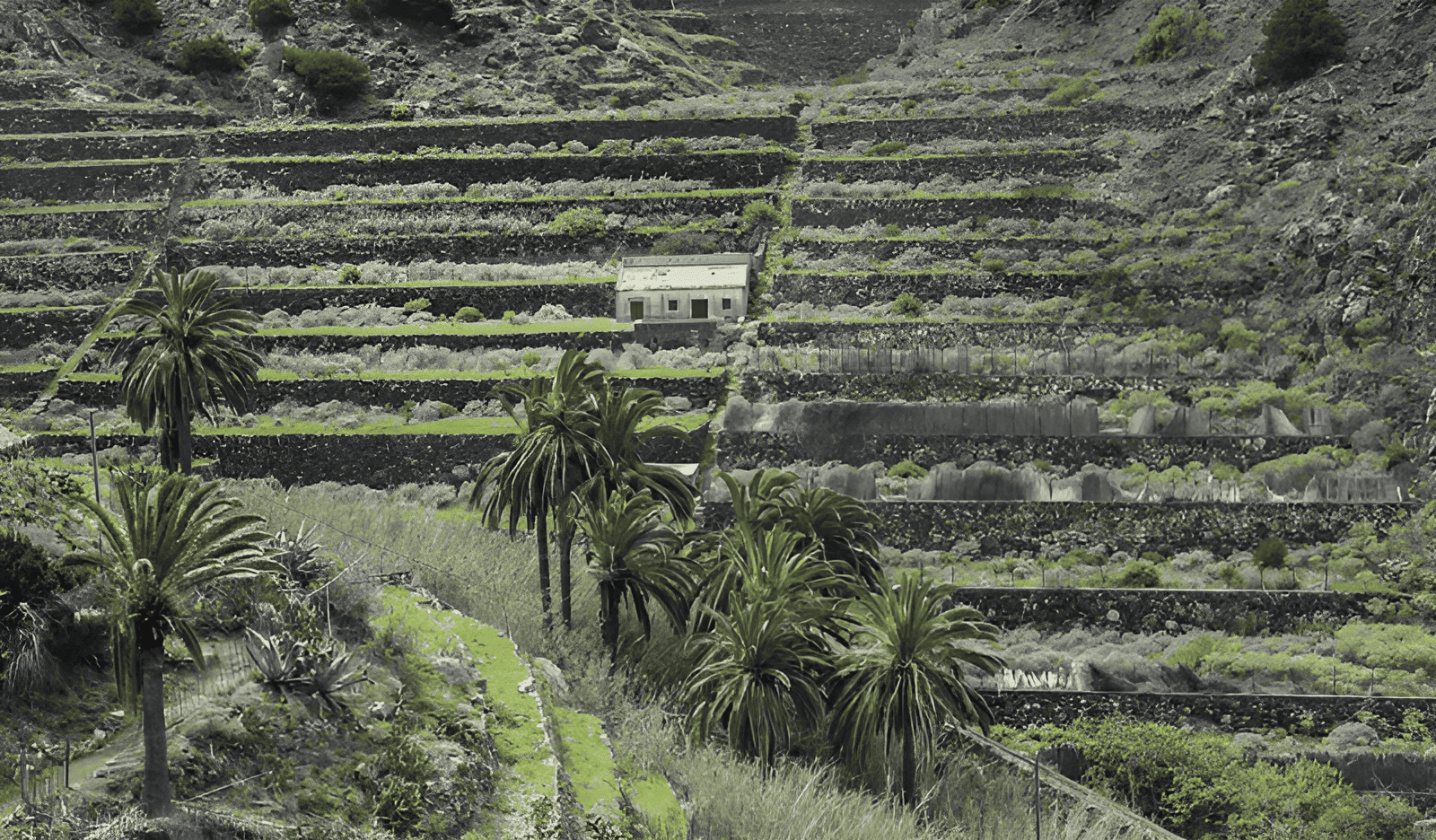
The agricultural history of the Canary Islands has had a major influence on the region’s present-day food security challenges. For centuries, farming on the islands adapted to steep terrain, dry conditions, and volcanic soils through the use of terraces, stone walls, and localized water management systems. These practices reflected both necessity and ingenuity, and in many ways they remain an important example of traditional agriculture and cultural preservation.
However, over time, agricultural priorities shifted toward export-oriented systems built around a relatively narrow range of commercial crops. Bananas and tomatoes became especially important in the islands’ agricultural economy, and large areas of land were increasingly dedicated to specialized production for outside markets. While this generated income, it also reduced the amount of land available for a broad and diverse range of locally consumed foods.
Heavy dependence on a limited number of crops can increase vulnerability in multiple ways. When a farming system lacks diversity, it becomes more exposed to pests, disease, weather disruption, and market volatility. A diversified agricultural landscape is generally more resilient because it spreads both ecological and economic risk. By contrast, systems dominated by only a few export crops can weaken local food sovereignty and increase dependence on imported staples and produce.
The history of terraced farming on the islands remains important, but it also shows the limits of land use when broader resource constraints are not addressed. Agricultural systems must not only use land efficiently, but also protect soil, preserve moisture, and support long-term ecological health. These principles are closely aligned with modern approaches to soil health and regenerative agriculture, which emphasize organic matter, biodiversity, and improved water retention as the foundation of productive food systems.
Dependency on Imports and Its Contribution to Food Insecurity on the Islands
One of the central food security challenges facing the Canary Islands is their high dependence on imported food. Like many island territories, the Canary Islands rely on shipping networks and external supply chains to meet a significant share of daily food demand. Imports can help maintain year-round availability of food products, but they also expose the islands to outside risks that local communities cannot fully control.
Price fluctuations, shipping disruptions, fuel costs, labor shortages, and global supply chain instability can all affect food access in island economies. When imported food becomes more expensive, households with lower incomes are often the first to feel the impact. Dependence on imports also means that local communities may have less control over what foods are available, how fresh they are, and how affordable they remain during periods of economic or logistical stress.
In practical terms, food security in the Canary Islands is not only about growing more food; it is also about reducing structural dependence on distant systems whenever possible. Building stronger local food production capacity can improve stability, reduce vulnerability, and create more opportunities for communities to access fresh produce grown within the islands themselves.
Key Drivers of Food Insecurity in the Canary Islands
Several structural factors contribute to food insecurity in the Canary Islands. The table below summarizes the key drivers that influence the region's dependence on imported food and the challenges facing local agricultural production.
| Factor |
Impact on Food Security |
| High food imports |
Increases vulnerability to shipping disruptions, price volatility, and external supply shocks. |
| Limited farmland |
Reduces the amount of land available for diverse local food production. |
| Water scarcity |
Lowers crop yields and increases pressure on agriculture during dry periods. |
| Climate change |
Contributes to drier conditions, heat stress, and shifting rainfall patterns that affect farming. |
| Export agriculture |
Historically reduced crop diversity and increased dependence on imported food staples. |
The Effects of Climate Change on Island Food Security
The effects of climate change are adding another layer of pressure to food systems in the Canary Islands. Rising temperatures, shifting rainfall patterns, and increasing evapotranspiration are contributing to drier conditions across many parts of the archipelago. These changes directly affect agriculture by reducing available water, increasing crop stress, and making farming more difficult during long dry seasons.
Island food systems are especially sensitive to climate stress because land and freshwater resources are limited. Unlike large continental regions, islands often have less flexibility to absorb agricultural losses over wide interior landscapes. When water availability declines, the consequences are felt quickly across farming, household use, and ecosystem health.
The Canary Islands are therefore part of a broader global challenge involving the relationship between climate, water, and agricultural resilience. The need to protect watersheds, restore soil, and support climate-adapted food production is closely tied to the wider discussion of land and water as the foundation of future food systems.
Drier Summers and the Challenges They Pose for Agriculture
Drier summers have become one of the most significant agricultural challenges for the Canary Islands. Reduced rainfall and hotter conditions increase irrigation demand at the same time that water supplies become more constrained. This places farmers under growing pressure to maintain yields while using less water.
Under these conditions, water conservation is no longer optional. Techniques such as drip irrigation, rainwater harvesting, mulching, and careful soil management have become increasingly important for preserving agricultural productivity. Farmers are also exploring more drought-tolerant crop varieties and planting strategies that reduce heat stress and improve moisture retention.
Soil condition is especially important in dry environments. Soils rich in organic matter can hold more water, support healthier root systems, and improve plant resilience under heat stress. In contrast, degraded soils dry out faster and offer less protection during periods of limited rainfall. This is one reason why soil restoration is so important to climate adaptation strategies.
Terraced Farming on the Volcanic Slopes of the Canary Islands
Terraced farming is one of the most distinctive agricultural adaptations in the Canary Islands. Built into steep volcanic slopes, terraces make it possible to cultivate land that would otherwise be difficult or impossible to farm. They reduce erosion, slow runoff, and create flatter growing surfaces that can support crops in rugged terrain.
These terraced systems reflect generations of practical adaptation to difficult landscapes. They are also closely related to broader principles of ecological land design, including water capture, slope management, and integrated use of limited land resources. In many respects, terraced farming overlaps with ideas now associated with permaculture design principles, particularly the emphasis on working with topography, conserving water, and building long-term resilience through thoughtful land organization.
Yet terraces alone do not solve the food security problem. Even well-designed agricultural land cannot remain productive without sufficient water. The core challenge is not only how to use land efficiently, but how to pair land use with water-smart systems that can sustain crops under increasingly dry conditions.
Growing To Give: Initiatives and Programs Combating Food Insecurity in the Canary Islands
In response to these challenges, community-based initiatives have emerged to strengthen local food resilience in the Canary Islands. One notable example is Growing To Give, a project focused on promoting sustainable food production through water-smart agricultural systems. Rather than relying on conventional irrigation-intensive models, the initiative emphasizes technologies and designs intended to increase productivity while dramatically reducing water use.
The Growing To Give approach is centered on practical food security outcomes. By helping communities grow more food with less water, the initiative seeks to reduce dependence on imports, improve local access to fresh produce, and support more resilient neighborhood-scale growing systems. Crop Circle Farms & Gardens represent one such approach, designed to improve growing efficiency while using significantly less water than conventional spray or drip systems in some applications.
The goal is not simply to produce food, but to strengthen communities. When local agriculture becomes more efficient and more resilient, farmers and households are better positioned to meet their own needs and support others. In some cases, surplus production can even be shared or donated, expanding the social value of local growing efforts.
These efforts also align with the broader ecological understanding that plants do more than provide calories. Healthy planting systems support soil protection, microclimate moderation, biodiversity, and community well-being. This is part of the larger story about the benefits of plants for people and the planet, especially in regions where environmental resilience and food access are tightly connected.
Food insecurity in the Canary Islands is a complex issue shaped by historical agricultural choices, water scarcity, import dependence, and the growing impacts of climate change. Yet these conditions also make the islands an important example of why local resilience matters. With stronger soil stewardship, diversified agriculture, water-smart food systems, and community-based initiatives such as Growing To Give, the Canary Islands can move toward a more secure and resilient local food future.

.png)
.png)
.png)

.png)