FREEING PEOPLE FROM HUNGER
Ethiopia Drought and Famine Crisis 🌍
Ethiopia faces severe drought and famine driven by climate change, water scarcity, and land degradation—threatening millions with food insecurity and hunger.
EXPLORE
FREEING PEOPLE FROM HUNGER
Ethiopia faces severe drought and famine driven by climate change, water scarcity, and land degradation—threatening millions with food insecurity and hunger.
EXPLORE
Ethiopia • Drought • Food Crisis
Ethiopia’s recurring droughts and famines are driven by climate change, water scarcity, land limitations, and agricultural stress—placing millions at risk and demanding long-term, sustainable solutions.
Quick answer: Drought and famine in Ethiopia are caused by a combination of climate change, water shortages, limited arable land, and vulnerable farming systems, resulting in repeated food crises that affect millions of people.
Ethiopia has long struggled with recurrent droughts and famines, with major crises occurring throughout its history, including a severe drought in 2022 that left millions in urgent need of food assistance. These events are not isolated—they are part of a repeating cycle driven by environmental and structural challenges.
Definition: Famine is an extreme shortage of food affecting large populations, often caused by a combination of drought, conflict, economic instability, and agricultural failure.
The convergence of global warming, declining water resources, land pressure, and food system limitations has created a critical situation in which communities face ongoing threats to their survival.
Did you know? During the 1980s drought, Ethiopia’s natural water supply dropped by as much as 80%, contributing to one of the most devastating famines in modern history.
Ethiopia’s history reveals a persistent cycle of drought and famine that continues to impact millions of lives. While international aid has provided relief during crises, long-term solutions have remained difficult to implement at scale.
In recent decades, climate change has intensified this cycle, bringing more frequent and severe droughts. These conditions lead to crop failures, livestock losses, and water shortages, pushing vulnerable populations deeper into food insecurity.
One of the most significant challenges facing Ethiopia is the limited availability of arable land. Much of the country consists of mountainous terrain and dry plains, leaving only a small portion suitable for agriculture. As population pressures increase, existing farmland becomes overworked, overgrazed, and depleted, reducing its ability to produce food.
At the same time, water scarcity continues to intensify, particularly in drought-prone regions. Without reliable irrigation systems, farmers depend heavily on seasonal rainfall, making agricultural production highly unpredictable.
The 2022 drought was one of the most severe in recent history, leaving more than 10 million people in need of immediate food assistance. The crisis was further compounded by conflict and population displacement, which disrupted aid delivery and limited access to critical resources.
This event underscored the urgent need for resilient, scalable agricultural solutions that can help communities withstand future shocks and reduce reliance on emergency aid.
The challenge: Ethiopia’s drought and famine cycle will continue unless sustainable, water-efficient farming systems are adopted—systems that can restore soil health, improve productivity, and help communities produce food under increasingly difficult conditions.
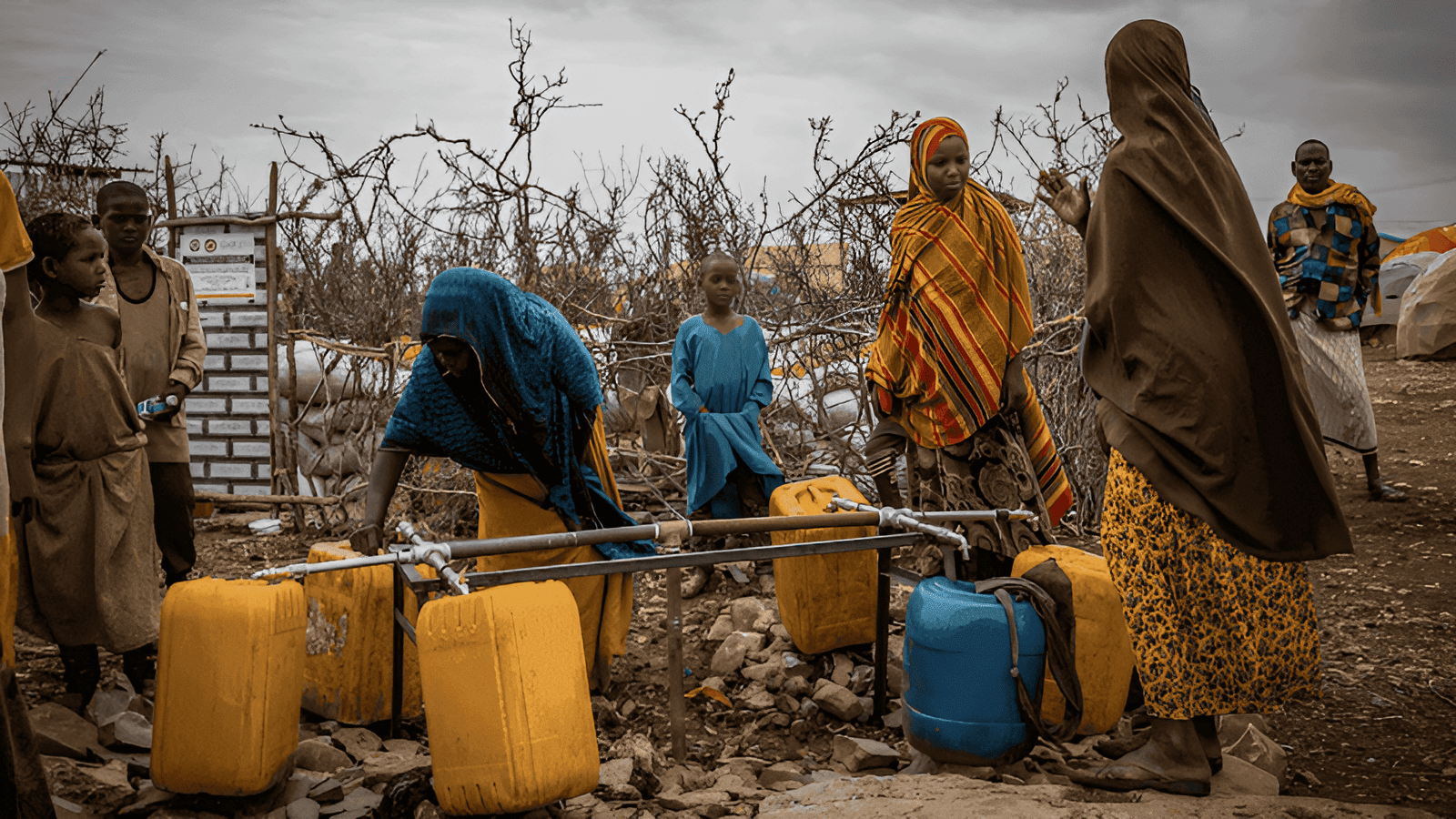
Without immediate interventions, Ethiopia's predicament is anticipated to worsen. Droughts caused by climate change will continue affect Ethiopian farmers capability to grow food as the population continues to grow, exert even more stress on the nation's resources.
While the government has initiated steps to tackle these challenges, the problem far exceeds its capability to address these overwhelming issues. It’s clear that a massive influx of international aid is needed. Investment in agriculture is also required that use water efficient techniques to grow more with less.
Drought in Ethiopia is threatening the lives of millions of people. The escalating impact of climate change, yielding irregular and volatile weather conditions, has led to diminished rainfall and extended drought durations. Insufficient agricultural land, alongside overgrazing and deforestation, has instigated soil erosion, further complicating crop cultivation and livestock maintenance. A perpetual state of a water scarcity has created a situation where half of Ethiopia has little or no access to potable water.
Every contribution moves a community one step closer to food stability and climate resilience.
Food scarcities, largely due to crop failures and livestock mortality, have thrust numerous Ethiopians into a dire predicament, their existence hanging by a thread. Absent external support, Ethiopia's outlook seems bleak.
The magnitude of the crisis is such that it overshadows the nation's capacity to manage it solely. Nonetheless, a ray of hope presents itself in the form of international aid entities such as Growing To Give who employs crop smart irrigation systems as one of the strongest drivers to increase yield, improve efficiency, and develop sustainable agricultural production.
Growing To Give is committed to alleviating the impacts of the drought and famine crisis in Ethiopia. By providing food and potable water, they are addressing the needs of school children in Addis Ababa, Ethiopia’s capital. Their efforts extend beyond short-term relief, as they also strive to promote sustainable agricultural practices and water conservation, empowering communities to better withstand future crises.
Through their work, Growing To Give brings hope to those who need it most. While the path ahead remains fraught with challenges, the initiatives of such organizations provide a lifeline, offering the promise of a better, more sustainable future for Ethiopia. In a time of crisis, Growing To Give stands as a beacon of hope, proving that through unity, perseverance, and compassion, it is possible to turn the tide.

.png)
.png)
.png)

.png)
Copyright Ⓡ 2026. All Rights Reserved. Growing To Give