UNDERWATER GARDENS
Edible Seaweeds & Coastal Foraging: Kelp, Nori, Dulse & Ocean Food
Discover how seaweed farming and coastal foraging provide sustainable, nutrient-rich food without soil, freshwater, or fertilizer.
EXPLORE
UNDERWATER GARDENS
Discover how seaweed farming and coastal foraging provide sustainable, nutrient-rich food without soil, freshwater, or fertilizer.
EXPLORE
Seaweed • Ocean Farming • Sustainable Food
Edible seaweeds and coastal foraging offer a powerful, low-impact food source—producing nutrient-rich food without soil, freshwater, or synthetic inputs.
Quick answer: Edible seaweeds like kelp, nori, dulse, and sea lettuce grow in ocean ecosystems and provide sustainable, nutrient-dense food without requiring land, freshwater, or fertilizers.
Edible seaweeds and coastal foraging involve harvesting and cultivating marine plants from ocean environments. These “underwater gardens” include a wide range of sea vegetables that have been used for food, medicine, and cultural practices for centuries.
Definition: Coastal foraging is the practice of responsibly gathering edible plants and marine resources from coastal ecosystems, while seaweeds are nutrient-rich marine algae used as food and fertilizer.
Unlike traditional agriculture, marine plants grow using sunlight and naturally available nutrients in seawater. They require no soil, irrigation, or synthetic fertilizers, making them one of the most resource-efficient food systems on Earth.
Did you know? Seaweed can grow up to 1–2 feet per day under optimal conditions, making it one of the fastest-growing food sources in the world.
For coastal communities, sea vegetables have long been a vital part of diets, traditional medicine, and cultural identity. Today, they are gaining renewed attention as part of regenerative food systems and climate-resilient agriculture.
As land-based farming faces challenges such as soil degradation, freshwater scarcity, and climate stress, underwater gardens offer a complementary solution that expands food production into ocean ecosystems.
These systems align with broader sustainable practices explored in plant-based nutrition, permaculture design, and traditional food systems, helping build a more resilient global food future.
One of the most familiar types of underwater food plants is seaweed, which comes in numerous species and types. Seaweeds are broadly categorized into brown, red, and green algae, each offering unique flavors, textures, and nutrient profiles. Some common varieties include kelp, nori, and dulse.
• Kelp: This large brown seaweed forms dense underwater forests along cool coastlines...
• Nori: Nori is the Japanese name for edible seaweed species in the red algae genus Pyropia...
• Dulse: This red seaweed grows on rocky northern coastlines...
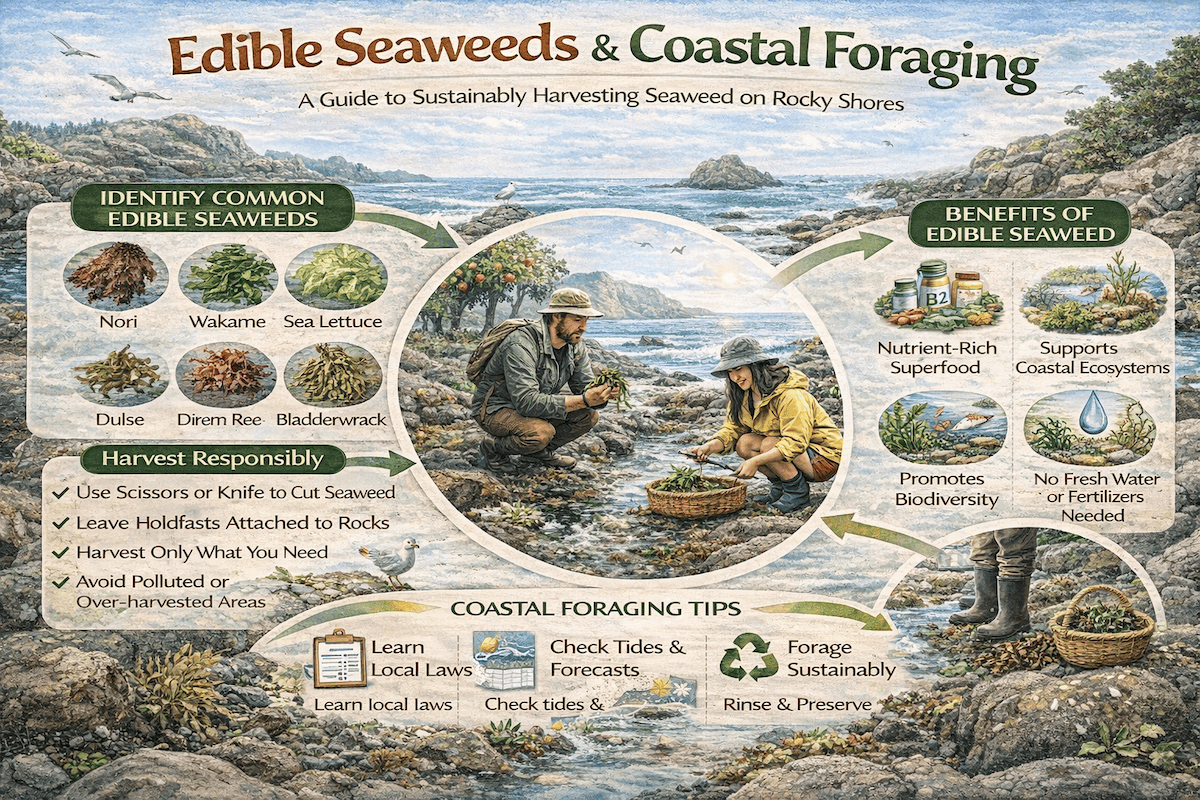
Beyond the more familiar seaweeds, many lesser-known marine plants and algae are gaining culinary recognition. These species add diversity to coastal diets and represent untapped potential for sustainable nutrition.
• Sea lettuce: This bright green, leafy seaweed grows in intertidal zones and shallow waters. With a delicate texture and mild flavor, it is used in salads, soups, and sushi. Sea lettuce is high in protein, fiber, vitamin C, and iron.
• Samphire (Sea Asparagus): Though technically a salt-tolerant coastal plant rather than a seaweed, samphire grows along shorelines and marshes. Its crunchy texture and natural saltiness make it a popular accompaniment to seafood dishes. It can be lightly steamed, sautéed, or pickled.
• Sea Grapes (Caulerpa lentillifera): These bead-like clusters resemble tiny green grapes and are prized in Southeast Asian cuisines. Sea grapes are eaten fresh in salads or with dipping sauces. They are rich in antioxidants and minerals.
Wild harvesting seaweed can be a rewarding and sustainable practice when done responsibly. However, it requires knowledge, care, and adherence to local regulations. Always research local laws, as permits may be required and certain species may be protected.
Only harvest seaweed from unpolluted areas away from marinas, sewage outflows, industrial discharge, or heavily trafficked harbors. Seaweed absorbs minerals — and pollutants — from the water, so water quality is essential for safe consumption.
Use scissors or a sharp knife to cut seaweed above its holdfast (the root-like structure attaching it to rocks). Never rip seaweed from its base. Leaving the holdfast intact allows the plant to regenerate. Take only a small portion from each patch, typically no more than one-third of what is present.
Do not harvest from eelgrass beds or protected marine habitats. These ecosystems provide essential shelter and nursery grounds for fish and marine life.
After harvesting, rinse seaweed thoroughly in clean seawater at the collection site to remove sand, small shells, or marine organisms. At home, rinse again in cool freshwater to remove excess salt and debris. Inspect carefully for small invertebrates.
Fresh seaweed can be eaten raw in salads, lightly blanched, or added to soups and stir-fries. Store fresh seaweed in the refrigerator in a breathable container or loosely wrapped in a damp cloth. It typically keeps for 3–5 days.
Drying is one of the most effective preservation methods. Lay seaweed in a single layer on clean racks in a well-ventilated, shaded area. Avoid direct sunlight, which can degrade nutrients. Once fully dry and brittle, store in airtight containers away from moisture. Properly dried seaweed can last up to a year.
Blanch seaweed briefly in boiling water for 1–2 minutes, cool quickly in ice water, drain thoroughly, and freeze in portioned containers. Frozen seaweed maintains good texture for soups and cooked dishes.
Some varieties can be pickled in vinegar or fermented with salt, creating probiotic-rich foods that enhance flavor and extend shelf life.
Overharvesting is a significant concern for many edible marine plants. Eelgrass (Zostera marina), for example, is vital for marine biodiversity and water filtration. Removing too much plant material disrupts habitats, increases erosion, and weakens ecosystem resilience. Responsible harvesting practices and marine protected areas are essential for preserving ocean health.
Marine plant aquaculture is expanding globally. One of the leaders in this field is the cultivation of seaweeds like kelp. In regions like Maine (USA), Japan, China, and Norway, kelp farming is a thriving industry.
Kelp farming has significant environmental advantages. It grows rapidly, requires no feed or fertilizer, and absorbs excess nitrogen and carbon dioxide from the water, helping combat ocean acidification and nutrient pollution.
Sea grapes (Caulerpa lentillifera) are also commercially cultivated in shallow ponds and coastal farms, particularly in Southeast Asia. These low-impact aquaculture systems provide livelihoods while reducing pressure on wild populations.
The sea offers a rich array of food sources that are both nutritious and sustainable. As interest in regenerative food systems grows, underwater gardens represent a frontier of climate-smart agriculture. However, exploration and consumption must be guided by respect for marine ecosystems. Responsible harvesting, sustainable aquaculture, and science-based policy are essential to ensure the long-term vitality of these ocean forests.
When managed wisely, underwater gardens can nourish both people and planet — offering food security, ecological restoration, and a deeper connection to the living oceans that sustain us.
Successful edible landscapes in cities often combine food production, ecological restoration, and community engagement. These spaces are designed not only to grow food but also to provide education, habitat for pollinators, and gathering places for neighborhoods.
| Feature | Purpose |
|---|---|
| Fruit Trees | Provide seasonal harvests such as apples, citrus, figs, and berries while offering shade and long-term food production. |
| Herb Gardens | Grow culinary and medicinal herbs like basil, rosemary, thyme, and mint for community kitchens and home cooking. |
| Vegetable Gardens | Raised beds or crop circles that produce vegetables such as tomatoes, peppers, greens, and root crops throughout the growing season. |
| Pollinator Plants | Flowers and native plants that support bees, butterflies, and other pollinators essential for healthy food systems. |
| Community Kitchens | Shared spaces where harvested produce can be prepared, preserved, and used for nutrition education programs. |
| Youth Training Areas | Hands-on learning zones where students and volunteers learn gardening, ecology, and sustainable food production. |
| Food Forest Layers | Multi-layer plantings including canopy trees, shrubs, herbs, vines, and root crops that mimic natural ecosystems and maximize food production. |
Seaweed aquaculture is one of the fastest growing forms of sustainable food production in the world. Coastal farms growing kelp, nori, dulse, and other edible sea vegetables can produce large amounts of nutritious food without requiring soil, freshwater, fertilizer, or pesticides. Because these marine plants grow naturally in ocean ecosystems, they represent an efficient and environmentally friendly way to increase global food production.
In addition to providing healthy food, ocean farming can help restore marine ecosystems. Seaweed absorbs excess nutrients such as nitrogen and phosphorus from coastal waters, helping reduce pollution and improve water quality. Many seaweed farms also create habitat for fish, shellfish, and other marine life, increasing biodiversity in coastal environments.
As interest in sustainable food systems continues to grow, seaweed farming is becoming an important complement to land-based regenerative agriculture and urban food systems. By combining responsible coastal foraging with modern seaweed aquaculture, communities around the world can develop resilient food sources that support both human nutrition and ocean health.

.png)
.png)
.png)

.png)
Copyright Ⓡ 2026. All Rights Reserved. Growing To Give