Food Islands: Residential Edible Landscaping & Water-Smart Backyard Food Systems
Food Islands transform lawns, rooftops, and small urban spaces into
productive edible landscapes using agroforestry, vertical growing systems,
and water-smart design to increase food production and reduce water use.
Food Islands: Transforming Residential Properties into Edible Landscapes
Food Islands turn homes into productive, water-smart food systems—converting lawns and unused space into resilient, high-yield edible landscapes.
Quick answer: Food Islands are residential food systems that transform yards, rooftops, and small spaces into productive edible landscapes—helping households grow fresh food, conserve water, and reduce reliance on external supply chains.
What Are Food Islands?
Food Islands are distributed, household-level food systems that transform lawns, rooftops, side yards, porches, and vertical spaces into productive growing environments. Instead of treating land as decorative space, Food Islands reimagine every square foot as part of a functional, regenerative food system.
Definition:Food Islands are decentralized, residential edible landscapes designed to produce food, conserve resources, and increase local food resilience through integrated, multi-layer growing systems.
This approach replaces traditional ornamental landscaping with productive systems that include trees, shrubs, vines, vegetables, herbs, pollinator plants, and soil-building organisms working together in harmony.
Did you know? Converting even a small portion of a residential yard into an edible landscape can significantly increase household food production while reducing water use compared to traditional lawns.
Measurable Impact
📊 Measurable Impact
A 1,000 sq ft lawn converted into intensive edible landscaping can produce approximately 600–1,200 pounds of fresh produce annually while reducing irrigation demand by 30–50% when managed with drip irrigation and deep mulch systems. These systems also improve soil carbon, reduce urban heat, and strengthen local food resilience.
Why Food Islands Matter
Food Islands represent a shift from resource-intensive, ornamental landscapes to productive, regenerative systems. Traditional lawns require water, fertilizer, and maintenance without producing food, while Food Islands generate yield, improve soil, and support biodiversity.
In urban environments, this transformation is especially powerful. It allows households to participate directly in food production, reducing dependence on distant supply chains and creating more resilient local food networks.
Distributed Food Systems at the Household Level
Food Islands are more than gardens—they are nodes in a decentralized food system. When implemented across neighborhoods, they form interconnected networks that can collectively produce significant amounts of food at the local level.
This distributed approach improves food security, reduces transportation emissions, and creates a more adaptive and resilient food system capable of responding to climate and economic challenges.
The opportunity: By transforming residential spaces into Food Islands, communities can grow more food, use less water, and build resilient, localized food systems—starting right at home.
Agroforestry at Home
Food Islands incorporate the principles of agroforestry, blending fruit and nut trees directly into residential landscapes. Instead of isolated backyard trees, these are intentionally placed canopy anchors forming the backbone of a layered ecosystem.
Walnut, apple, peach, citrus, fig, pecan, almond, and cherry trees provide shade, seasonal harvests, habitat for pollinators, and long-term soil enrichment. Beneath them grow berries, medicinal plants, nitrogen-fixing shrubs, perennial vegetables, and seasonal annual crops.
This layered system mirrors forest ecology while remaining manageable at residential scale. The canopy moderates temperature, reducing evaporation. Deep roots draw nutrients upward. Leaf litter becomes mulch. The result is a resilient, climate-adapted backyard food forest that grows stronger each year.
The Use of Vertical and Horizontal Trellises
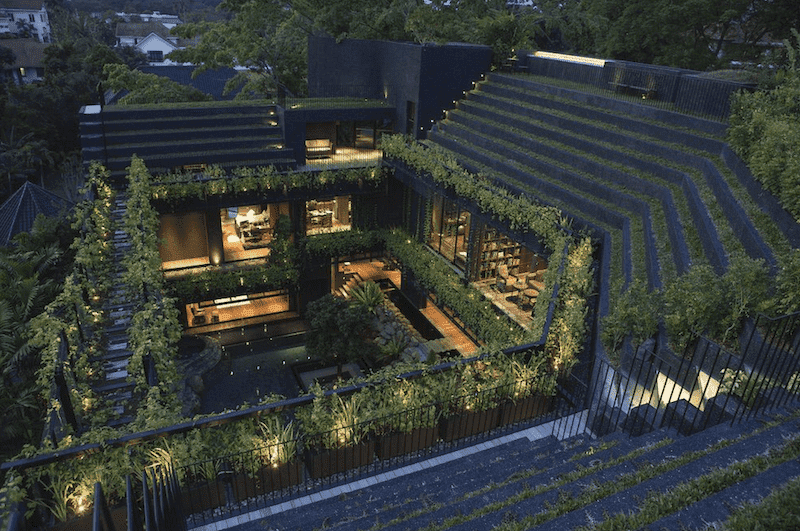
Exterior walls in a Food Island are not passive surfaces—they become productive growing infrastructure. Vertical trellises transform sun-exposed walls into high-yield food corridors supporting tomatoes, pole beans, cucumbers, gourds, passionfruit, kiwi, and climbing berries.
Independent trellis structures expand usable space vertically, dramatically increasing production per square foot. Horizontal trellising systems allow indeterminate tomatoes and vine crops to spread efficiently while maintaining airflow and reducing disease pressure.
Vertical production reduces ground footprint while maximizing yield density. It also moderates building temperature, reducing heat absorption and improving energy efficiency—particularly important in arid or heat-intense climates.
Crop Circle Gardens: Precision Growing in Sun and Shade
Crop Circle Gardens are a hallmark of Food Islands. These circular planting systems maximize edge space, sun exposure, and irrigation efficiency. Placed in underutilized side yards, corners, and transition spaces, they transform awkward lawn areas into productive micro-farms.
Crop Circles are especially effective for mixed plantings—vegetables, herbs, flowers, and companion plants arranged to optimize nutrient cycling and pest balance. They allow for:
Efficient drip irrigation layouts
Improved soil aeration
Layered root depth management
High-density food production
By using both sun and shade intelligently, homeowners create a continuous harvest calendar rather than seasonal surges followed by gaps.
Water-Smart Irrigation and Soil Health
Food Islands prioritize water efficiency. Drip irrigation on programmable timers delivers water directly to root zones, minimizing evaporation. Deep organic mulch layers—wood chips, straw, compost—retain moisture and moderate soil temperature.
Compared to traditional turf lawns, edible landscapes managed with drip systems can significantly reduce water demand while increasing productivity. Soil organic matter improves over time, enhancing water-holding capacity and reducing runoff.
For further guidance on urban agricultural best practices, the USDA Urban Agriculture and Innovative Production initiative provides national resources supporting localized food production and conservation practices.
Transforming Homes into Thriving Ecosystems
Food Islands go beyond yield. They convert residential properties into self-sustaining ecosystems where pollinators, soil microbes, birds, beneficial insects, and humans interact in regenerative cycles. Integrated pollinator support increases fruit set and biodiversity.
Composting closes nutrient loops. Rainwater harvesting captures seasonal precipitation. Shade trees lower ambient temperature. These systems mitigate urban heat islands while building soil carbon and improving air quality.
Economic Opportunity and Backyard Micro-Enterprise
A mature Food Island can produce surplus. Excess vegetables, herbs, seedlings, fruit, honey, or value-added products (jams, dried herbs, preserves) can generate income within neighborhoods.
Small-scale distributed production reduces transportation costs and increases freshness. In areas facing food insecurity, Food Islands can supplement household nutrition while creating micro-enterprise opportunities.
The Future of Urban Agriculture
Food Islands represent the future of urban agriculture—decentralized, climate-smart, and hyperlocal. Rather than relying solely on centralized farms or community gardens, residential properties become production nodes within a neighborhood ecosystem.
As climate variability increases, distributed food systems improve resilience. If supply chains are disrupted, neighborhoods with established Food Islands retain baseline production capacity.
This model aligns with regenerative agriculture principles—building soil, conserving water, enhancing biodiversity, and reducing fossil fuel dependence.
Rooftops and Expanded Surfaces
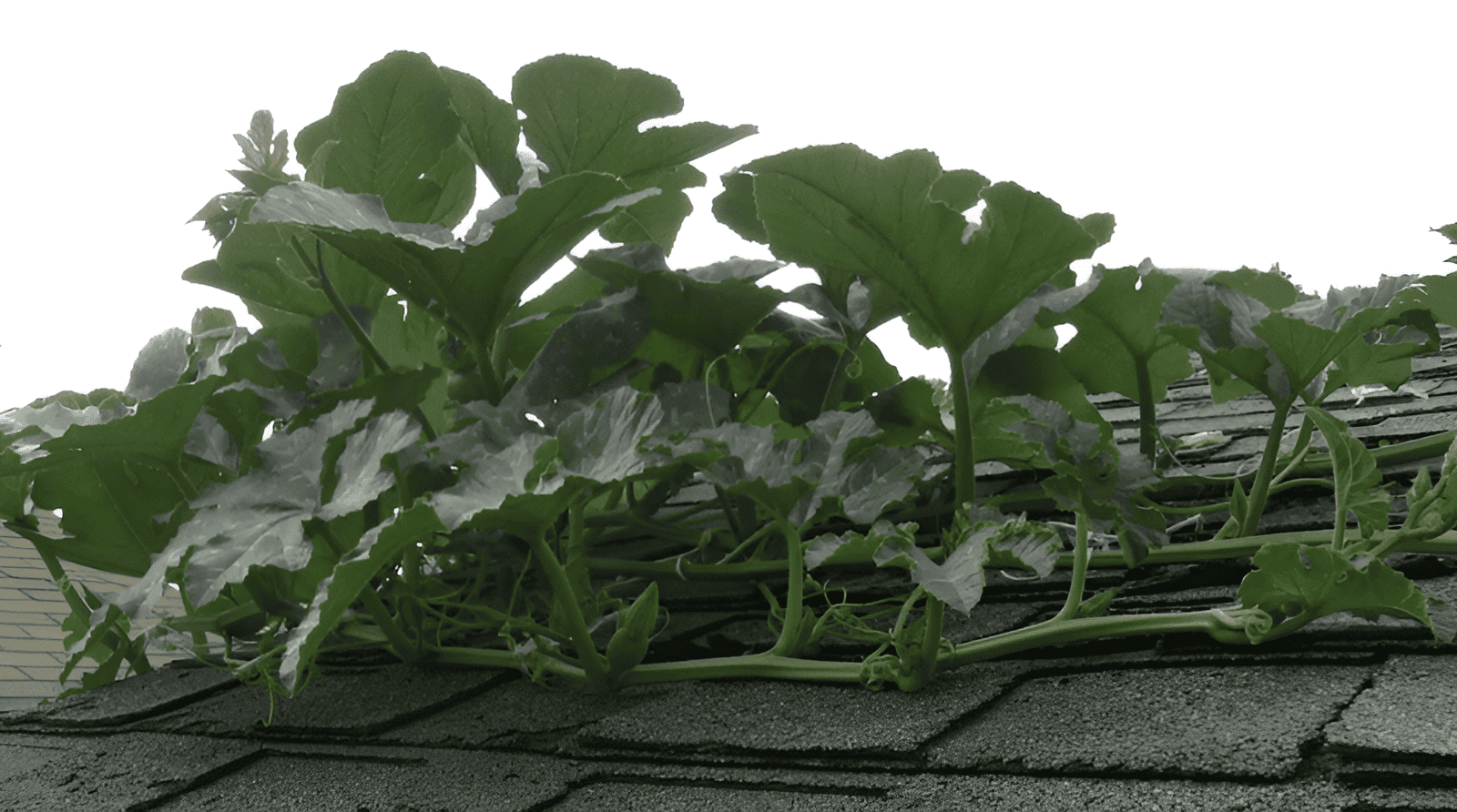
Even roofs are not left untouched. Sloped or reinforced roof areas can support lightweight vine crops such as melons, cantaloupes, gourds, and squash. This maximizes production area while adding visual distinction to residential architecture.
Combined with vertical systems and layered plantings, the result is a three-dimensional food production environment—ground level, wall level, and canopy level.
Neighborhood Networks and Community Resilience
One Food Island improves one household. Dozens across a neighborhood create a distributed food network. Surplus sharing strengthens community ties. Workshops teach food literacy. Youth engage with soil and ecology.
Food Islands can:
Reduce grocery dependency
Improve dietary diversity
Increase climate resilience
Lower irrigation costs
Enhance property aesthetics and value
As these edible landscapes spread, neighborhoods shift from ornamental consumption landscapes to productive, regenerative environments.
From Lawn to Living System
Lawns are among the most water-intensive residential land uses in many regions. Converting even a portion of turf to edible landscaping significantly increases functional productivity while reducing long-term resource inputs.
Food Islands offer a replicable blueprint for residential climate adaptation—accessible, scalable, and measurable.
More than a gardening trend, Food Islands are a strategic approach to distributed food security. As climate uncertainty grows and communities seek resilient solutions, transforming residential properties into water-smart backyard food systems may become one of the most practical and empowering steps households can take.

.png)
.png)
.png)

.png)